Manufacturing inventory management software helps businesses monitor raw materials, work-in-progress (WIP), finished goods, and production-related inventory in one system.
Instead of relying heavily on spreadsheets or disconnected records, manufacturers can use software to track stock movements, plan materials, and connect inventory with production activities.
Choosing the right system is crucial for supporting long-term growth and business expansion. This article will help you optimize and streamline your manufacturing processes.
The right software should support real-time inventory tracking, BOM management, production orders, reorder automation, and multi-warehouse operations.
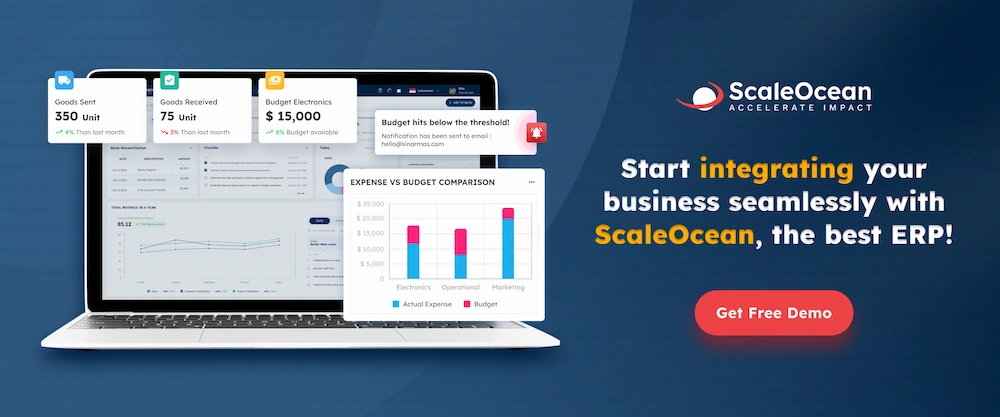
ScaleOcean Atlas for manufacturing connects inventory with production, procurement, warehouse, and other business operations, with ScaleMind AI for AI-powered insights.
What is Manufacturing Inventory Management Software?
Manufacturing inventory management software is a digital system designed to control and monitor inventory throughout the manufacturing process. It covers materials before production, components used during production, WIP, and finished goods after production.
Unlike basic inventory tools, manufacturing inventory software connects stock data with production workflows. For example, when a production order consumes raw materials, the system can update inventory records and reflect the remaining stock automatically.
For Philippine manufacturers, this can be useful when operations involve multiple warehouses, suppliers from different regions, or production schedules that need to account for shipping lead times.
Why is Manufacturing Inventory Management Software Important?
The reason why it’s important is because manufacturing businesses need to balance enough materials for production without holding excessive stock. Too little inventory can delay production, while too much can increase storage costs.
The importance of better inventory management is also reflected in the scale of the Philippine manufacturing sector. According to the Philippine Statistics Authority (PSA), Industry, which includes Manufacturing, Mining and quarrying, Electricity, and Construction, generated ₱6.47 trillion in gross value added at current prices in 2024. This reflects a 5.6 percent increase from ₱6.13 trillion in 2023, with Manufacturing as one of its largest components.
That resilience has carried into 2026, even as GDP growth slowed to 2.3 percent in Q2 2026, manufacturing still grew 2.6 percent, outpacing the broader Industry sector, which contracted 2.4 percent.
As manufacturing activity grows, having accurate inventory data can help businesses manage materials and production more efficiently. Here are some of the reasons why manufacturing management software are important:
Real-time inventory visibility: View available, incoming, reserved, and in-production inventory from a centralized system instead of relying on multiple spreadsheets.
Prevent stockouts: Maintain enough raw materials and components to avoid production delays caused by insufficient inventory.
Reduce excess inventory: Monitor stock levels more accurately to avoid overstocking, unnecessary storage costs, and tied-up working capital.
Coordinate production and purchasing: Connect material requirements with production schedules and purchasing activities so teams can plan replenishment more efficiently.
Improve team coordination: Allow purchasing, production, warehouse, sales, and finance teams to work with more consistent inventory data.
Support multiple locations: Help businesses manage inventory across factories and warehouses, which can be useful for manufacturers operating across Luzon, Visayas, and Mindanao.
Simplify inventory records: Keep organized records of inventory movements, valuation, and transactions to support accounting and reporting requirements.
How Does Manufacturing Inventory Management Software Work in Practice?
Manufacturing inventory management software connects inventory activities across the production cycle. Below here is a typical workflow of how manufacturing inventory management software work in practice:
Purchasing materials: Record purchase orders, expected deliveries, and supplier information to help plan incoming stock.
Receiving and inspection: Update received quantities and record inspection or batch details, where supported, before materials enter production.
Material planning: Compare bill of materials (BOM) requirements with available stock and incoming supplies to identify potential shortages.
Production: Record material usage, work orders, work-in-progress (WIP), and completed quantities to monitor production progress.
Finished-goods storage: Update finished-product quantities and warehouse locations so teams know which goods are available.
Costing and reporting: Connect material movements and production data with inventory costing and financial records to support reconciliation and operational reviews.
To simplify manufacturing monitoring, here is an example of how the system helps; a Philippine food manufacturer can check ingredient and packaging availability before production starts. If a shortage occurs, purchasing can order stock early to avoid delays.
The Features You Should Look for in a Manufacturing Inventory Software
Secondly, not every inventory platform is designed for manufacturing. When comparing solutions, look for features that connect inventory management with actual production requirements. Here are some of the features that should be consider:
Real-time inventory tracking: Monitor raw materials, WIP, finished goods, and inventory movements as transactions happen.
Bill of Materials (BOM): Define the components and quantities required to manufacture each finished product, including multi-level BOMs when needed.
Production order management: Create and monitor production orders while connecting material consumption with the manufacturing process.
Reorder automation: Automatically trigger replenishment when inventory reaches predefined thresholds, helping ensure materials are available before they affect production.
Production order tracking: Monitor production orders from planning to completion, including material usage, production status, and order progress.
Multi-warehouse management: Manage inventory across factories, warehouses, and other storage locations from one platform.
Barcode and QR code support: Reduce manual data entry and improve the accuracy of receiving, picking, stock counting, and production activities.
The 10 Best Manufacturing Inventory Software in the Philippines
The best manufacturing inventory software depends on your production model, company size, inventory complexity, and budget. The following platforms are worth considering for Philippine manufacturers, from growing businesses to companies with more complex ERP requirements:
Software
Key Strength
Best For
ScaleOcean Atlas
Integrates manufacturing, inventory, and business operations.
Medium to large manufacturers needing an all-in-one ERP system.
KatanaMRP
Combines production, inventory, purchasing, and sales.
Small and growing manufacturers.
SAP Business One
Offers ERP, MRP, BOM, and inventory tools.
Small and midsize manufacturers.
Fishbowl Manufacturing
Manages materials, BOMs, work orders, and production.
Businesses needing detailed production control.
Odoo
Provides modular manufacturing and ERP applications.
Growing businesses with expanding needs.
MRPeasy
Combines MRP, inventory, purchasing, and production.
Small and midsize manufacturers.
Cin7 Core
Connects inventory, manufacturing, sales, and fulfillment.
Product-based businesses using multiple channels.
Unleashed Software
Offers inventory visibility with batch and serial tracking.
Businesses needing better inventory traceability.
inFlow Inventory
Simplifies inventory, assembly, and warehouse management.
Supports complex manufacturing and supply chain operations.
Larger organizations with complex operations.
1. ScaleOcean Atlas for Manufacturing
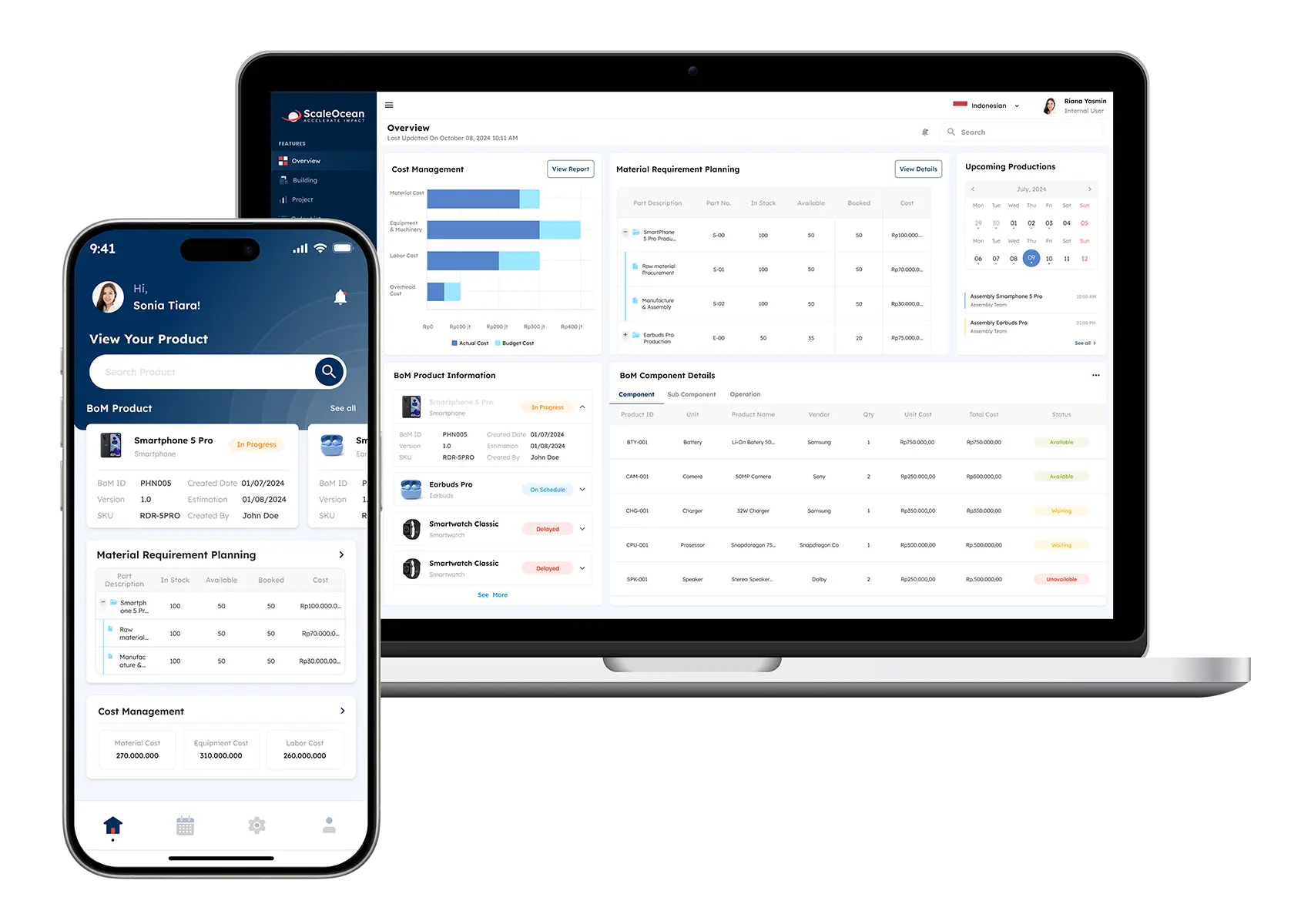
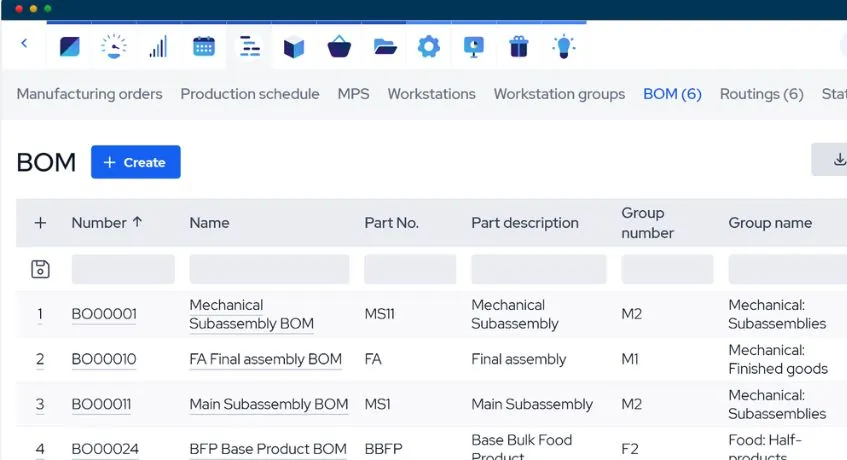
ScaleOcean Atlas for Manufacturing is a cloud-based manufacturing ERP software designed to help businesses manage production, inventory, procurement, and other operational activities in one platform. The system provides manufacturers with better visibility across their production and inventory workflows.
To support this, ScaleOcean Atlas for manufacturing helps manufacturing businesses manage inventory throughout the production cycle, from raw materials and work-in-progress (WIP) to finished goods. Businesses can also monitor material usage, production orders, stock levels, and replenishment requirements within the same system.
Moreover, the platform is integrated with an ERP system that connects manufacturing inventory with accounting, procurement, warehouse, sales, and other business operations. This integration helps reduce information silos and gives teams more consistent data for daily decision-making.
By implementing ScaleOcean Atlas, manufacturing companies typically see a 45-75% boost in productivity and improved cycle time efficiency by automating manual processes and gaining real-time operational visibility.
Manufacturers can also schedule a consultation to understand how the software can fit their production workflows and inventory requirements. Some of its key features include:
Production Planning and Scheduling: First, ScaleOcean Atlas helps manufacturers plan production schedules based on material availability, demand, and production requirements.
Bill of Materials (BOM): It also organizes the materials and components required for each product, helping teams prepare accurate production requirements.
Real-Time Inventory Management: Additionally, it provides real-time visibility into raw materials, WIP, and finished goods across warehouse locations.
Reorder Automation: The platform can automate replenishment based on inventory thresholds which helps businesses maintain sufficient materials for upcoming production.
Production Order Tracking: Manufacturers can monitor production orders from planning through completion, including order status, material usage, and production progress.
ScaleMind AI: Equipped with ScaleMind AI, it helps manufacturers analyze operational data and provide AI-powered insights for inventory, production, and business decision-making.
MRP and Demand Forecasting: ScaleOcean Atlas supports material requirements planning and demand forecasting to help businesses prepare inventory based on expected production and demand.
Integrated ERP System: As an ERP solution, ScaleOcean Atlas connects manufacturing with purchasing, accounting, sales, inventory, and other departments within one system.
Pros
Cons
Connects accounting, inventory, sales, warehouse, and production processes.
Offers configurable modules that can be adapted to business requirements.
Conducts an in-depth analysis of business processes.
May be less suitable for small manufacturers with only basic inventory requirements.
ScaleOcean Atlas Pricing: Final pricing depends on the required solutions, modules, users, integrations, and manufacturing requirements. Contact the ScaleOcean team for a customized pricing estimate.
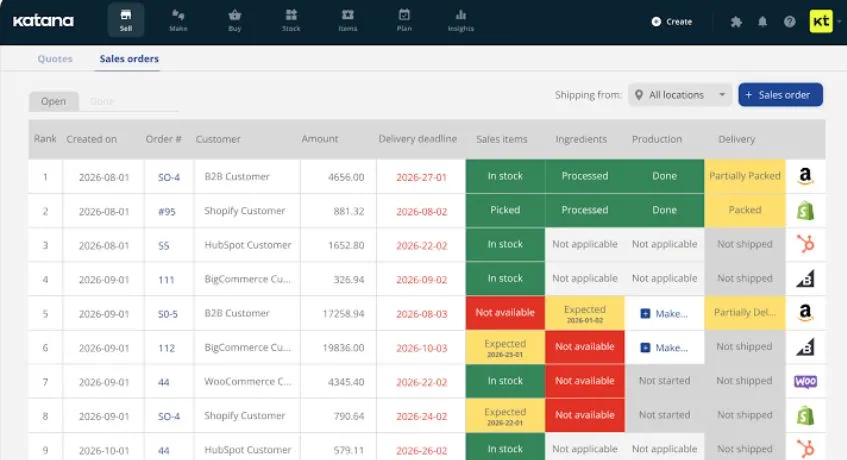
KatanaMRP is a cloud-based manufacturing inventory management software designed for small and growing manufacturers. The platform brings production, inventory, purchasing, sales, and product management together to give businesses better control over their operations.
The platform also connects inventory management with purchasing and sales activities. This allows businesses to track incoming materials, production requirements, and customer orders without relying on separate systems.
Manufacturers can use KatanaMRP to organize their daily production workflows and maintain better inventory visibility. Some of its key features include:
Real-Time Inventory Management: Monitor raw materials, WIP, and finished products as inventory moves through different processes.
Bill of Materials: Define the materials and components required to manufacture each product.
Production Planning: Plan manufacturing activities based on available materials, orders, and production requirements.
Production Order Tracking: Follow production orders from creation to completion and monitor their progress.
Reorder Automation: Set inventory thresholds to help identify when materials need to be replenished.
Pros
Cons
Provides a user-friendly interface that easier to manage.
Combines inventory, production, purchasing, and sales in one centralized system.
Less suitable for manufacturers that require highly complex enterprise-level.
KatanaMRP Pricing: Starts at ₱18,785.57 ($299) per month. A free plan is also available, with paid pricing depending on usage and requirements.
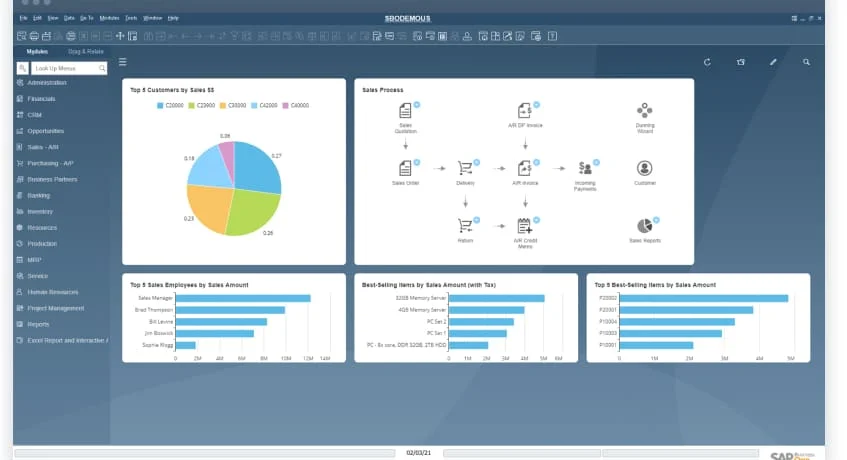
SAP Business One is an ERP software designed for small and midsize businesses, including manufacturers that need to connect inventory with production, purchasing, sales, and financial operations.
The platform helps businesses manage manufacturing inventory and material requirements through features such as BOM management, production orders, inventory control, and MRP. This gives manufacturers greater visibility into the materials required to complete production. Here are some of the features:
Material Requirements Planning: Calculate material requirements based on demand, inventory, purchasing, and production data.
Bill of Materials: Define raw materials, components, and quantities needed for manufacturing.
Production Order Management: Create, release, and monitor production orders throughout the manufacturing process.
Inventory Management: Track inventory quantities, locations, movements, and availability.
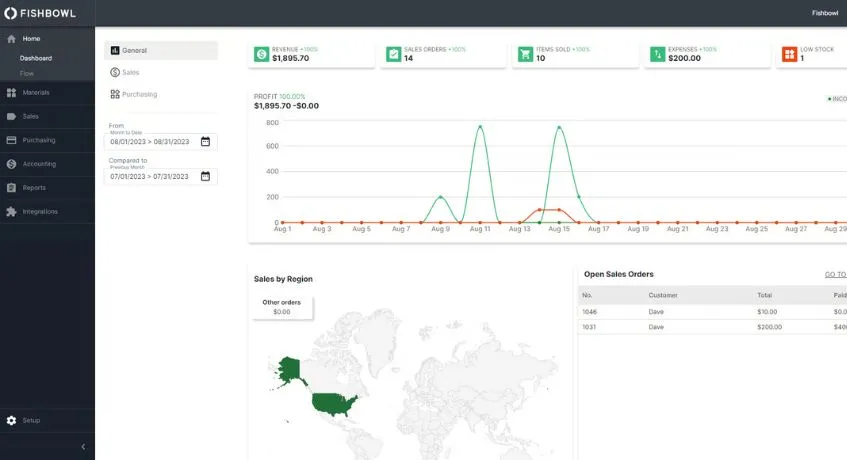
Fishbowl Manufacturing is a manufacturing and inventory management software designed to help businesses control materials, production, and finished goods. The platform combines inventory management with manufacturing workflows in one system.
Moreover, Fishbowl helps manufacturers track materials from purchasing through production and final inventory. Businesses can manage BOMs, work orders, raw materials, and finished products while maintaining visibility into stock availability. Below here are some of the featured in Fishbowl:
Manufacturing Management: Manage production activities, work orders, and manufacturing processes from one platform.
Bill of Materials: Define the components and quantities required to build finished products.
Work Order Management: Create and track work orders throughout production.
Material Requirements Planning: Plan materials based on production requirements and inventory availability.
Pros
Cons
Integrate manufacturing and inventory management in one platform.
Provides detailed tools for work orders, BOMs, and material tracking.
May require more configuration for businesses with highly customized manufacturing workflows.
Fishbowl Manufacturing Pricing: Pricing depends on the required products, users, features, and implementation requirements. Businesses can request a customized quote.
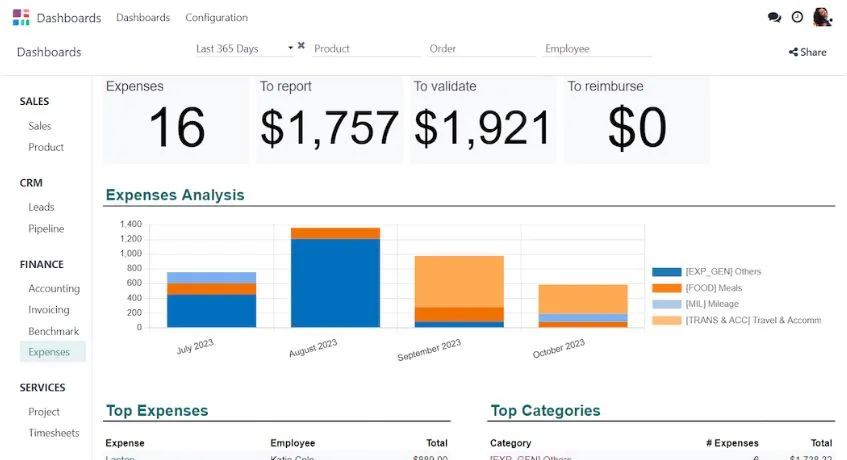
Odoo is a modular ERP software that provides manufacturing, inventory, purchasing, accounting, and other business applications. It helps businesses manage inventory alongside production activities, allowing teams to monitor materials, manufacturing orders, WIP, and finished products.
Another advantage is its modular structure. A business can start with manufacturing and inventory features and expand into accounting, sales, purchasing, or other applications as its operations grow. Some of its key features include:
Manufacturing Orders: Create and manage production orders based on manufacturing requirements.
Bill of Materials: Build product structures and define the components required for production.
Inventory Management: Track stock levels, movements, locations, and product availability.
Reordering Rules: Set inventory rules that help trigger replenishment when stock reaches specified levels.
Pros
Cons
Offers a broad selection of business applications within one ERP ecosystem.
Modular structure allows businesses to select applications based on their operational needs.
Businesses may need technical expertise to configure and customize the system effectively.
Odoo Pricing: Starts at ₱1.950,34 ($31.10) per user per month for the Standard plan. The Custom plan starts at ₱3.825,43 ($61) per user per month. A free plan is also available.
MRPeasy is a cloud-based manufacturing ERP and inventory management software designed primarily for small and midsize manufacturers. It combines MRP, inventory, purchasing, production, and sales management in one platform.
Further, MRPeasy also connects purchasing with production planning. This helps businesses determine what materials need to be ordered and when they are required for production. Some of the features include:
Material Requirements Planning: Calculate the materials needed based on production schedules and demand.
Inventory Management: Track raw materials, WIP, finished goods, and inventory movements.
Production Scheduling: Plan production activities and organize manufacturing workloads.
Pros
Cons
Focuses specifically on manufacturing and MRP requirements.
Its inventory and production features work together to support material planning.
Businesses with complex enterprise requirements may need more extensive ERP capabilities.
MRPeasy Pricing: Starts at ₱3.072,89 ($49) per user per month for the Starter plan.
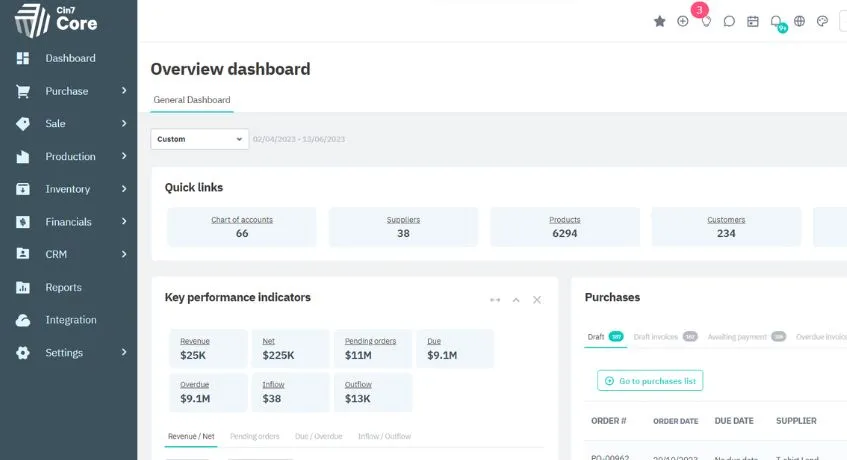
Cin7 Core is a cloud-based inventory management platform that combines inventory, purchasing, sales, manufacturing, and order management. It is designed for product-based businesses that need visibility across their supply chain.
For manufacturers, Cin7 Core helps connect inventory with production and sales activities. Teams can monitor materials, BOMs, production orders, and finished goods while keeping inventory information synchronized across business processes. Here are some the features include:
Manufacturing Management: Manage production activities and manufacturing orders within the inventory platform.
Bill of Materials: Define components and quantities required to produce finished products.
Inventory Tracking: Monitor stock levels and movements across locations.
Production Planning: Plan manufacturing activities according to demand and inventory availability.
Pros
Cons
Connect inventory across manufacturing, purchasing, sales, and fulfillment.
Integrations can support businesses selling through multiple channels.
Businesses with highly specialized manufacturing processes may require additional configuration.
Cin7 Core Pricing: Pricing starts at ₱21.903,41($349)/month.
Unleashed Software is a cloud-based inventory management software that provides manufacturing and product-based businesses with visibility over stock, production, purchasing, and sales.
Furthermore, Unleashed can be particularly useful for companies that need detailed product-level inventory information. Its batch and serial tracking capabilities can also help businesses maintain traceability throughout the supply chain. Some of its key features include:
Manufacturing Management: Manage production and assembly processes while keeping inventory records updated.
Bill of Materials: Define the components and quantities needed to manufacture products.
Real-Time Inventory Visibility: Monitor stock quantities and movements across locations.
Batch and Serial Tracking: Track inventory by batch or serial number for better product traceability.
Pros
Cons
Connecting production activities with inventory records accurately.
Batch and serial tracking can support businesses with traceability requirements.
Companies looking for advanced enterprise manufacturing planning may require additional systems.
Unleashed Software Pricing: Approximately starts at ₱25.035,45 ($399)/month, flat rate.
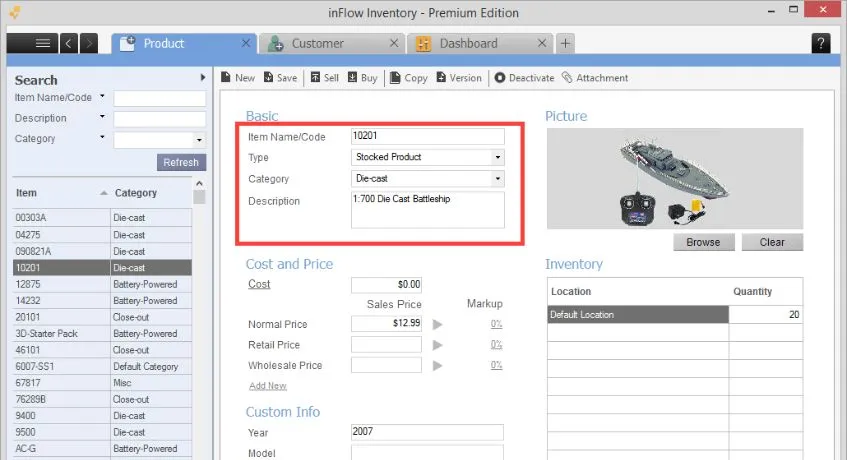
inFlow Inventory is an inventory management software with manufacturing capabilities designed to help businesses manage stock, purchasing, sales, and product assembly.
The platform supports manufacturers in tracking materials and finished products throughout assembly and production. Businesses can create BOMs, manage manufacturing orders, and monitor the inventory consumed during production. Below here are the features to optimizing manufacturing process:
Manufacturing and Assembly: Manage production and assembly activities while updating inventory automatically.
Bill of Materials: Specify the materials and components required to build a product.
Production Order Tracking: Monitor manufacturing orders and their completion status.
Inventory Tracking: Track stock quantities, movements, and product availability.
Pros
Cons
Interface is designed for businesses that want a more straightforward inventory solution.
Barcode and multi-location features can support daily warehouse operations.
Larger enterprises may require broader ERP and supply chain capabilities.
inFlow Inventory Pricing: Pricing starts at ₱11.672,06 ($186)/month, you can contact the team for more detailed information.
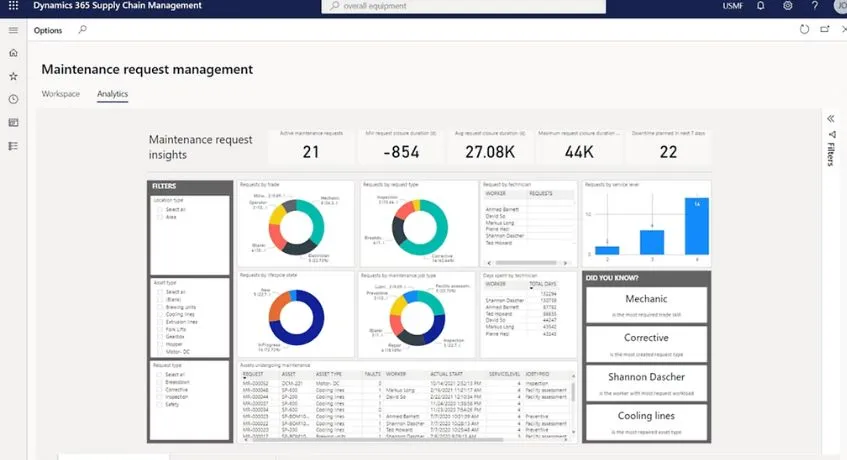
Microsoft Dynamics 365 Supply Chain Management is an enterprise supply chain and manufacturing management software that helps businesses manage inventory, production, procurement, warehouse operations, and demand planning.
Dynamics 365 also supports different manufacturing approaches, making it suitable for businesses with more complex production structures. Its integration with the wider Microsoft ecosystem can further connect supply chain information with other business processes. Some of its key features include:
Advanced Inventory Management: Monitor inventory levels, movements, availability, and requirements across operations.
Material Requirements Planning: Calculate material requirements based on demand, supply, inventory, and production schedules.
Production Order Tracking: Monitor manufacturing orders and production progress across different stages.
Pros
Cons
Provides extensive manufacturing, inventory, and supply chain functionality.
Designed to support businesses with complex and large-scale operations.
Require significant implementation and configuration for complex organizations.
Microsoft Dynamics 365 Pricing: Approximately starts at ₱3.137,73 ($50)/user/month, there’s available free trial.
Inventory management in ERP software connects stock data with purchasing, production, sales, and accounting. This helps businesses improve inventory accuracy and coordinate operations more effectively. Here are the benefits of the software:
1. Real-Time Visibility Across Departments
ERP software centralizes inventory data, allowing teams to check stock levels, incoming supplies, and allocated items in one system. This improves coordination between purchasing, warehouse, production, and sales teams.
2. More Accurate Stock Control
ERP systems record receipts, transfers, material usage, and outgoing orders. These records help businesses identify discrepancies, reduce inventory errors, and maintain more reliable stock levels.
3. Improved Operational Efficiency
Automated data entry, barcode scanning, and reorder alerts reduce repetitive tasks. Employees can spend less time updating records and more time managing important operational activities.
4. Reduced Inventory Costs
ERP software helps identify excess stock, slow-moving items, and potential shortages. These insights support better purchasing decisions, lower storage costs, and reduced inventory waste.
5. Better Production Planning
Manufacturers can connect inventory data with bills of materials (BOMs), production orders, and material requirements planning (MRP). This helps identify material shortages early and keep production schedules on track.
6. Quality Control and Traceability
Features such as batch, lot, and serial number tracking help businesses trace materials and finished goods. These records support quality investigations, product recalls, and applicable compliance requirements.
7. Improved Customer Satisfaction
Accurate stock information helps teams confirm product availability and provide more realistic delivery estimates. Better inventory coordination can reduce order delays and improve fulfillment reliability.
Challenges of Manufacturing Inventory Management
Manufacturers face several inventory challenges that can affect production schedules, operating costs, and order fulfillment. Here are some of the challenges of manufacturing inventory management, so the team can avoid the mistake:
Inaccurate stock records: Manual updates and missed transactions can create discrepancies between recorded and actual inventory.
Material shortages: Delayed supplier deliveries or poor demand planning can interrupt production.
Excess inventory: Over-purchasing ties up working capital and increases storage costs.
Limited inventory visibility: Disconnected systems make it harder to monitor stock across warehouses and production facilities.
Production waste: Poor material planning can lead to unused components, expired materials, or excess finished goods.
AI and the Future of Inventory Management Software
While traditional systems help address basic operational hurdles, artificial intelligence is taking inventory management a step further. By moving from reactive problem-solving to predictive planning, AI transforms how manufacturers navigate the industry challenges.
Demand forecasting: AI analyzes historical sales and demand patterns to estimate future inventory needs.
Predictive replenishment: AI-powered insights help identify when materials may need replenishment based on demand and lead times.
Anomaly detection: Systems can flag unusual stock movements or inventory discrepancies for further review.
Smarter production planning: AI can help evaluate material availability and production requirements to support scheduling decisions.
Warehouse optimization: AI-assisted tools can help improve picking routes, stock placement, and warehouse workflows.
Data-driven decisions: AI-powered reports help managers identify trends and evaluate inventory performance more efficiently.
AI recommendations still depend on reliable data and appropriate system configuration. Businesses should review important recommendations before making purchasing or production decisions.
How to Choose the Right Solution for Your Business
Choosing the right manufacturing inventory software is not only about having many features. It should fit your actual productionprocess, inventory needs, and business operations. These are some of the tips to get the right solutions:
Fits Manufacturing Process: Make sure the software supports your production model, including multiple BOM levels, subcontracting, batch production, or make-to-order workflows.
Supports Philippine Operations: Consider whether the software can handle operations across Luzon, Visayas, and Mindanao, especially when suppliers and warehouses are located in different regions.
Supports Demand Changes: Look for tools that help adjust inventory and production plans based on changing customer demand and seasonal requirements.
Provides Accurate Inventory Data: Real-time stock visibility can help teams make faster decisions about material availability, production, and replenishment.
Matches Your Budget: Consider not only the software subscription but also implementation, customization, integrations, training, support, and future expansion costs.
Can Grow With Your Business: Choose a solution that can support additional users, warehouses, products, production lines, and business processes as your manufacturing operations expand.
In Conclusion
Manufacturing inventory management software can make a major difference when production depends on accurate material availability and timely inventory decisions. Moreover, the right system can connect every producing process and warehouse activities accurately.
Keep in mind that there is no single best manufacturing inventory software for every Philippine business. For example, a smaller manufacturer may prefer a focused MRP and inventory platform, while the others need different requirements.
Among the options, ScaleOcean Atlas for manufacturing is worth considering if your business wants an integrated manufacturing ERP with inventory, production planning, procurement, warehouse management, costing, and demand forecasting capabilities.
If you are evaluating manufacturing inventory software for your business, schedule a consultation with the ScaleOcean team to discuss your manufacturing workflows, inventory challenges, and the solution configuration that best fits your requirements.
FAQ:
1. What is the best inventory management software for manufacturing?
The best inventory management software for manufacturing depends on your production process, inventory needs, budget, and business size. Key features include real-time tracking, BOMs, production orders, reorder automation, and multi-warehouse management.
2. How does manufacturing inventory software improve production?
It connects inventory data with production activities, helping manufacturers monitor material availability, track production orders, and coordinate purchasing with production requirements.
3. Is ScaleOcean Atlas suitable for manufacturing inventory management?
ScaleOcean Atlas for Manufacturing connects inventory with production, procurement, warehouse, sales, accounting, and other business operations. It also includes ScaleMind AI for AI-powered operational insights.













 Key Takeaways