Quality control software for manufacturing is one of the processes for maintaining consistent product quality. Usually, this step focuses on managing inspections, defects, quality records, and corrective action in the system.
Having these activities digitally organized enables quality teams to work more efficiently and respond to issues faster. In the Philippines, implementing digital quality control can optimize manufacturing processes and make daily work easier for manufacturers.
However, it’s not as straightforward as one might imagine to choose the right system for the manufacturing. In this article, you’ll know how to select the most appropriate platform to achieve greater visibility of the production situation and to maintain consistent product quality.
Manufacturing quality can be affected by many factors, including raw-material variations, operator errors, supplier issues, and changes in production processes. Without centralized quality data, identifying the source of a problem can take more time.
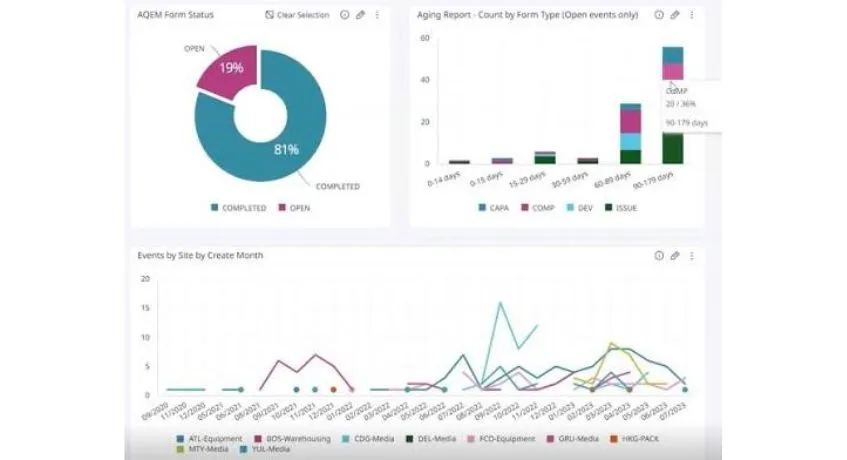
Quality control software gives teams a clearer view of what happens during production. Quality information, including inspection results, non-conformities, CAPA, and more can be recorded and reviewed from a central platform.
In addition, for manufacturers in the Philippines, quality control software can help in achieving more streamlined quality-management and compliance procedures. Specific requirements are dependent on industry, product and market.
Compliance with appropriate product standards and certification criteria, customer specifications, and industry regulations may be required for businesses. In addition to applicable FDA requirements, manufacturers of FDA-regulated products must meet the requirements of this Act.
Why is Quality Control Software Important for Manufacturing Businesses?
The Philippine manufacturing sector continues to play an important role in the country’s economy. The manufacturing sector added 2.5% to the country’s annual GDP growth in 2025, and several manufacturing industries had better performance over the year.
Furthermore, this expansion motivates factories to keep their product quality stable, as the number of products made, product variations, and operational needs are growing. Quality control software can offer a number of advantages to businesses seeking to scale up and uphold the same quality:
Fewer manual errors: Digital forms eliminate repetitive data entry and paperwork.
Faster issue detection: Teams can identify defects and nonconformities earlier.
Better traceability: Quality records can be linked to products, batches, material or production process.
More consistent inspections: Standardized checklists help teams follow the same quality procedures.
Simpler corrective actions: Issues can be assigned, monitored, and followed through to resolution.
Improved reporting: Managers are able to check on trends in quality and identify problems that occur regularly.
Improved audit preparation: Centralized records simplify retrieval of important quality documents.
The Key Features of Manufacturing Quality Control Software
There are several platforms that offer certain features to support the manufacturing process. However, manufacturers should focus on capabilities that match their production processes and quality requirements. Here are some features to take into consideration:
Quality Inspections and Documentation: Helps teams conduct standardized inspections using digital forms while managing SOPs, inspection methods, specifications, quality policies, and audit records in one place.
Nonconformance Management: Keeps records and monitors products or materials that do not meet quality standards, making it easier to investigate issues.
Corrective and Preventive Actions (CAPA): Supports teams to document CAPA and to track corrective actions until they are resolved and assign responsibility.
Statistical Process Control (SPC): Uses statistical methods to monitor production processes, identify variations, and detect potential quality issues before they lead to defects.
Quality Analytics and Reporting: Quality KPIs, including defect rates, inspection results etc. to help teams identify common issues and areas for improvement.
Traceability: Relates quality information to products, batches, materials, lots and production activities to improve product tracking.
Integration with Manufacturing Systems: Integrates quality data with ERP, MES, inventory, procurement and production systems to eliminate data silos and duplicate data entry.
The 10 Best Quality Control Software for Manufacturing in The Philippines
There are different types of quality platforms available, from dedicated QMS solutions to broader manufacturing systems with built-in quality capabilities. Here are 10 ideas for manufacturing businesses in the Philippines:
Software
Key Strength
Best for
ScaleOcean Atlas
Integrated manufacturing ERP with AI-powered recommendations
Manufacturers needing connected production and business operations
MasterControl Quality Excellence
Cloud-based QMS with strong quality documentation and workflows
Broad QMS covering CAPA, audits, risks, and supplier quality
Manufacturers with complex quality processes
Mitti by SafetyCulture
Mobile-first inspections and quality management
Teams moving from paper-based quality checks
GoAudits
Simple digital inspections and audit management
Manufacturers digitizing routine quality checks
ComplianceQuest
Combines quality, risk, and compliance management
Businesses needing broad QMS and compliance capabilities
UniPoint
Manufacturing-focused QMS with ERP integration
Manufacturers connecting quality with existing business systems
1Factory
Specialized inspection, SPC, FAI, and PPAP tools
Precision and measurement-driven manufacturers
Plex Systems
Connects manufacturing management with quality processes
Manufacturers needing integrated production and quality management
Veeva QMS
Life sciences-focused quality and regulatory management
Pharmaceutical and biotechnology manufacturers
1. ScaleOcean Atlas for Manufacturing
Manufacturers typically control multiple production, inventory, procurement and quality control processes. If these activities are in separate systems, it is more difficult to monitor production problems and to control quality.
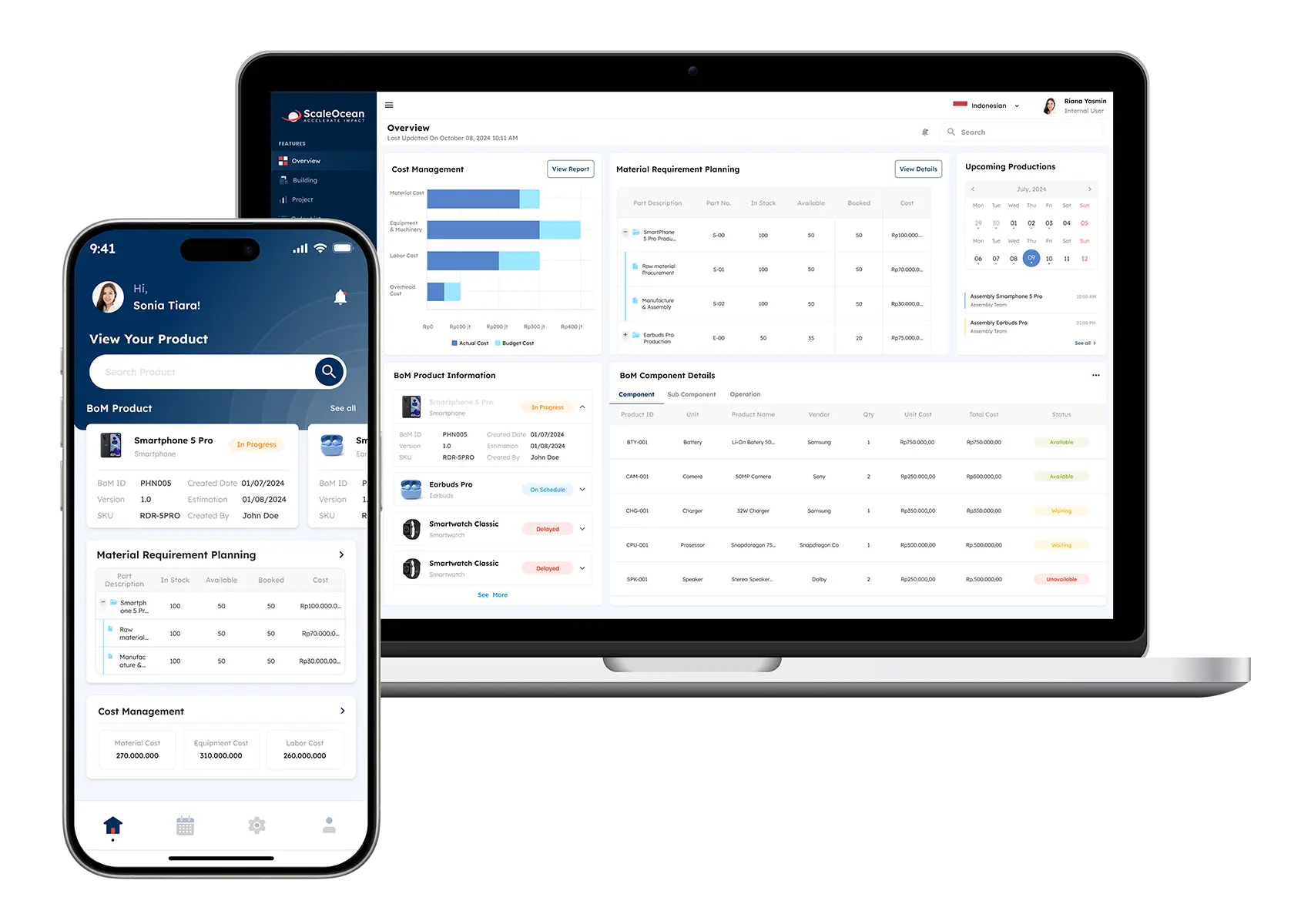
To overcome this, ScaleOcean Atlas for manufacturing integrates manufacturing operations on a single platform. It integrates production planning with inventory, procurement, warehouse, production, sales, accounting and reporting, providing greater visibility throughout the production process.
The platform also includes ScaleMind, an AI-powered assistant that can provide recommendations based on business and production data. This can facilitate management in recognizing patterns of operations and making better decisions.
For manufacturers in the Philippines, an integrated system can be particularly useful when quality issues are connected to material availability, production planning, inventory levels, or supplier performance.
Businesses can also schedule a consultation with our experts to explore how ScaleOcean Atlas can support their manufacturing operations. Some of its key features include:
Production Planning: Helps organize production schedules, resources, and manufacturing activities based on operational requirements.
BOM Management: Manages bills of materials to provide accurate visibility into the materials and components needed for production.
Smart MRP: Supports material planning by considering production requirements, inventory levels, and purchasing needs.
Manufacturing Cost Management: Tracks production-related costs to help businesses monitor expenses and calculate product costs.
Inventory and Warehouse Integration: Connects production with inventory and warehouse activities for better material and stock visibility.
ScaleMind AI: Provides AI-powered recommendations based on operational data to support manufacturing decisions.
Pros
Cons
Integrates manufacturing with inventory, warehouse, procurement, accounting, sales, and other business processes.
Includes production planning, BOM, MRP, and manufacturing cost management.
Equipped with ScaleMind AI to provide data-driven operational recommendations.
May be more suitable for businesses looking for an integrated ERP rather than a standalone quality management system.
ScaleOcean Atlas Pricing: Pricing is quote-based and depends on the modules, users, integrations, and business requirements. You can contact the ScaleOcean team for pricing details.
Master Control Quality Excellence is a cloud-based QMS built to help manufacturers manage quality processes and documentation. It brings workflows, quality events, and compliance activities into one platform.
Moreover, for manufacturers handling strict documentation requirements, the system can make quality records easier to manage and keep accessible. Here are some of the features include:
Quality Event Management: Tracks issues and quality events from identification to resolution.
Document Management: Organizes controlled quality documents and records.
Electronic Workflows: Automates quality-related tasks and approvals.
Compliance Management: Supports processes related to quality and regulatory requirements.
Pros
Cons
Supports electronic quality workflows and documentation.
Suitable for regulated manufacturing environments.
Maybe more than smaller manufacturers need for basic quality inspections.
MasterControl Quality Excellence Pricing: Approximately starts at ₱62.640,00 ($1000)/month. Contact the MasterControl team for pricing details.
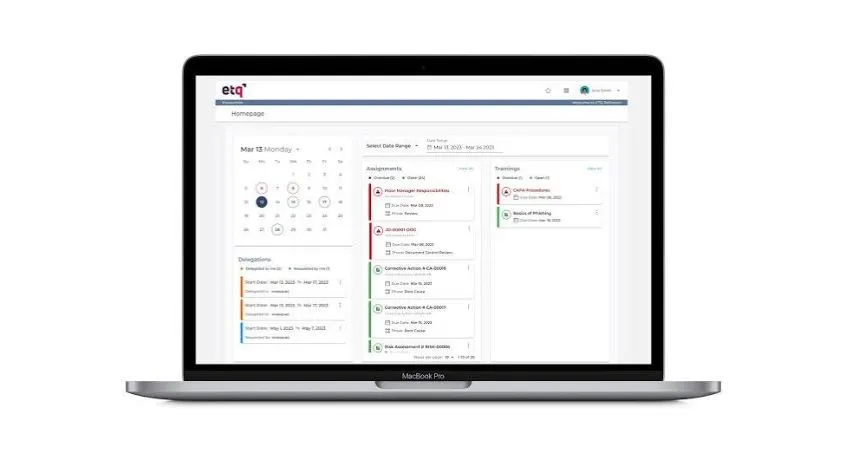
ETQ Reliance, or now known as Octave Reliance, provides a broad quality management system for manufacturers that need to manage quality across different operations and locations. Its modular approach allows businesses to focus on the quality processes most relevant to them.
Further, it covers areas such as audits, CAPA, non-conformances, supplier quality, and risk management. Here are some features of ETQ Reliance to enhance checking products quality:
CAPA Management: Tracks corrective and preventive actions.
Nonconformance Management: Records and manages quality issues.
Audit Management: Helps organize audits, findings, and follow-up actions.
Pros
Cons
Offers a broad range of QMS capabilities.
Supports supplier and quality risk management.
Its extensive functionality may require more implementation planning.
ETQ Reliance Pricing: Pricing is quote-based and varies based on the selected modules and business requirements, contact the team for further pricing details.
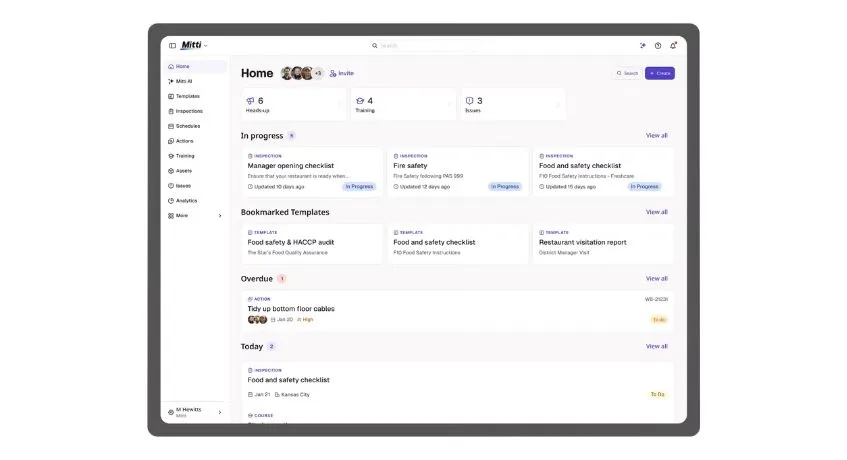
Mitti by SafetyCulture focuses on making quality management easier to handle on the factory floor. Its mobile-first approach allows employees to complete inspections, report issues, and follow up on corrective actions from their devices.
This makes it a practical option for manufacturers moving away from paper-based quality checks. Below here are some of the features of Mitti by SafetyCulture to maintain consistent products’ quality:
Digital Inspections: Replaces paper checklists with digital quality inspections.
Issue Tracking: Records problems and assigns follow-up actions.
Mobile Access: Allows teams to complete checks directly from the production floor.
Quality Reporting: Provides visibility into inspection results and recurring issues.
Pros
Cons
Easy access from mobile devices.
Simplifies inspections and quality checklists.
Businesses needing a broader ERP may require additional systems.
Mitti Pricing: Starting price at ₱1.818,78 ($29)/month, you can contact the team for further information about the pricing details.
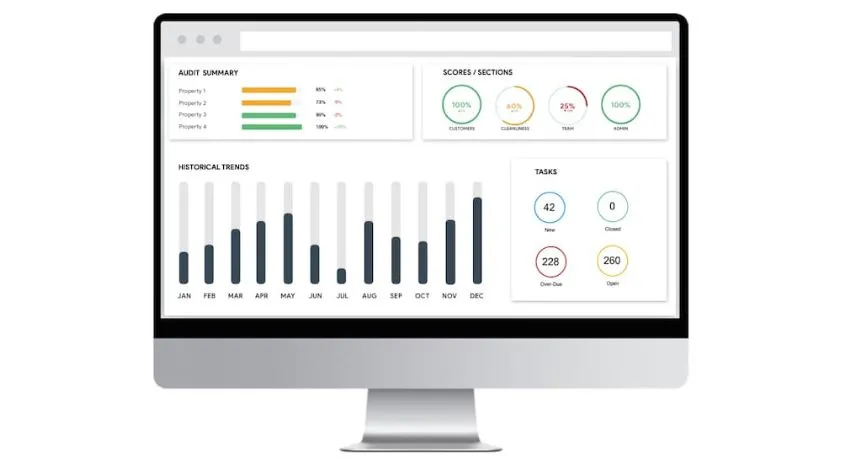
GoAudits is designed around inspections and audits, making it useful for manufacturers that want to digitize routine quality checks. Teams can use mobile devices to complete inspections, capture findings, and generate reports. The features include:
Digital Checklists: Creates standardized inspection forms.
Mobile Inspections: Allows employees to complete checks from mobile devices.
Audit Management: Organizes audits and tracks findings.
Automated Reports: Turns inspection results into structured reports.
Pros
Cons
Simple approach to digital inspections.
Supports mobile quality checks.
Focuses more on inspections and audits than full manufacturing management.
GoAudits Pricing: Starts at approximately ₱751,02 ($12) per user per month when billed annually. Higher plans are available.
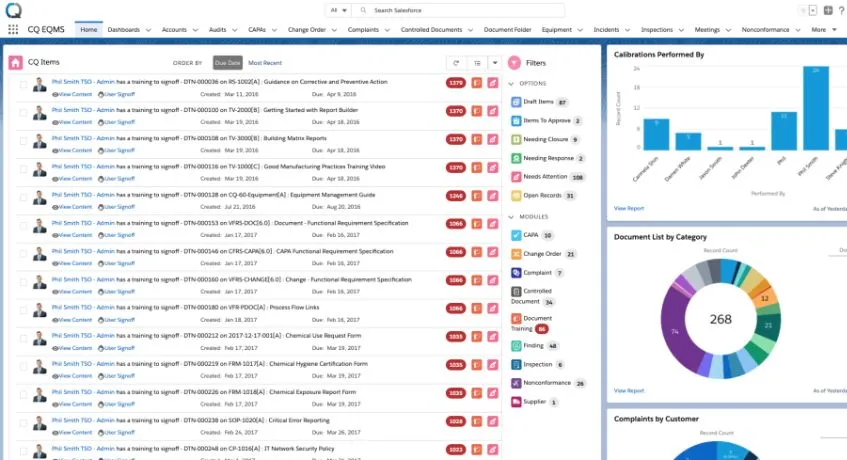
ComplianceQuest combines quality, risk, and compliance management in one cloud-based platform. Its QMS covers processes such as CAPA, audits, complaints, supplier quality, and risk management. Here are some of the features include:
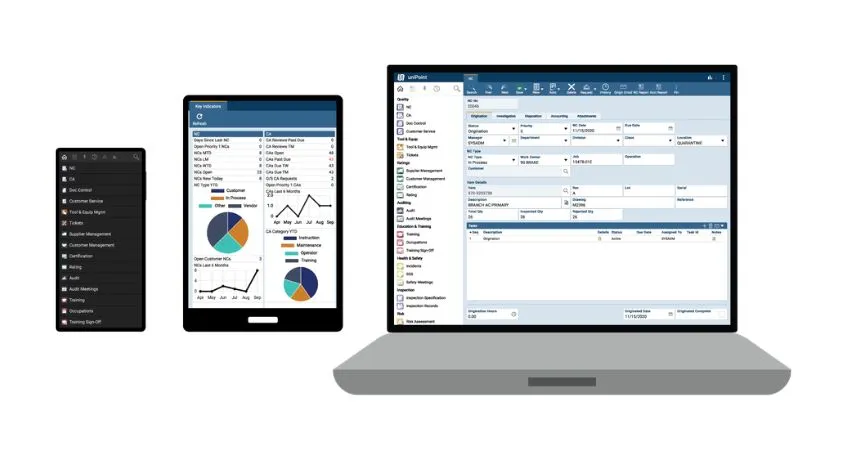
UniPoint is an enterprise QMS designed with manufacturing operations in mind. It helps teams manage inspections, audits, corrective actions, and quality documentation while connecting quality activities with ERP systems. The Key features include:
Inspection Management: Records and tracks inspection results.
Corrective Actions: Manages quality issues and follow-up activities.
Audit Management: Organizes audit processes and findings.
ERP Integration: Connects quality information with business systems.
Pros
Cons
Designed specifically for manufacturing environments.
Supports ERP integration.
May require implementation support for more complex deployments.
UniPoint Pricing: Base pricing starts around ₱375.816,00 ($6,000.00,) you can contact the team for pricing details.
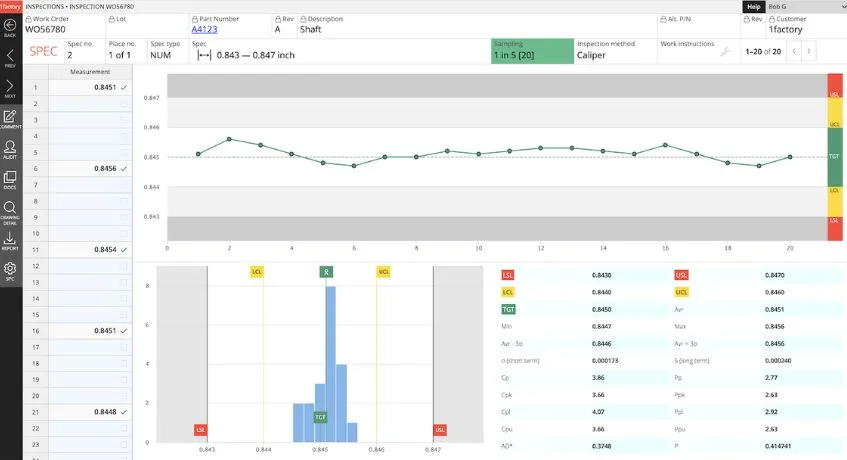
1factory focuses on manufacturing quality control, particularly inspection, and measurement processes. It supports tools such as SPC, First Article Inspection, PPAP, and inspection planning.
Therefore, its capabilities make it relevant for manufacturers where precise measurements and production specifications are a major part of quality control. Here are the features of 1Factory:
SPC: Helps monitor process variation and quality data.
FAI: Supports First Article Inspection processes.
PPAP: Helps manage production part approval processes.
Inspection Planning: Organizes inspection requirements and activities.
Pros
Cons
Strong focus on manufacturing quality control.
Supports FAI, PPAP, and SPC.
More specialized than general-purpose manufacturing ERP platforms.
1factory Pricing: Starting at approximately $75/user/month.
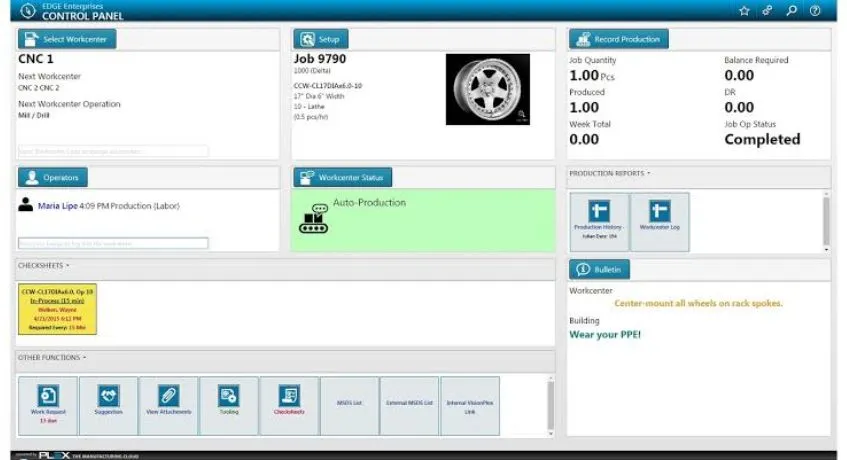
Plex Systems combines manufacturing management with quality capabilities. Its QMS supports in-line quality, audits, CAPA, supplier quality, document control, and traceability.
Because quality information can connect with manufacturing activities, it can help teams monitor quality closer to the production process. Below here are the features to maximize quality control process of Plex Systems:
In-Line Quality: Supports quality checks during production.
Traceability: Tracks products, materials, and production information.
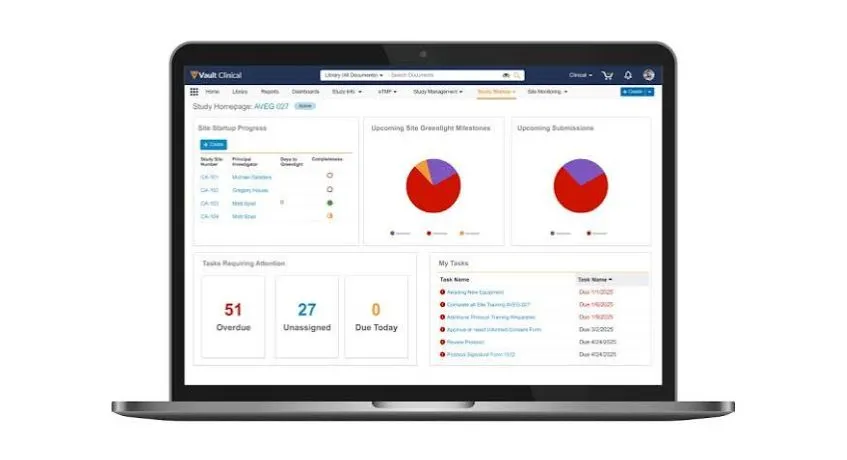
Veeva QMS is built pxrimarily for life sciences organizations, including pharmaceutical and biotechnology manufacturers. It supports quality processes such as deviations, complaints, audits, CAPA, change control, and supplier quality.
For highly regulated manufacturers, its focus on life sciences quality processes can be particularly relevant. Here are the features of Veeva to enhance the quality of the products:
Deviation Management: Records and manages deviations from established procedures.
CAPA: Tracks corrective and preventive actions.
Change Control: Manages changes to products, processes, and documents.
How Do You Choose the Best Manufacturing Quality Control Software?
<p>The right software depends on the size of the manufacturing operation, production complexity, regulatory requirements, and existing technology. Below are the factors to consider before making a decision:
1. Define Your Quality Requirements
Start by identifying the quality processes that need improvement. These could include inspections, defect tracking, supplier quality, audits, CAPA, document control, or product traceability, such as:
Inspection and defect tracking.
Supplier quality management.
Audits and corrective/preventive action (CAPA).
Document control and product traceability.
2. Consider Your Industry
Secondly, different industries have different quality requirements. Especially for manufacturers in the Philippines, it’s essential to understand the industry of your business. Here are some of the manufacturers industries that should follow local regulations:
Food and Pharmaceutical: GMP compliance, batch traceability, and validation records.
Electronics and Automotive: Statistical process control (SPC) and defect-rate tracking.
Less Regulated Sectors: Lighter documentation needs and more flexibility in workflow design.
3. Check Integration Capabilities
Look for software that can connect with your ERP, MES, inventory, procurement, or other existing systems. Integration can reduce duplicate data entry and provide a more complete view of operations.
4. Evaluate Ease of Use
Quality software is only useful when employees actually use it. Choose an interface that operators, inspectors, supervisors, and quality managers can understand without excessive training.
5. Review Reporting and Analytics
Check whether the system can provide the KPIs your quality team needs. Common metrics include defect rates, inspection completion, nonconformance trends, supplier quality, and corrective action status.
6. Consider Scalability
Your quality requirements may grow as production volume and facility count increase. Choose a platform that can support additional users, production lines, locations, products, and workflows.
7. Assess Local Business Needs
For Philippine manufacturers, consider how the software will support documentation, audits, product traceability, and industry-specific requirements. Also check implementation support, training, data migration, and after-sales service.
8. Compare Total Costs
Software costs are not limited to the subscription or license fee. Consider implementation, customization, integration, training, maintenance, and additional modules when estimating the total investment.
In Conclusion
Quality control is no longer limited to checking finished products at the end of production. Manufacturers need visibility throughout the process, from incoming materials and production activities to final inspections and corrective actions.
The right quality control software for manufacturing can help Philippine businesses standardize inspections, improve traceability, organize quality records, and make decisions based on reliable production data.
For businesses that want quality management connected with broader manufacturing operations, ScaleOcean Atlas for manufacturing provides an integrated approach covering production, inventory, procurement, warehouse operations, sales, accounting, and reporting. Its modular approach can also be tailored to different manufacturing requirements rather than relying on a one-size-fits-all setup.
To understand how ScaleOcean Atlas can fit your manufacturing processes, you can explore ScaleOcean’s manufacturing ERP solution or schedule a consultation with the ScaleOcean team to discuss your operational and quality management needs.
FAQ:
1. What is the best software for quality control in manufacturing?
The right quality control software depends on your industry, regulatory requirements, production scale, and integration needs. Manufacturers can consult the ScaleOcean team to find a solution that fits their quality management processes.
2. What is QC in manufacturing?
QC, or quality control, refers to the processes used to inspect, test, and monitor products during manufacturing. Its purpose is to ensure products meet defined quality standards and minimize defects.
3. What are the four main types of quality in manufacturing?
The four main types are Incoming Quality Control, In-Process Quality Control, Final Quality Control, and Outgoing Quality Control. Each stage checks quality at a different point in the manufacturing processes.











 Key Takeaways