

Bid construction software is a digital tool that helps contractors manage bidding processes more accurately. This tool deliberately helps contractors who still face challenges when preparing project bids manually. These issues can make it harder to compete in large projects.
As construction projects in the Philippines continue to grow, companies need digital solutions that simplify estimating, proposal creation, or bid tracking. By using the right software, contractors can improve bid accuracy and increase the chances of winning profitable projects.
 Key Takeaways
- Construction bidding software is a digital solution that helps contractors manage bid preparation, cost estimation, and tender tracking more efficiently.
- Construction bidding software is important because it’s improving bid accuracy, reducing manual work, accelerating tender preparation, and enhancing project collaboration.
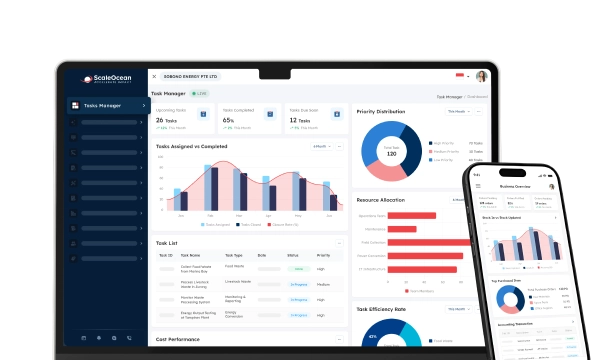
- ScaleOcean Atlas for Construction Bidding helps construction companies improve bidding accuracy, budgeting, procurement, and project management through one integrated platform.
What is Construction Bidding Software?
Construction bidding software is a digital solution to prepare, manage, and submit project bids instantly. This software simplifies the bidding process with organizing cost estimates, material pricing, labor calculations, and proposal documents into one integrated system.
In construction projects, bidding is one of the most important initial steps of a construction project. Manual bidding methods require many documents such as spreadsheets and calculations. However, these works can lead to human-error that could delay the process.
Moreover, construction bid software helps automates these tasks to improve speed and accuracy. Whether for private developments or government infrastructure projects, contractors need accurate and professional bid preparation to secure contracts successfully.
Why is Construction Bidding Software Important?
Relying only on manual methods during construction projects can slow down the preparation and increase the risk of errors. However, if you want to maximize the construction process easily, you can use bidding software.
In the Philippines, construction procurement and public infrastructure bidding are regulated under Republic Act No. 9184 – Government Procurement Reform Act. This regulation emphasizes transparency and standardized bidding procedures for government projects.
Because of these requirements, many contractors use construction bidding software to organize tender documents, improve cost estimation accuracy, and manage bidding processes more efficiently. Here are several reasons why this software is important:
- Improves Bid Accuracy: One of the reasons is the software helps reduce manual calculation. This tool helps automation of cost estimations, labor rates, and material pricing.
- Saves Time: Second, bid software helps prepare bids efficiently. Usually, manual bidding takes time, thus this software preparation is faster.
- Centralizes Information: Third, bid software can organize documents and project specifications in one system. This makes collaboration easier between teams.
- Enhances Competitiveness: Not only organizing, this software also increases accuracy. It increases the chances of winning projects while helping contractors respond to tenders faster.
- Supports Better Decision-Making: Therefore, bid construction software provides better visibility into project costs and resource allocation. This helps management make strategic decisions.
- Reduces Administrative Work: Bid construction software also reduces administrative work. It minimizes repetitive tasks such as updating spreadsheets and generating documents manually.
Types of Construction Bidding Software
Construction bidding software comes in different types depending on business needs and project complexity. Understanding these categories helps contractors choose the most suitable solution. Here are types of bidding systems within the construction management software:
- Standalone Bidding Software: The first type focuses specifically on bid preparation and cost estimation. It is commonly used by small to medium-sized contractors that need bidding functionality without broader tools.
- Cloud-Based Construction Bidding Software: This type allows teams to access project data from anywhere using the internet. This is also useful for construction companies managing multiple job sites across different locations in the Philippines.
- Integrated Construction ERP Software: The third type is Integrated systems that combine bidding, procurement, & accounting into one platform. This solution is ideal for growing contractors that need complete operational visibility.
- Takeoff and Estimating Software: In the fourth type, it specializes in digital quantity takeoffs and material estimation. Usually, people use it to calculate project quantities directly from blueprints.
- Subcontractor Bid Management Platforms: The fifth type is to help contractors communicate with subcontractors, distribute invitations to bid, and compare quotations more efficiently.
Features of Bid Construction Software
Bid construction software includes various features that help contractors simplify project bidding processes and improve efficiency. Here are some features that software bid construction project managers should consider:
- Cost Estimation Tools: The software automates labor, material, equipment, and subcontractor cost calculations for more accurate budgeting.
- Digital Takeoff: Users can measure project quantities directly from digital plans and drawings, reducing manual measurement errors.
- Bid Proposal Management: The system helps create professional proposals, quotations, and tender documents faster.
- Document Management: All project files, contracts, specifications, and bid documents are organized in one centralized platform.
- Collaboration Features: Project teams can work together in real time, improving communication between estimators, project managers, and subcontractors.
- Bid Tracking: Contractors can monitor bid statuses, submission deadlines, and project opportunities more effectively.
- Reporting and Analytics: The software provides insights into project profitability, bid performance, and cost trends to support decision-making.
- Integration Capabilities: Many solutions integrate with accounting systems, ERP platforms, scheduling tools, and procurement software for smoother workflows.
How We Evaluated the Best Construction Bidding Software
The best construction bidding software can vary depending on the construction type, workflow, or budget. To create this comparison, we considered the capabilities that contractors commonly need during the bidding and preconstruction stages. The software was evaluated based on:
- Bid Management: Ability to organize bid invitations, submissions, and bid activities. This helps teams keep all bidding activities organized in one place.
- Estimating and Takeoff: Tools for calculating quantities, labor, materials, and project costs. It can reduce manual calculations and support more accurate bids.
- Bid Leveling: Ability to compare proposals and identify differences in cost or scope. This includes identifying differences in pricing, scope, materials, labor, and other costs before selecting a bid.
- Subcontractor Management: Features for coordinating subcontractors and managing proposals. This is useful when managing multiple subcontractors for one or more projects.
- Project Management: Capabilities that connect bidding with project planning and execution. It’s allowing contractors got comprehensive information’s of the bidding processes.
- Integration: Connections with accounting, procurement, inventory, or other construction workflows. Moreover, it can reduce duplicate data entry and improve information between departments.
- Scalability: Suitability for businesses with different project sizes and operational requirements. A scalable solution should remain useful as contractors take on larger or more complex projects.
10 Best Construction Bidding Software
Choosing the right construction bidding software can help contractors improve bid accuracy, and streamline project management. Below are some of the best construction bidding software solutions that can support construction companies:
| Software | Key Strength | Best For |
|---|---|---|
|
ScaleOcean Atlas |
Integrated construction ERP with project, budget, procurement, resource, and accounting management |
Medium to large construction companies needing end-to-end project management |
|
Procore |
Allows project collaboration, document control, and financial tracking |
Large and complex construction projects |
|
Buildertrend |
User-friendly bidding, scheduling, budgeting, and customer communication |
Residential builders, remodelers, and home builders |
|
BuildingConnected |
Efficient bid management and subcontractor coordination |
Contractors managing multiple subcontractors and bids |
|
STACK |
Digital quantity takeoff and construction cost estimating |
Estimators and contractors preparing commercial project bids |
|
Contractor Foreman |
Affordable construction management with estimating, scheduling, finance, and document tools |
Small to medium-sized contractors |
|
Archdesk |
Integrated construction ERP connecting estimating, procurement, finance, and project operations |
Growing construction companies seeking ERP integration |
|
PlanSwift |
Digital takeoff and estimating with easy drag-and-drop tools |
Estimators looking to simplify quantity takeoffs and bidding |
|
SmartBid |
Bid invitation, subcontractor management, and proposal tracking |
Contractors managing multiple subcontractors and tenders |
|
PlanHub |
Bid opportunity discovery and contractor-subcontractor networking |
Contractors looking to find more project opportunities |
1. ScaleOcean Atlas for Construction Bidding
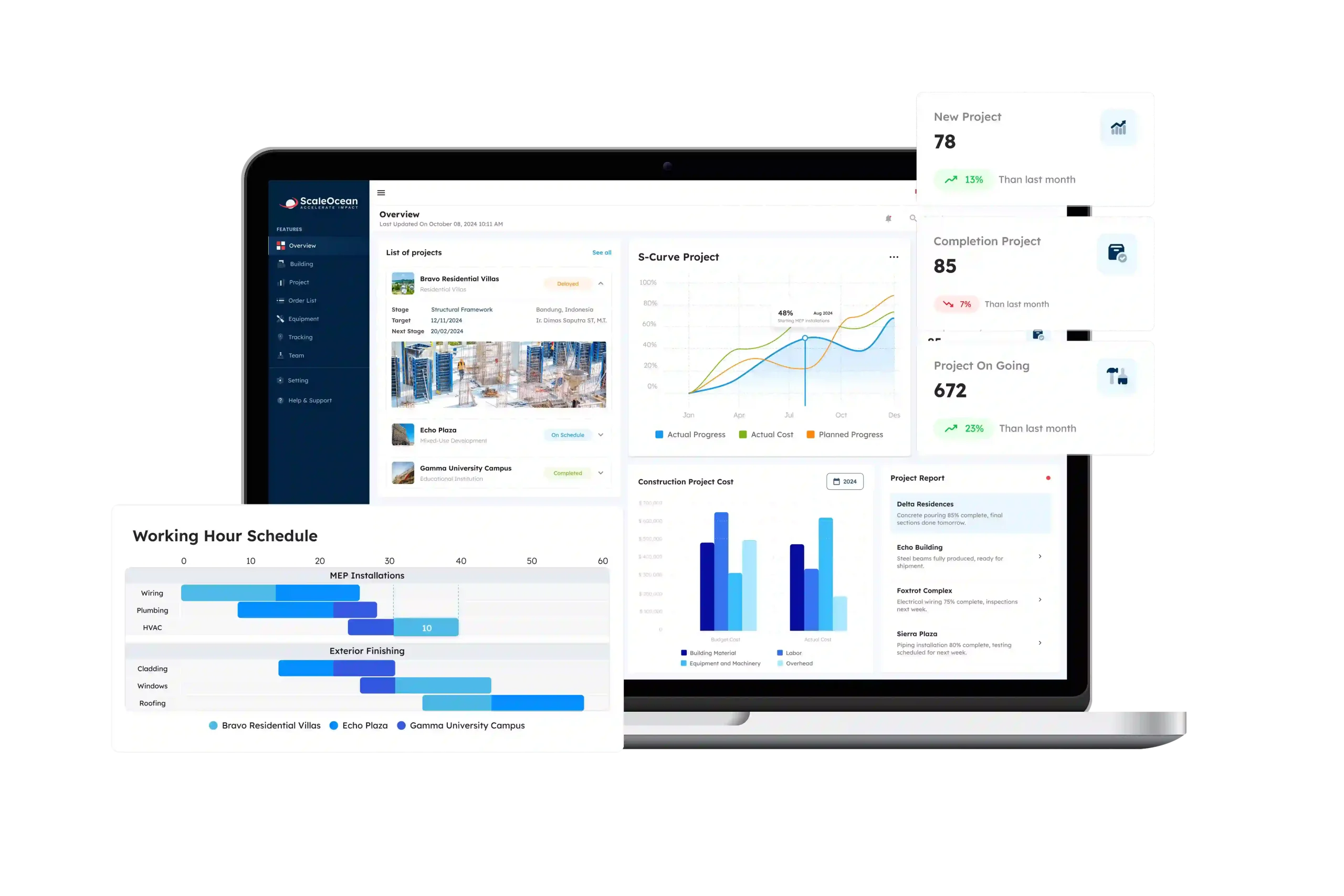
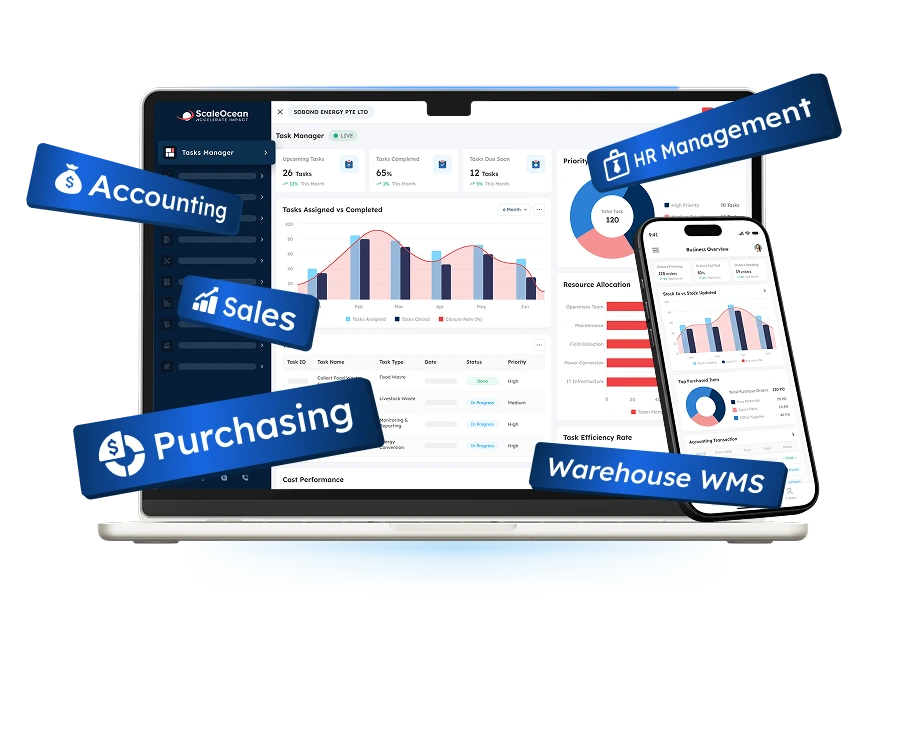
ScaleOcean Atlas for Construction is a construction ERP solution for the construction industry. The software helps contractors manage projects by automating the process such as tendering, contracts, procurement, and material management in real time.
Moreover, ScaleOcean Atlas is built to improve project visibility, cost control, and operational efficiency. It is related to its advantages, which is an integrated ERP system, which connects construction operations with accounting, asset management, and procurement within one platform.
This integration helps contractors streamline workflows and reduce operational silos between departments. Furthermore, the system is suitable for contractors handling residential, commercial, and infrastructure projects in the Philippines that require better project coordination.
Companies can also schedule a consultation before implementation to better understand how the software supports construction project management. Here are some the features:
- Tender and Project Management: ScaleOcean Atlas centralized project and tender management to improve bidding processes and increase project win rates through accurate budgeting.
- Budget and Progress Tracking: Another important feature is progress tracking. It offers real-time monitoring of project expenses and budgets to help ensure projects stay on track.
- Automated Procurement: Not only tracking, ScaleOcean Atlas also automates material and equipment purchasing processes to reduce delays and improve procurement efficiency.
- Resource Management: The fourth important feature is managing resources efficiently. ScaleOcean Atlas helps optimize labor and equipment allocation across multiple construction projects.
- Integrated ERP System: Last but not least, ScaleOcean Atlas connects construction operations with accounting, procurement, inventory, & asset management in one platform. Thus, it helps centralize the project’s requirements across departments.
| Pros | Cons |
|---|---|
|
|
- ScaleOcean Atlas Pricing: Custom pricing based on business requirements. Companies can contact ScaleOcean teams for a tailored quotation.
- ScaleOcean Atlas Capterra Rating: 5.0/5
2. Procore
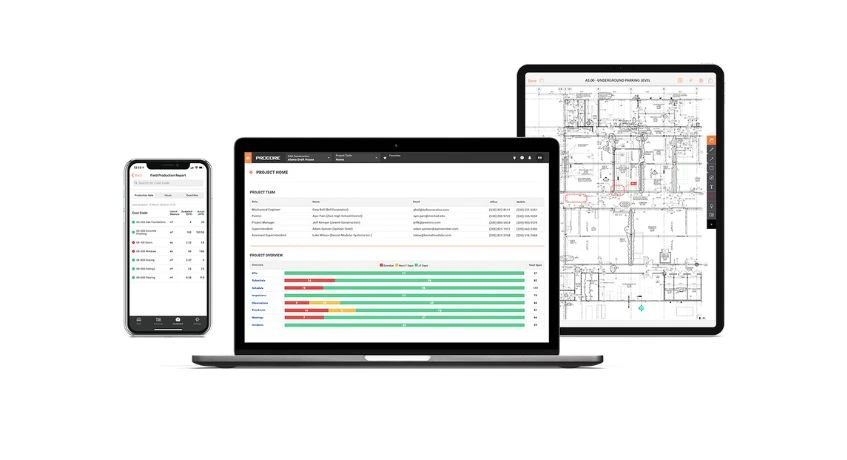
Procore is a construction management platform used by contractors for handling large-scale projects. The software is designed to improve coordination between project teams, subcontractors, and stakeholders.
Besides bidding management, Procore also supports document control, financial tracking, scheduling, and communication processes within one cloud-based system. Moreover, its cloud-based accessibility allows teams to monitor projects in real time.
- Project Documentation Management: One of the most important features of Procore is document control. This software helps organize documents, contracts, and reports to improve accessibility.
- Budget Tracking and Financial Monitoring: Also, Procore provides real-time visibility into project costs, expenses, and financial performance to help contractors control budgets more effectively.
- Real-Time Collaboration Tools: In addition to project tracking, Procore also supports communication and collaboration between field teams, office staff, and subcontractors through cloud-based access.
| Pros | Cons |
|---|---|
|
|
- Pricing Procore: Pricing can vary based on the construction volume and requirements of the business.
- Procore Capterra Rating: 4.5/5.
3. BuilderTrend
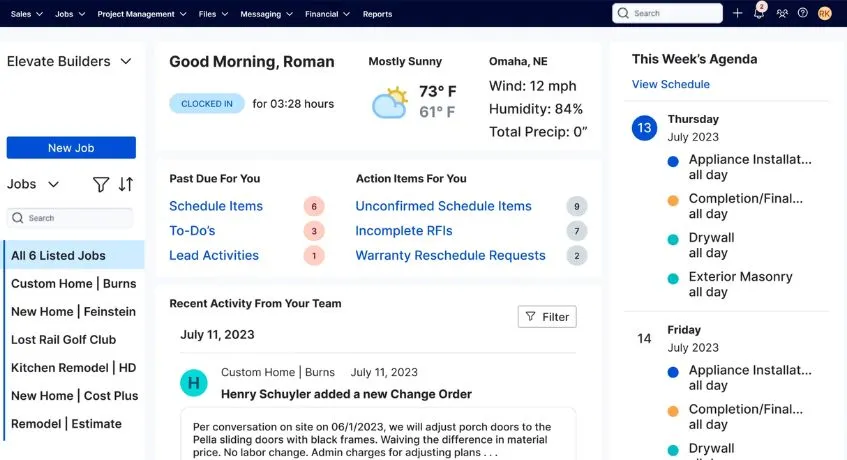
BuilderTrend is a platform for construction of residential, remodelers, and home builders. The platform combines bidding, budgeting, and project management into one system to simplify operations.
Buildertrend is useful for businesses that frequently communicate with homeowners and clients. The software helps improve transparency through customer portals, scheduling updates, and progress tracking. Here are some features that BuilderTrend offers:
- Bid and Proposal Management: Buildertrend helps contractors create, organize, and manage project bids and proposals more efficiently.
- Scheduling and Task: Another important feature is project scheduling. It allows contractors to organize tasks, timelines, and workforce activities more effectively.
- Customer Communication Portal: Buildertrend also improves client communication. It is providing a portal where customers can monitor project updates and progress.
| Pros | Cons |
|---|---|
|
|
- Buildertrend Pricing: Custom pricing is available based on the business’s requirements and number of projects.
- Buildertrend Capterra Rating: 4.5/5.
4. BuildingConnected
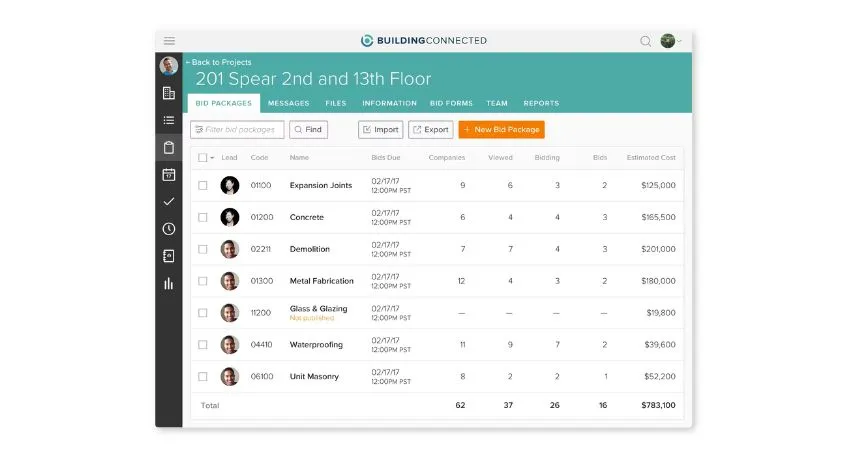
BuildingConnected specializes in bid management and subcontractor coordination for construction companies This software helps contractors distribute invitations to bid, organize communications, and compare proposals efficiently.
Moreover, it is commonly used to simplify preconstruction processes which is to reduce manual tasks. Since the software focuses on bid coordination, it is useful for contractors managing multiple subcontractor relationships. Some of BuildingConnected features includes:
- Subcontractor Database: One of the important features is subcontractor management. It centralizes subcontractor information and simplifies vendor communication.
- Proposal Comparison Tools: Moreover, the platform allows contractors to compare subcontractor proposals accurately for better decision-making.
- Bid Tracking System: Also, BuildingConnected provides bid tracking features that help monitor bid responses and submission progress in real time.
| Pros | Cons |
|---|---|
|
|
- Pricing BuildingConnected: Starts at approximately ₱225,756 ($3,600) per year. A free trial and free version are also available.
- BuildingConnected Capterra Rating: 4.6/5.
5. STACK
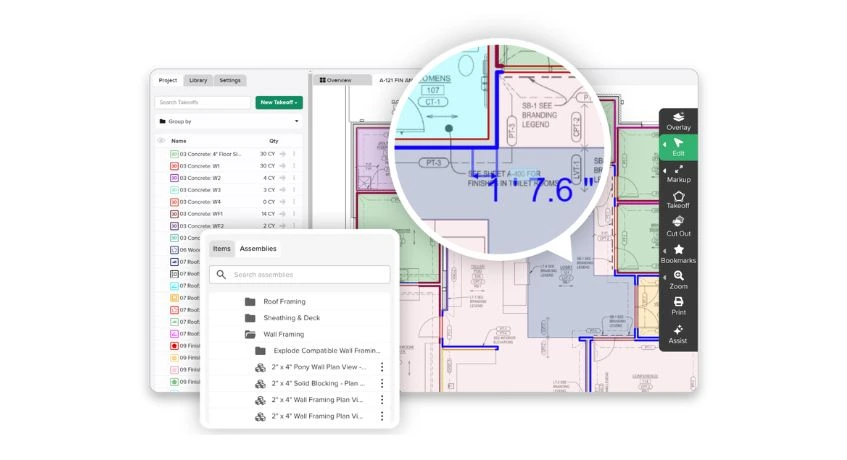
STACK is a cloud-based takeoff and estimating software designed to simplify bidding preparation. The platform helps contractors perform digital quantity takeoffs directly from construction drawings, thus it is reducing manual calculations.
Therefore, STACK is used by estimators and contractors for handling commercial projects that bid preparation. It offers a cloud-based system that allows teams to collaborate remotely and access project data easily. Some of features that can help construction projects:
- Digital Quantity Takeoff: STACK helps estimators calculate material quantities directly from digital construction drawings to improve estimation accuracy.
- Cost Estimation Tools: Another important feature is project cost estimation. It supports labor, material, and project cost calculations more efficiently.
- Cloud-Based Project Storage: STACK stores project data within a cloud-based platform for easier access and collaboration.
| Pros | Cons |
|---|---|
|
|
- Pricing STACK: Starts at approximately ₱163,036 ($2,599) per year, with a free version and free trial available. Higher-tier plans are available depending on the features required.
- STACK Capterra Rating: 4.5/5.
6. Contractor Foreman
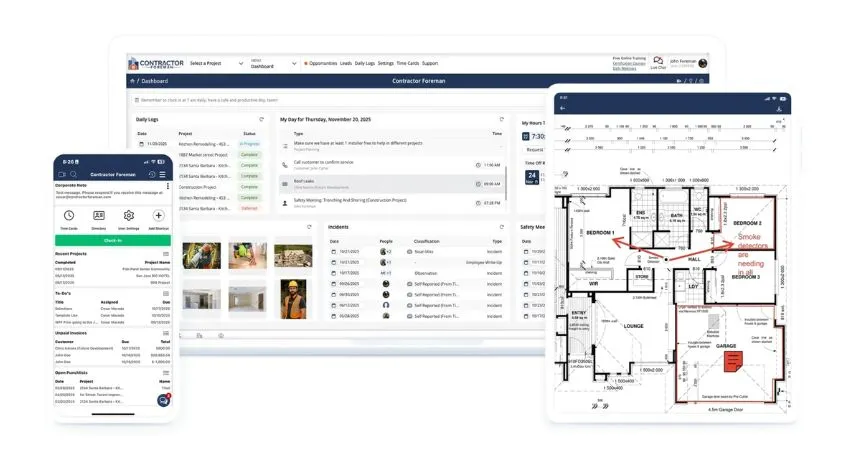
Contractor Foreman provides affordable construction bidding and project management for small to medium-sized contractors. The software combines estimating, scheduling, financial tracking, document management, and compliance tools into one platform.
Moreover, Contractor Foreman is often chosen by growing contractors looking for budget-friendly software with a wide range of operational features. The platform also supports mobile accessibility, helping field teams manage projects more efficiently.
- Bid and Estimate Creation: Contractor Foreman helps contractors prepare project estimates and bid proposals more efficiently.
- Scheduling and Task Tracking: Another important feature is project scheduling. It allows teams to monitor project timelines and daily activities more effectively.
- Financial Management Tools: The software provides budgeting, expense tracking, and invoicing features to improve financial control.
| Pros | Cons |
|---|---|
|
|
- Pricing Contractor Foreman: Starts at approximately ₱3,074 ($49) per user per month. Different plans are available, with pricing increasing based on the features and level of support required.
- Contractor Foreman Capterra Rating: 4.5/5.
7. ArchDesk
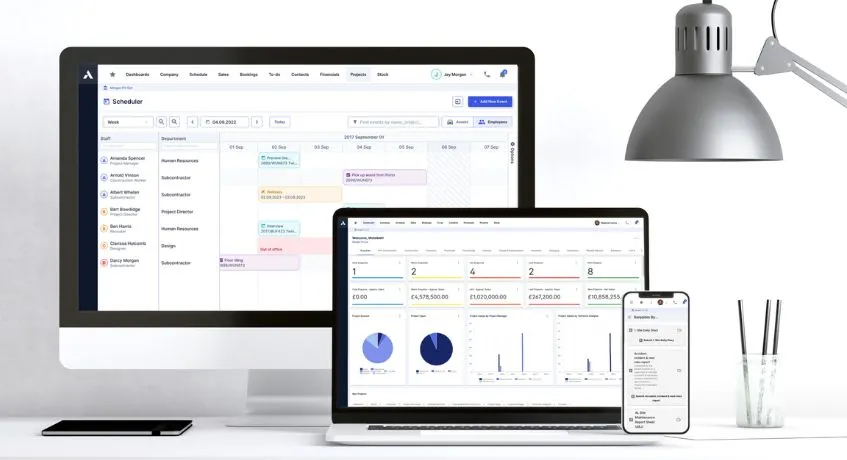
Archdesk is an integrated construction ERP platform that combines estimating, procurement, and project management into a centralized system. The software is designed to help construction companies improve operational visibility and automate workflows
Threofer, Archdesk is suitable for contractors looking for an ERP-based solution that connects financial management with project operations. Its centralized system helps companies reduce data duplication and improve collaboration between teams.
- Construction Estimating Tools: Archdesk helps contractors improve estimation accuracy through integrated budgeting and cost calculation features.
- Financial and Accounting Integration: Another important feature is accounting integration. It connects project operations with financial management processes within one platform.
- Procurement Management: Archdesk automates procurement workflows to simplify purchasing and vendor coordination.
| Pros | Cons |
|---|---|
|
|
- Pricing Archdesk: Starts at approximately ₱58,424.56 (£690) per month. The available plan and final cost may vary based on the business’s requirements.
- Archdesk Capterra Rating: 4.5/5
8. PlanSwift
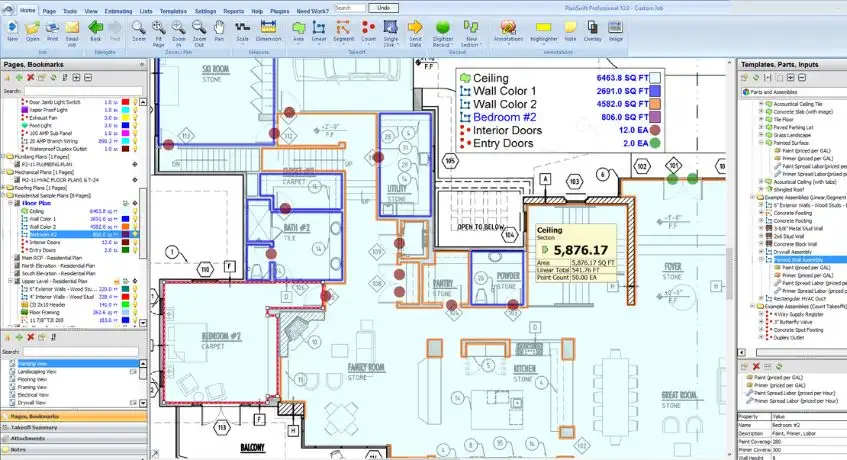
PlanSwift is widely used for digital takeoff and estimating processes in the construction industry. The software helps contractors calculate material quantities and project costs directly from digital blueprints.
PlanSwift is commonly used by estimators who want to reduce manual calculations and improve bidding efficiency. Its drag-and-drop functionality also simplifies the takeoff process for users. Here are some of the features in PlanSwift:
- Digital Quantity Takeoff: PlanSwift helps contractors measure material quantities directly from digital blueprints to reduce manual calculations.
- Drag-and-Drop Estimating Tools: Another important feature is its user-friendly estimating tools that simplify project cost calculations.
- Material Cost Calculations: The software supports accurate material pricing and quantity estimation for better budgeting.
| Pros | Cons |
|---|---|
|
|
- Pricing PlanSwift: Starts at approximately ₱125,420 ($2,000) per year. The Professional plan includes software updates and training.
- PlanSwift Capterra Rating: 4.3/5.
9. SmartBid
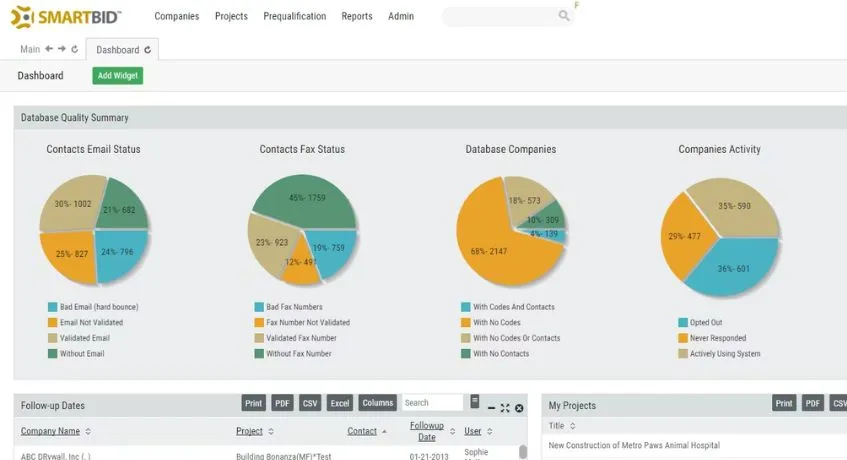
SmartBid helps contractors manage bid invitations, subcontractor communication, and proposal comparisons. Furthermore, this software focuses on improving preconstruction workflows and organizing bidding processes.
It is commonly used by contractors who are managing multiple subcontractors and project tenders simultaneously. Thus, it helps improve communication efficiency and centralizes bid-related documentation. Here are some of the features that SmartBid offers:
- Bid Invitation Automation: SmartBid helps contractors automate bid invitation processes to improve efficiency and reduce manual communication.
- Subcontractor Management: Another important feature is subcontractor coordination. It centralizes subcontractor data and communication within one platform.
- Proposal Tracking: The software allows contractors to monitor proposal submissions and bid responses more effectively.
| Pros | Cons |
|---|---|
|
|
- Pricing SmartBid: Starts at approximately ₱37,626 ($600) per feature. A free trial is available, while the final cost depends on the features selected.
- SmartBid Capterra Rating: 4.4/5.
10. PlanHub
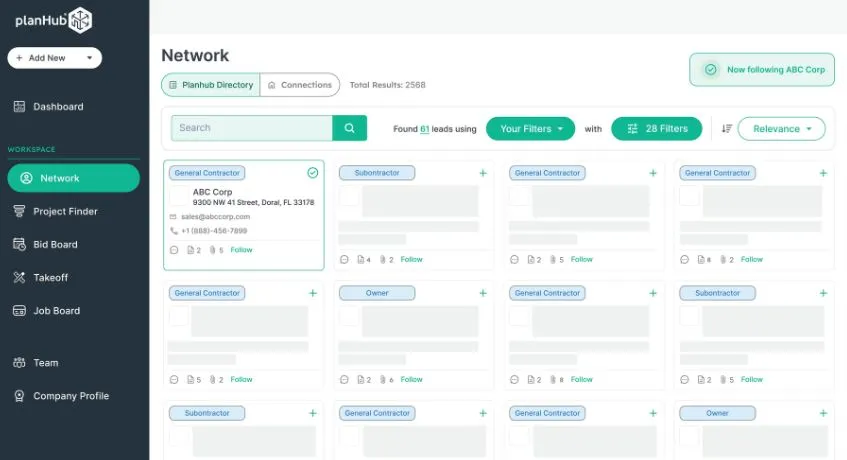
PlanHub is a cloud-based construction bidding platform that connects general contractors and subcontractors for project opportunities. The platform helps contractors discover projects, manage bid invitations, and collaborate with subcontractors efficiently.
Therefore, PlanHub is used by contractors looking to expand business opportunities and simplify the bidding process. Its cloud-based accessibility also supports easier collaboration across different teams and locations.
- Bid Opportunity Management: PlanHub helps contractors discover and manage project bidding opportunities more efficiently.
- Contractor and Subcontractor Networking: Another important feature is networking. It connects contractors with subcontractors to improve collaboration opportunities.
- Project Document Sharing: The platform allows teams to share project files and bid documents through one centralized system.
| Pros | Cons |
|---|---|
|
|
- Pricing PlanHub: Starts at approximately ₱5,707 ($91) per month for the Takeoff plan. Other plans include Estimation at $141 per month, while General Contractor, Subcontractor, and Supplier plans use custom pricing.
- PlanHub Capterra Rating: 4.4/5.
In Conclusion
After understanding the functions and recommendations of bid construction software, it is clear that this digital solution is important for improving construction workflows. Bid construction software helps contractors increase bidding accuracy and organize data efficiently.
As the construction industry in the Philippines becomes increasingly competitive, digital solutions can help companies increase the chances of winning projects. Moreover, with better preparations, companies can stay competitive while maintaining project profitability.
Also, for contractors looking for a more integrated solution, ScaleOcean Atlas for Construction offers comprehensive features for bidding, budgeting, procurement, project management, and financial monitoring within one centralized platform.
Businesses can also schedule consultation with our experts to see how the system can support construction operations more effectively.
FAQ:
1. What is the best construction bidding software?
The best construction bidding software depends on a company’s business size, project complexity, budget, and operational requirements. Some contractors prefer software focused on bid management, while others choose integrated ERP solutions.
2. What is bid software?
Construction bidding software is a digital platform that helps contractors manage preconstruction and tendering processes more efficiently. The software centralizes activities such as finding bid opportunities and tracking bid submissions within one secure system.
3. How do you create a construction bid?
A construction bid typically includes the estimated project costs, labor expenses, material pricing, subcontractor costs, overhead expenses, profit margins, and project scope of work. It also commonly contains supporting information.
















.png)