




Warehouse management system is one of the management tools that is designed to manage warehouse workflows. With these systems, businesses can maintain organized and well-maintained goods easily.
Optimizing the management of the warehouses is relevant to any business in the Philippines to increase productivity and cut down on errors, thus, there is a need for a structured system. Here are tips on how to boost warehouse productivity.
 Key Takeaways
- Warehouse management is the process of overseeing receiving, inventory, order fulfillment, and shipping to improve warehouse efficiency.
- The key warehouse processes include receiving, put-away and storage, inventory management, Order Picking, packing, shipping, and returns processing.
- Warehouse Management System (WMS) is a warehouse operations tool with features such as real-time inventory tracking, storage management, and performance reporting.
- ScaleOcean Warehouse Management ERP Software helps businesses streamline warehouse operations with AI-powered inventory management.

1. What is Warehouse Management?
Warehouse management refers to the process of planning, organizing, and optimizing all activities within a warehouse. The aim is to ensure efficient flow of goods, accurate stock records, and minimize running costs.
Furthermore, an effective warehouse operation is more than just organizing product storage. This involves managing people, equipment, storage areas and technology to ensure maximum productivity and minimization of delays.
Therefore, as businesses grow, businesses get larger and the warehouse gets more complex. Standardized procedures are necessary to ensure that each product can be picked and shipped quickly, as there are higher order volumes.
Many companies today support these activities by implementing a warehouse management system that automates inventory tracking, warehouse processes & order fulfillment, and offers real-time visibility throughout the warehouse.
A study published in the International Journal of Industrial Management, revealed that using a system-based approach, distributors are able to manage the inventory more accurately, as the flow of the supply chain is influenced by the delay in the process.
Additionally, in the Philippines, where businesses are largely involved in retail, logistics, and eCommerce, applying effective warehousing tips can help maintain a well-managed warehouse, enhance delivery times, and minimize costs in the process.
2. What are the Benefits of Warehouse Management?

Adopting a successful warehouse management helps businesses improve efficiency, reduce operational costs, and deliver better customer service. Effective management can provide several benefits to businesses, such as:
- Improves Inventory Accuracy: It aids in maintaining accurate inventories; minimizes discrepancies and offers real-time inventory visibility for making informed decisions.
- Faster Order Fulfillment: An organized warehouse process, including an effective putaway process, allows workers to access products in a faster manner thus improving the picking and packing time.
- Better Space Utilization: Effective warehouse organization of material management maximizes the use of the available space by organizing the products accordingly.
- Lower Operating Costs: Also, effective warehouse management reduces losses due to misplaced products, damaged goods, and overtime.
- Increases Employee Productivity: Optimized workflows for receiving process, storing, material handling, and shipping allow employees to complete tasks more efficiently.
- Enhances Customer Satisfaction: Accurate inventory records boost customer confidence, promote repeat sales and foster long-term customer relationships.
- Supports Business Growth: Easier to manage more SKUs, higher order volumes and multiple locations without adding to complexity of operations.
3. Difference Between Warehouse Management and Inventory Management
Although warehouse management and inventory management are closely related, they serve different purposes in warehouse operations. Below are the differences of warehouse and inventory management:
| Aspect | Warehouse Management | Inventory Management |
|---|---|---|
| Primary Focus | Controlling warehouse, workflows and storage activities. | Keeping track of the number of items and stock availability |
| Scope | Covers receiving, storage, picking, packing, shipping, and warehouse optimization. | Focuses on stock control, replenishment, and inventory tracking |
| Main Objective | Improve warehouse efficiency and order fulfillment. | Maintain optimal inventory levels while avoiding stockouts and overstocking. |
| Key Activities | Receiving goods, storage allocation, order picking, packing, shipping, and workforce management. | Stock counting, inventory forecasting, reorder planning, and inventory valuation. |
| Technology Used | Often supported by a warehouse management system. | Usually supported by inventory management software or ERP inventory modules. |
4. Principles of Warehouse Management
To manage a warehouse, there are some principles that can be implemented to help maximize productivity, ensure inventory accuracy, and optimize warehouse operations. By following these best practices, warehouses can improve their operations:
- Set Clear Warehouse Objectives: Every warehouse should have clear goals, such as improving inventory accuracy, speeding up order fulfillment, or reducing operating costs. Defining these objectives helps businesses measure warehouse performance.
- Maintain End-to-End Visibility: Warehouse managers should be able to monitor inventory, employees, equipment, and workflows in real time. Having complete visibility makes it easier to identify issues and keep operations running smoothly.
- Optimize Space and Resources: An efficient warehouse makes the best use of available storage space, equipment, and labor. Proper warehouse organization layouts play a key role in organizing a warehouse which help employees work faster while maximizing warehouse capacity.
- Be Flexible and Adaptable: Warehouse operations should be able to respond to changes, such as seasonal demand, unexpected delays, or fluctuating inventory levels. Flexible processes help businesses maintain productivity even when conditions change.
- Prioritize Customer Satisfaction: Every warehouse activity should support fast and accurate order fulfillment. Delivering the right products on time improves customer satisfaction, builds trust, and encourages repeat business.
- Make Data-Driven Decisions: Tracking warehouse performance through reports and key metrics helps businesses identify inefficiencies and improve operations. A warehouse management system provides real-time insights that support smarter planning and continuous improvement.
5. The Key Processes in Warehouse Management
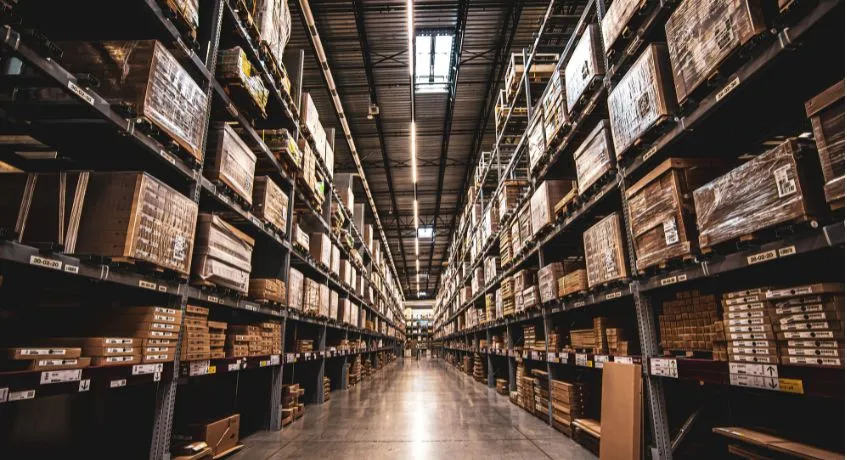
Every warehouse follows a series of activities to ensure products move efficiently from suppliers to customers. A good warehouse process can help increase inventory accuracy and also help to ensure timely order fulfillment. The main processes are:
- Receiving: Warehouse personnel receive and inspect received goods, confirming the product quantity against purchase orders, and ensuring there are no damages.
- Put-away and Storage: After inspection, products are assigned to designated storage locations based on their type, demand, or handling requirements.
- Inventory Management: Businesses continuously monitor stock levels and inventory movements through regular stock counts and inventory tracking.
- Order Picking: Once customer orders are received, warehouse staff perform order picking by collecting the required items from storage.
- Packing: Within this process, items are picked and then inspected, packed, labeled and ready for shipping.
- Shipping: Completed orders are then picked up on delivery vehicles and sent to the customers or sales centers.
- Returns Processing: Products that are returned are checked before going back into inventory, repaired, recycled, or discarded.

6. What is Warehouse Management System?
A Warehouse Management System (WMS) is the software designed to support and optimize the day to day functioning of the warehouse. This encompasses the receiving, storage and inventory, order picking, packing, shipping and returns of goods.
At its core, a WMS acts as the central nervous system of the warehouse. It links all the steps in the fulfillment process, from the time it is received at the receiving dock to the time it is shipped for delivery. Essentially, it increases the efficiency of the aforementioned warehouse processes.
Rather than relying on manual logs or spreadsheets, warehouse staff can access real-time information on stock levels, storage locations, and order status all from one place.
 Also Read: Top 13 Warehouse Management Systems in the Philippines
7. Common Problems in Warehouse Management
As inventory volumes, warehouse operations are becoming more difficult to manage manually. Businesses can suffer from inefficiencies if they are not using digital tools. Here are some of the most common problems:
a. Stock Inaccuracies
Manual inventory updates, human error, and delayed stock recording can result in discrepancies between actual stock and inventory records. Therefore, inaccurate inventory can lead to stock outs, overstock and slow order delivery.
The system helps solve this problem by providing real-time inventory tracking through barcode scanning and automated stock updates, maintaining the accuracy of stock data at all times.
b. Inefficient Use of Space
Poor storage planning can result in overcrowded aisles, underutilized storage areas, and longer travel distances for warehouse staff. Therefore, implementing efficient racking systems helps maximize storage space and improve warehouse efficiency.
Optimizing warehouse organization with designated storage locations and intelligent slotting strategies helps maximize the storage space, making it easier and more efficient to use.
c. Slow Pick & Pack Route
The third problem arises when warehouse employees often spend unnecessary time searching for products when storage locations are not well organized. This slows down order processing and increases the risk of picking errors.
Modern WMS solutions optimize order picking routes by directing staff through the most efficient path, helping businesses process orders faster while improving picking accuracy.
d. Seasonal Demand Fluctuations
Businesses in the Philippines often experience spikes in demand during holidays, promotional campaigns, and major online shopping events. Without proper planning, these periods can cause outages and late deliveries if not well managed.
Real-time inventory visibility, demand forecasting, and automated replenishment tools help businesses prepare for seasonal fluctuations that maintain optimal inventory levels throughout peak periods.
e. Delayed Processes
Manual paperwork and disconnected systems often slow down receiving, inventory updates, packing, and shipping activities. These delays lead to decreased warehouse productivity and difficulties meeting customer orders.
An integrated warehouse management system automates warehouse workflows and centralizes operational data. Moreover, this feature allows workers to work more efficiently and minimize manual effort and delays.
8. ScaleOcean AI-Powered WMS Solves Every Problem in the Warehouse
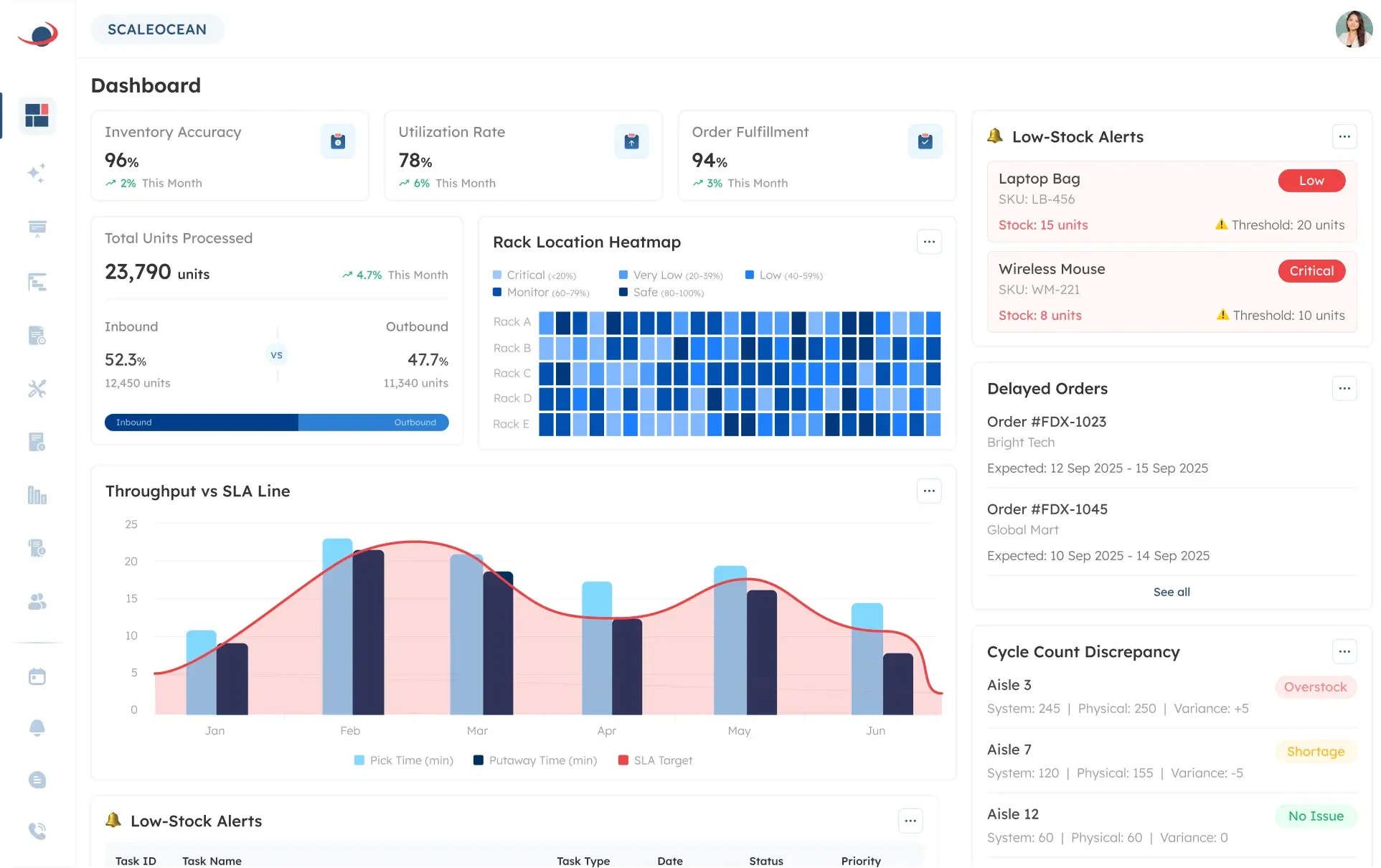
As businesses grow bigger, warehouse operations flow getting more complex and need more requirements. Therefore, growing SKU counts, rising inventory levels, and larger orders make manual tracking prone to errors.
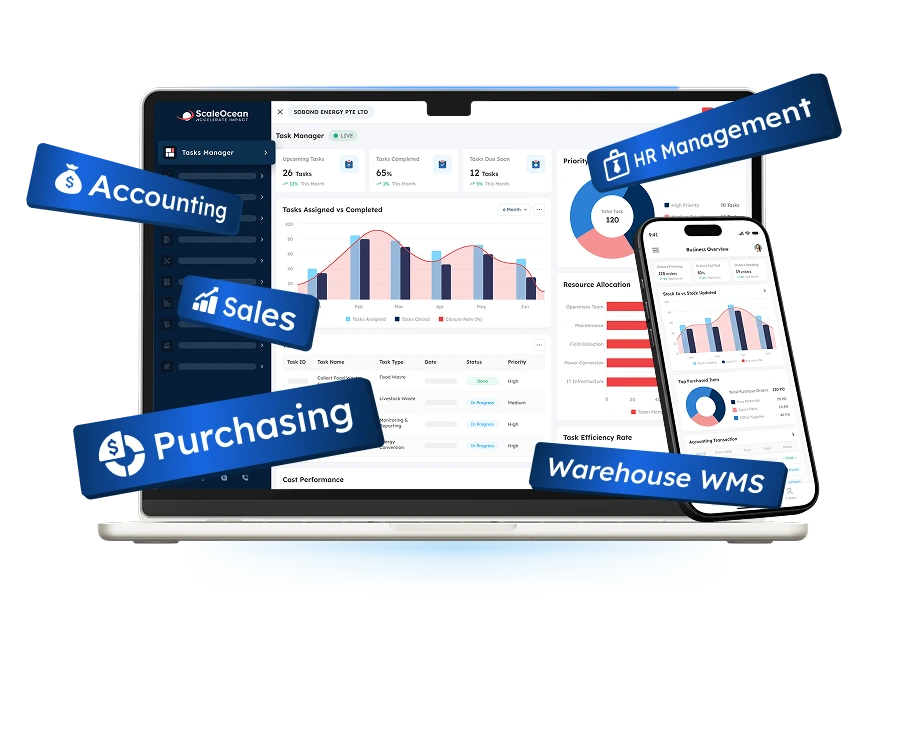
It’s a good thing that ScaleOcean Warehouse Management ERP Software helps in resolving the issues. Additionally, ScaleOcean offers AI-powered warehouse systems available to streamline warehouse processes.
Using AI assistance, businesses can minimize the chances of mistakes and enhance team productivity, achieving around 25-55% more efficient operations while also preparing for business growth.
Request a free demo of ScaleOcean Warehouse Management ERP Software to see how it can optimize your warehouse. Its key features include:
- Real-Time Inventory Visibility: Track the movement of inventory across multiple warehouses, and automatically update inventory to maintain accuracy and avoid stock discrepancies.
- Barcode & QR Code Support: This feature allows more efficient receiving & stock counting, picking & shipping, and less manual data entry.
- Intelligent Warehouse Organization: Stocking inventory in a certain space, warehouse staff can locate products more quickly, and make full use of warehouse space.
- AI-Powered Demand Forecasting: Leverage AI algorithms to provide product suggestions based on customer purchasing patterns.
- Customer Feedback Analysis: Use AI to process customer feedback and track sentiment, informing business decisions that promote a better customer experience.
- Optimized Order Picking: Optimized picking routes reduce picking time, picking accuracy and speed up order fulfillment.
- Comprehensive Dashboard & Analytics: Real-time reporting of inventory levels, warehouse utilization, order fulfillment and more to aid quicker decision making.
9. In Conclusion
Effective warehouse management is crucial for companies seeking to enhance inventory accuracy, optimize warehouse processes, and deliver efficient customer order fulfillment. It’s because standardized procedures can improve customer satisfaction.
Due to manual processes being no longer sufficient because warehouse operations get more complex. Companies recommended shifting to use an automated warehouse management system to make better warehouse decisions and automate tedious tasks.
ScaleOcean Warehouse Management ERP Software offers numerous AI-driven capabilities that can enhance warehouse efficiency, productivity, and inventory management, making it a solution worth considering for streamlining operations.
Request a free demo of ScaleOcean Warehouse Management ERP Software to see how an integrated AI-powered solution can transform your warehouse operations and help your business grow.
FAQ:
1. What are the 7 types of warehouses?
The seven main warehouse types are private, public, bonded, cooperative, smart, cold storage, and distribution centers. Each serves different business needs based on ownership, storage requirements, and distribution operations.
2. What are the 5 functions of warehousing?
The main functions of warehousing include storing goods, protecting inventory, managing stock, supporting order fulfillment, and facilitating the movement of products between suppliers and customers.
3. What are the 5 KPIs for a warehouse?
Five common warehouse KPIs are inventory accuracy, order accuracy, order lead time, labor productivity, and inventory carrying cost. These metrics help businesses measure warehouse performance and identify areas for improvement.
















.png)