




Warehouse management tips can be a guideline for improving warehouse organization and reducing operational costs. With the growing amount of business in the Philippines, warehouse system implementation is a must in maintaining productivity.
From small to large warehouses, the improvement of daily work is significantly improving the productivity and optimization of warehouses. In this article, you can learn some tips about effective warehouse management that can improve order fulfillment.
 Key Takeaways
- Warehouse management refers to the planning and control of warehouse operations, including receiving, storing, picking, packing, and shipping goods.
- Warehouse management tips improve organization through product demand planning, inventory rotation, and clear labeling.
- ScaleOcean Atlas for Warehouse Management helps businesses streamline warehouse operations with AI-powered inventory management and real-time warehouse analytics.

What is Warehouse Management?
Warehouse Management is the coordination of the various activities in the warehouse to manage the flow of goods from the point of receipt to their final destination. In addition, this is for the purpose of ensuring organization and ease of the shipping process.
For businesses in the Philippines, effective warehouse management is becoming increasingly important as eCommerce, manufacturing, retail, and wholesale industries continue to expand all over the country.
In fact, data from the Philippine Statistics Authority shows that wholesale and retail trade remains one of the largest contributors to the country’s GDP. This highlights the growing need for efficient management to support this sector’s continued growth.
Moreover, to ensure high warehouse productivity, it is crucial to have an efficient warehouse management system. Also, learning how to manage a warehouse can boost productivity and reduce mistakes.
25 Warehouse Management Tips

Improving warehouse performance is not about making one major change. Rather, it is about streamlining warehouse design and training workers on the process. Here are some tips on how to manage a warehouse that help improve inventory management:
1. Tips for Better Warehouse Organization
A well-planned warehouse organization strategy can minimize extra movements and cut order processing time. Exploring different warehouse organization ideas makes it easy for warehouse workers to find products quicker. Here are some tips to better-organized groups:
- Utilize ABC Analysis: Classify inventory according to its value and sales frequency using ABC analysis. High-demand products should be stored near packing stations. This helps to save time and enhance warehouse productivity.
- Label Items Accordingly: Use consistent naming for shelving, storage bins and/or warehouse areas. Clear labels reduce confusion and assist in a new employee’s efficiency in the warehouse.
- Implement a Barcode / RFID Software: Switching to barcode/RFID software to eliminate manual stock control increases stock accuracy. These technologies offer instant scanning of products for the employees.
- Invest into Stackable Bins: Stackable bins allow for the most efficient use of vertical space and provide protection for products. They can also help to categorize products, minimize clutter and make inventories easier to count.
- Don’t Forget the Correct Pallets: Be sure to choose the right type of pallet for the job; this will help keep your warehouse safer and more efficient. To avoid damage, businesses should consider the weight of their product and select the pallets that they need.
- Stack Products Vertically: Use appropriate shelving and use the height of the warehouse to store products, this strategy with suitable warehouse racking systems further improves accessibility and inventory organization.
- Place Similar Items Near Each Other: Items often purchased together should be stored within the same locations. This helps to minimise walking time for order fulfilment and shorten picking times.
- Organize Items Based on FIFO, FEFO, LIFO: Use the right inventory rotation method for your products. FIFO is suitable for most consumer goods, FEFO is best for perishables such as food and medicines, and LIFO is best for certain industries.
- One SKU per Location: Only use one SKU to each storage location wherever possible. Having more than one product in the same area raises the chances of picking mistakes, inventory inaccuracies and stock confusion.
- Divide Areas into Workspaces: Setting up workspaces for receiving, storage, picking, packing, returns and shipping. Design these areas to reduce unnecessary movement of goods and managing materials throughout the warehouse.
- Keep it Clean: Clean warehouses are safer and more productive. The daily housekeeping also aids in the detection of damaged stock, equipment problems or even hazardous conditions in the workplace before they become bigger issues.

2. Tips to Warehouse Technology and Automation
Technology plays a key role in improving warehouse organization by reducing manual tasks and minimizing human error. As businesses in the Philippines handle growing order here are the tips to use technology and automation warehouse:
- Move Away from Physical Documents: Paper records have the potential to be lost, duplicated and otherwise incorrect. Having manual records replaced by digital ones means that staff have access to real-time data and inventory updates at instant.
- Invest into AGVs or AMRs: Automated Guided Vehicles (AGVs) and Autonomous Mobile Robots (AMRs) can move products around the warehouse with little or no human interaction.
- Implement a Warehouse Management System (WMS): A WMS will streamline warehouse processes, track inventory, and stock flow in real-time. By automating routine, a WMS helps businesses reduce errors & improve productivity.
- Implement Enterprise Resource Planning (ERP): ERP system connects warehouse operations with purchasing, manufacturing, and other business functions. When integrated with the Philippines’ Best WMS, businesses gain end-to-end visibility.
3. Tips for Better Picking and Packing
The picking and packing processes have direct impacts on order accuracy, delivery time, and customers’ satisfaction. Here are some tips to help improve picking and packing orders management to help warehouse staff complete orders faster:
- Utilize the Correct Picking Method: Each warehouse has different order volume and product variety. Selecting the right approach helps reduce travel time and improve overall warehouse picking efficiency.
- Order Picking Types as Well: Apart from the picking method, businesses should also consider the best order picking type for operations, as well. For instance, if there are a lot of orders that are similar to each other, then batch picking is suitable.
- Plan Out Routes before Operations: Planning picking routes minimizes unnecessary walking and allows employees to collect items. Many WMS platforms can automatically generate picking routes, allowing warehouses to be processed in less time.
- Organize Isles Properly: Aisle size must be sufficient for equipment to maneuver and it should be properly marked to minimize congestion. Items that are picked regularly must be kept in accessible places.
- Continuously Monitor and Update Your System: Records of products should be updated at the time of receipt, storage, and delivery. This coordination with warehouse operations also facilitates effective putaway in warehouse.
4. Tips for Better Receiving
Receiving is the initial part of warehouse activities, and is the beginning point for correct stock. With a good order receiving system, discrepancies in stock can be reduced to a minimum, here are some tips on how to receive orders better:
- Have a Dedicated Space for Receiving: Create a designated receiving zone for receiving shipments, documents, and process receipt into storage. A dedicated warehouse receiving zone helps reduce congestion and keeps inventory organized.
- Utilize Cycle Counting: It’s recommended to count items regularly, not just once or twice per year. This allows for identification of the differences earlier and less impact to the operation.
- Continuously Update your WMS: Inventory records must be continuously updated after product received, moved, or shipped. When the WMS keeps up to date with warehouse activities, workers have the most up-to-date information.
- Train Staff on Quality Control: Warehouse staff should inspect incoming products for damage, quantity, and label issues prior to receiving. Quality control guarantees consistency of the products and minimises the likelihood of wrong products.
- Optimize Cross-Docking for Fast-Moving Items: For products that are in high demand, consider cross-docking, which involves moving products directly from receiving to shipping without storing them.
ScaleOcean Atlas to Increases Warehouse Effectiveness
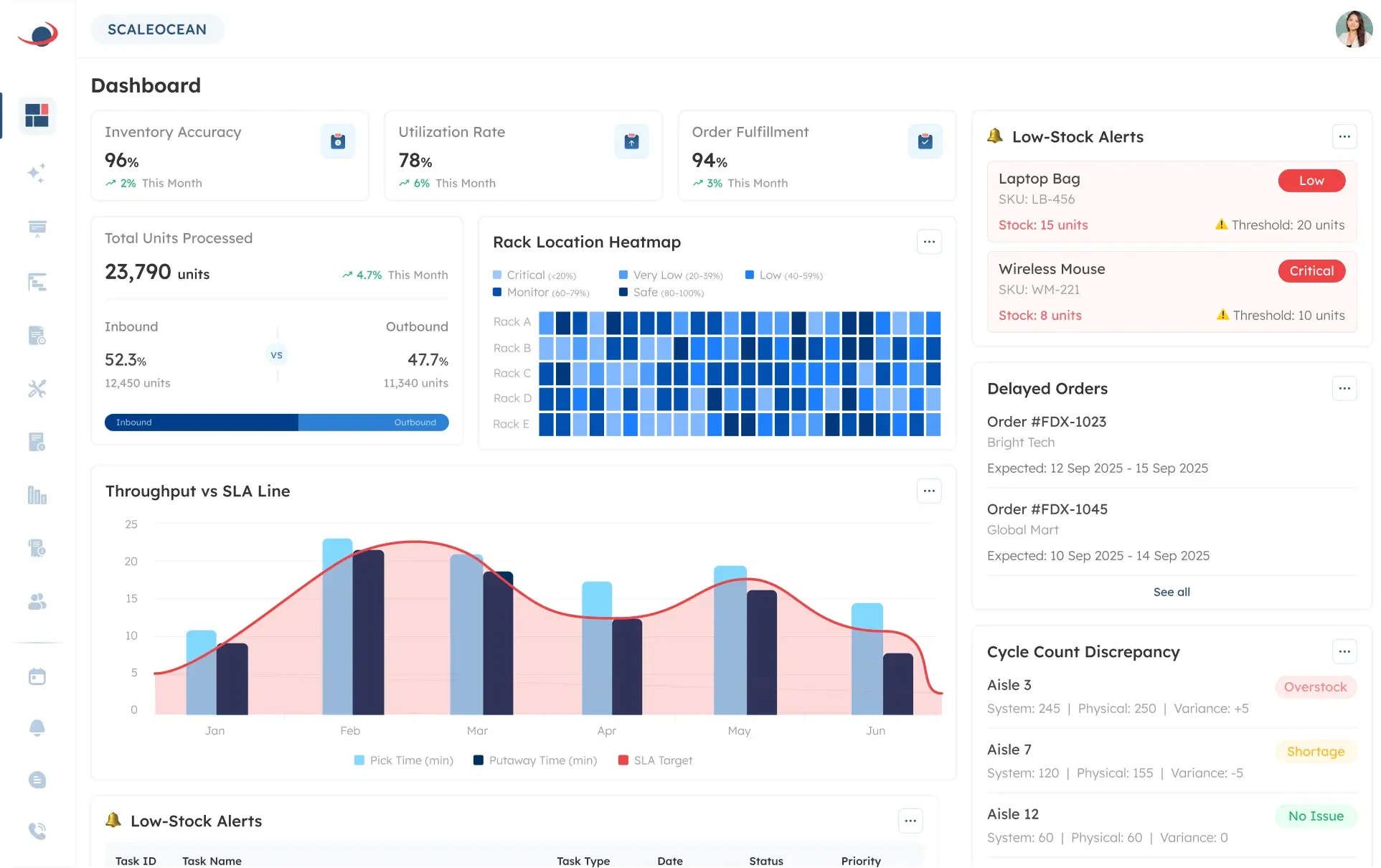
With the increasing complexity of warehouse operations, manual systems and disconnected systems can be challenging to maintain inventory accuracy and effective order fulfillment.
To solve this problem, ScaleOcean Atlas is powered with AI-driven Warehouse Management Systems (WMS) to streamline repetitive tasks, boost visibility into warehouse operations, and provide data-driven insights for optimized performance.
Furthermore, ScaleOcean Atlas for Warehouse Management integrates warehouse management, stock management, and logistics into a single solution. Thus, the company will be able to keep track of the stock flows.
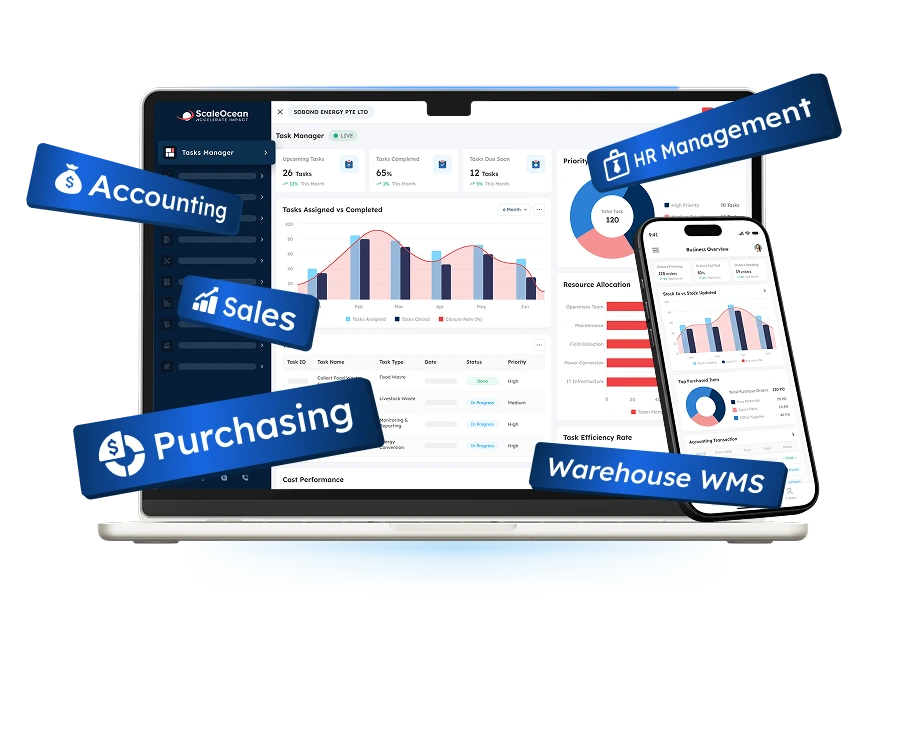
Not only that, ScaleOcean Atlas also integrates with other business processes, which can further minimize manual tasks and accelerates order delivery. You can request a free demo of ScaleOcean Atlas, and here the features include:
- Real-Time Inventory Visibility: Get live inventory data providing visibility of inventory levels in one or multiple warehouses as an effective way to avoid stockout and overstocking.
- Barcode and RFID Integration: Speed up receiving, storage, picking, and shipping processes while improving inventory accuracy through automated data capture.
- Smart Putaway Recommendations: Automatically store incoming products at the most appropriate location within, according to the rules and available space.
- Optimized Picking Routes: Create optimal picking routes for faster order fulfilment, higher productivity, and less employee travel time.
- Lot, Batch, and Serial Number Tracking: Maintain complete product traceability for better quality control, compliance, and faster product recalls when needed.
- Warehouse Performance Dashboards: Monitor critical warehouse metrics, staff productivity, and performance in real-time, with dashboards and reports.
- AI-Powered Analytics: Gain insights into inventory trends, predict demand, and make informed decisions for smarter warehouse planning and decision making.
 Also Read: What is Warehouse Management? How It Works & Key Benefits
In Conclusion
Warehouse management is not just about inventory storage, it’s about streamlining processes to boost productivity, lower costs, and ensure that your customers receive their orders correctly and on time.
In the fast-growing business landscape in the Philippines, it is crucial for companies to invest in the proper warehouse management practices and technology to ensure they stay competitive.
If you’re looking to streamline warehouse operations, improve inventory visibility, and automate key workflows, ScaleOcean Atlas for Warehouse Management is a fully integrated solution designed to support your business.
Request a free demo of ScaleOcean Atlas for Warehouse Management and learn how an ScaleMind AI can improve warehouse processes and enable your business to grow sustainably.
FAQ:
FAQ:
1. How can you improve warehouse management?
You can improve warehouse management by organizing inventory, optimizing storage layouts, using barcode or RFID systems, training staff, and implementing a Warehouse Management System (WMS) to automate daily operations.
2. Why is warehouse management important?
Warehouse management helps businesses maintain accurate inventory, improve order fulfillment, reduce operational costs, and maximize storage space. Efficient warehouse processes also increase productivity and enhance customer satisfaction.
3. What are the 5S’s in warehousing?
The 5S method includes sort, set in order, shine, standardize, and sustain. It helps warehouses stay organized, improve efficiency, reduce waste, and create a safer work environment through consistent housekeeping and continuous improvement.
















.png)