




Warehouse organization ideas are concepts to put goods or products, for small or big warehouse organization, in the most accessible way possible. These ideas help reduce unnecessary movement and enhance warehouse operations.
In the Philippines, where logistics demand continues to grow alongside e-commerce and manufacturing, these strategies are essential to optimize inventory flow. In this article, you’ll find tips and tricks of warehouse ideas to speed up order fulfillment.
 Key Takeaways
- Warehouse organization ideas improve inventory visibility, maximize storage space, and speed up order fulfillment while reducing operational costs.
- Warehouse organization ideas focuses on layout planning, inventory management, automation, cleanliness, and performance monitoring.
- The Warehouse Module of ScaleOcean Atlas streamlines warehouse organization with real-time inventory tracking, AI recommendations, and smart picking optimization.

Why is Warehouse Organization Important?
Warehouse organization is more than simply arranging shelves neatly. It is the foundation of efficient warehouse operations because of every receiving, storage, and shipping activity. A well-organized warehouse helps businesses:
- Improved Inventory Visibility: Organizing products in designated locations makes inventory easier to locate, reduces misplaced items, and improves stock accuracy.
- Faster Order Fulfillment: Clear storage layouts and organized inventory shorten picking and packing times, allowing businesses to process customer orders more quickly.
- Better Space Utilization: Efficient warehouse organization maximizes both vertical and horizontal storage space, helping businesses accommodate more inventory without expanding facilities.
- Lower Operating Costs: Reducing unnecessary employee travel and simplifying workflows helps decrease labor costs while improving overall productivity.
- Enhanced Workplace Safety: Keeping aisles clear, organizing storage areas, and maintaining proper housekeeping reduce workplace hazards and create a safer environment for warehouse staff.
- Greater Inventory Accuracy: Standardized storage methods minimize stock discrepancies, making inventory counts and replenishment more reliable.
For businesses focused on managing a warehouse, warehouse organization should be viewed as an ongoing improvement strategy. Additionally, these strategies help maintain proper housekeeping and ensure safe material storage.
A study study published in SN Applied Sciences shows that retail warehouse operations, switching from a random storage policy to a class-based one cut order-picking travel time by over 22%, saving roughly 50 labor hours per month.
Therefore, it’s important to maintain a tidy and safe warehouse, as doing so can enhance overall business operations by improving efficiency, reducing errors, protecting inventory, and creating a safer, more productive environment for warehouse staff.
The Risks of Inefficient Warehouse Organization

Poor warehouse organization affects nearly every warehouse process. As inventory grows, disorganized storage can significantly reduce operational efficiency and increase operating costs. Some of the most common risks include:
- Longer Order Fulfillment: Employees spend more time searching for products, increasing picking and packing times while delaying customer deliveries.
- Inventory Inaccuracies: Products stored in the wrong locations often lead to stock discrepancies, overstocking, stockouts, and inaccurate inventory records.
- Higher Labor Costs: Inefficient warehouse layouts require workers to travel longer distances and perform repetitive searches, reducing productivity and increasing labor expenses.
- Wasted Warehouse Space: Poor storage planning leaves valuable vertical and horizontal space underutilized, limiting overall warehouse capacity.
- Increased Safety Risks: Blocked aisles, cluttered work areas, and improperly stacked inventory increase the likelihood of workplace accidents and product damage.
- Reduced Customer Satisfaction: Delayed deliveries, incorrect shipments, and inventory errors can negatively impact customer trust, service quality, and business reputation.
 Also Read: Warehouse Racking System Guide: Variations & Advantages
How to Organize a Warehouse: 21 Ideas

Managing a business today requires optimizing orders from every channel. Rather than focusing solely on physical stores, businesses must handle orders coming from e-commerce platforms, retail locations, and websites
Therefore, an essential solution in materials management is organizing the warehouse. The warehouse is a vital hub for storing the goods and products customers rely on. Here are some ideas to enhance warehouse management:
1. Warehouse Layouting
A well-planned warehouse layout minimizes unnecessary movement while making inventory easier to access, streamlining warehouse putaway and picking tasks. Therefore, a good layout helps the warehouse floor to achieve efficiency.
- Create Warehouse Zones: Separate receiving process, storage, picking, packing, and shipping areas for a smoother workflow.
- Store Fast-Moving Items Nearby: Place high-demand products close to dispatch areas to speed up order fulfillment.
- Maximize Vertical Space: Install warehouse racks to increase storage capacity while making better use of available space.
- Group Similar Products: Store related products together to simplify picking, replenishment, and inventory counting.
2. Inventory Management
Another key approach to warehouse optimization is effective inventory management, one of the most practical warehouse management tips for growing businesses. Proper inventory management keeps stock organized while improving overall accuracy.
- Apply ABC Analysis: Store related products together to simplify picking, replenishment, and inventory counting.
- Use FIFO or FEFO: Rotate inventory properly to reduce product expiration, spoilage, and unnecessary waste.
- Standardize SKU Labels: Use consistent product codes to improve identification and reduce picking errors.
- Perform Cycle Counts: Regularly verify inventory to detect discrepancies and maintain accurate stock records.
- Set Reorder Levels: Define minimum stock levels to prevent stock shortages and avoid excess inventory.
3. Automation & Technology
Automation and technology improve warehouse organization by streamlining daily operations and providing real-time visibility. These solutions are often delivered through warehouse software in the Philippines and increase accuracy.
- Implement a WMS: Automate inventory tracking, storage assignments, and warehouse workflows with real-time visibility.
- Use Barcode or QR Codes: Scan products to improve inventory accuracy and reduce manual entry errors.
- Adopt RFID Technology: Track inventory movement automatically for faster and more accurate stock management.
- Use Mobile Warehouse Apps: Enable warehouse staff to update inventory and complete tasks directly from mobile devices.

4. Warehouse Cleanliness
A clean warehouse improves workplace safety and inventory protection. Regular housekeeping keeps storage areas organized, also and creates a safer environment that supports smoother warehouse operations.
- Schedule Regular Cleaning: Clean storage areas routinely to maintain an organized and productive warehouse.
- Remove Unnecessary Inventory: Dispose of obsolete or damaged stock to free valuable storage space.
- Keep Aisles Clear: Remove obstacles from walkways to improve safety and equipment movement.
- Organize Equipment: Store pallets, tools, and warehouse equipment in designated locations after use.
5. Performance Monitoring
Tracking warehouse performance helps businesses identify operational inefficiencies and opportunities for continuous improvement. By monitoring key performance indicators (KPIs) and enhancing overall warehouse efficiency.
- Monitor Inventory Accuracy: Track inventory records regularly to reduce discrepancies and improve stock reliability.
- Track Picking Accuracy: Measure order picking performance to reduce shipping errors and improve customer satisfaction.
- Measure Fulfillment Time: Monitor order processing times to identify delays and improve warehouse efficiency.
- Evaluate Space Utilization: Review storage usage to maximize warehouse capacity and organization.
Better Warehouse Organization with ScaleOcean Atlas
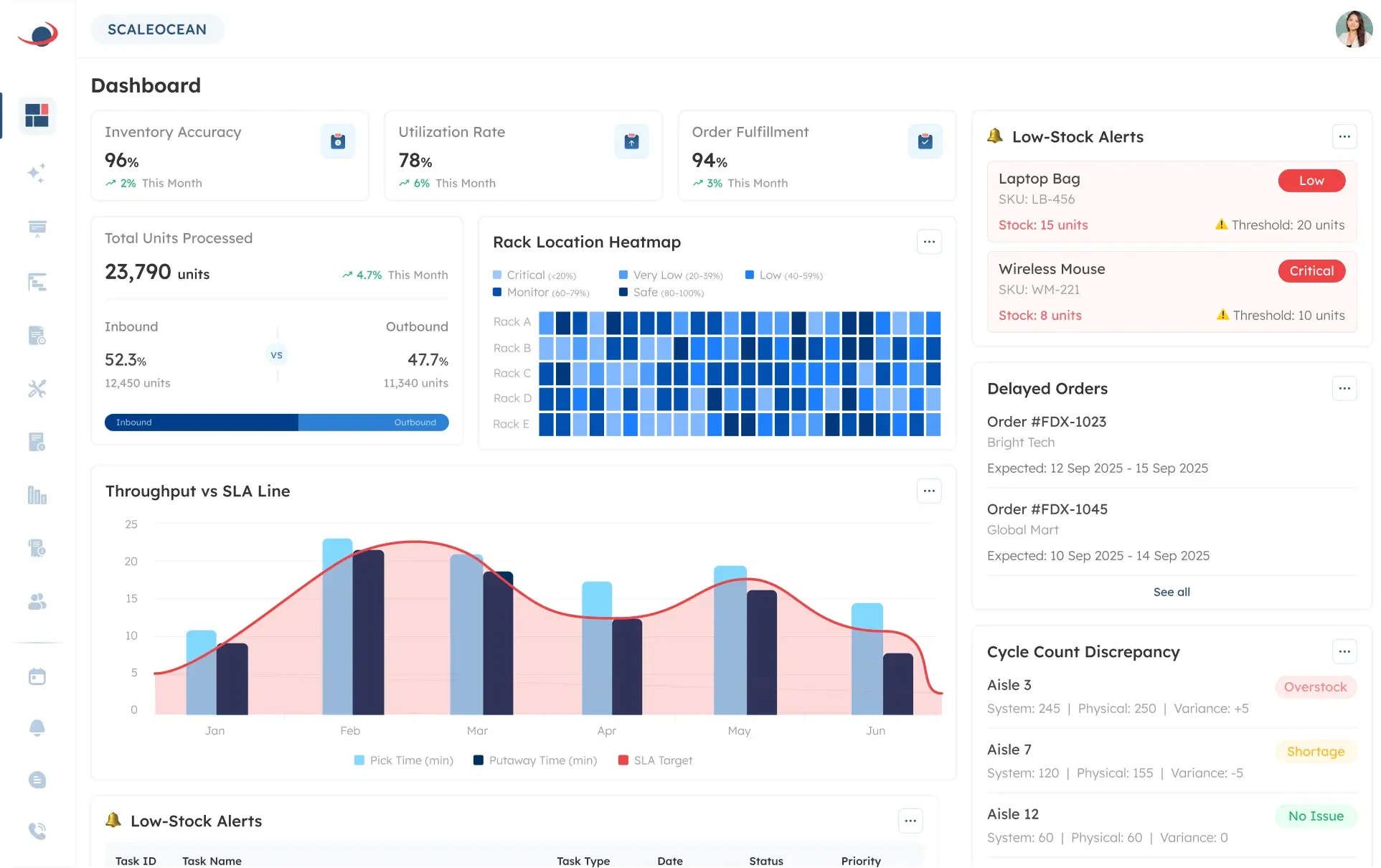
Maintaining warehouse organization manually becomes more challenging as inventory grows. Businesses may experience issues such as misplaced products, inefficient storage utilization, and longer picking or fulfillment times.
To overcome these challenges, warehouse module of ScaleOcean Atlas helps businesses organize warehouse operations through real-time inventory tracking, automated workflows, and intelligent storage management.
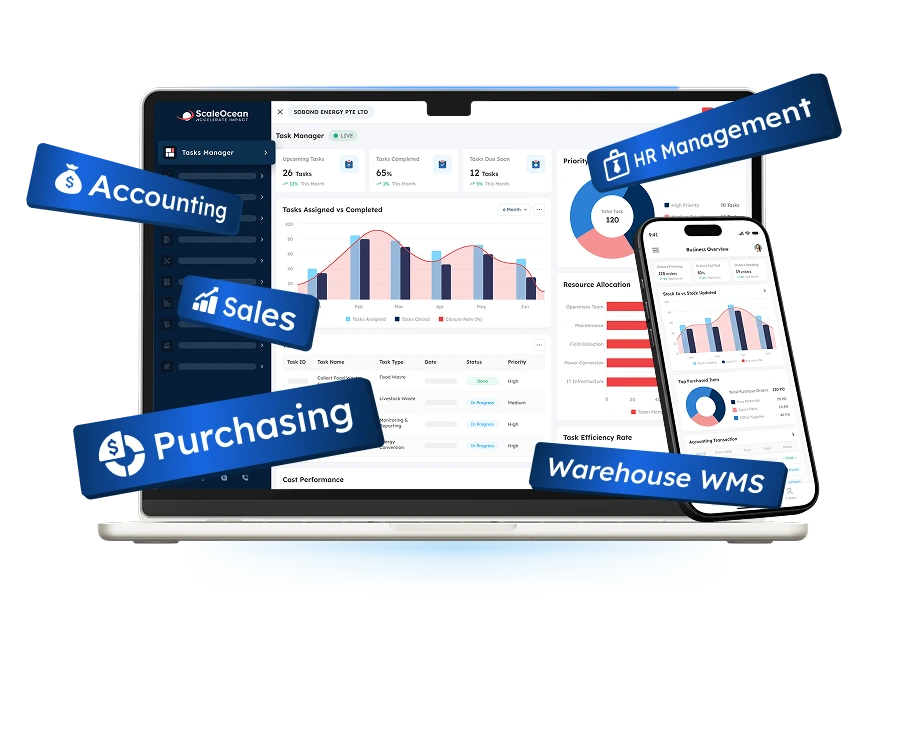
As part of the ScaleOcean Atlas, the system integrates warehouse operations with sales, procurement, inventory, accounting, and reporting in one centralized platform. This integration enables businesses to manage inventory movement more accurately.
Additionally, ScaleOcean Atlas is embedded with ScaleMind AI, an AI-powered assistant to automate warehouse activities. For example, it can recommend the best storage locations, suggest efficient picking routes, and help maximize space utilization.
Businesses looking to improve warehouse organization can also schedule a consultation to discover how ScaleOcean Atlas streamlines warehouse operations. Some of its key features include:
- Real-Time Inventory Tracking: Monitors stock quantities and storage locations across multiple warehouses, providing real-time visibility into inventory movement and availability.
- Barcode and QR Code Integration: Automates inventory updates during receiving, picking, and shipping to reduce manual errors and improve stock accuracy.
- AI-Powered Warehouse: Recommends optimal storage locations based on available space, product characteristics, and inventory movement to maximize storage capacity.
- Smart Picking Optimization: Suggests efficient picking routes that reduce travel time and improve order fulfillment productivity.
In Conclusion
Poor warehouse organization can lead to low SKU visibility, slow pick-and-pack processes, and difficulty fulfilling customer orders, ultimately affecting operational efficiency and customer satisfaction.
By implementing effective warehouse organization ideas that include optimizing layouts and adopting warehouse systems, businesses can improve inventory visibility, accelerate order processing, and maximize available storage space.
For businesses looking to overcome these warehouse challenges, warehouse module of ScaleOcean Atlas simplifies inventory tracking, optimizes storage locations, and streamline warehouse operations in one integrated platform.
You can schedule a consultation today to see how ScaleOcean Atlas can help you build a more organized, efficient, and scalable warehouse.
FAQ:
1. What is the best way to organize a warehouse?
The best way to organize a warehouse is by creating a logical workflow from receiving to shipping, storing fast-moving items in accessible locations, maximizing vertical space, and using barcode or WMS technology for accurate inventory tracking.
2. What are the 7s rules in warehouse?
The 7S principles include Sort, Set in Order, Shine, Standardize, Sustain, Safety, and Security. Together, they help maintain an organized, safe, and efficient warehouse while reducing wasted time and improving productivity.
3. What are the basic principles of warehouse?
Warehouse organization focuses on maximizing storage space, minimizing unnecessary product handling, maintaining a smooth inventory flow, and improving inventory accuracy to support faster and more efficient order fulfillment.
















.png)