




Order fulfillment software is a program for enterprises that wish to provide products promptly. With constantly increasing customer expectations, there’s a need for a system to streamline every aspect that involves the shipping of products.
For every eCommerce or wholesale business in the Philippines, the software supposedly can help to enhance the efficiency of the warehouse, thereby minimizing mistakes. This guide will help you to determine which is the best option for enterprise.
 Key Takeaways
- Order fulfillment software is a solution that automates inventory management, order processing, and order tracking to improve warehouse efficiency and fulfillment accuracy.
- The benefits of order fulfillment software include reduced fulfillment time, optimized warehouse picking, and multiwarehouse visibility.
- Essential features to look for include real-time inventory management, automated order processing, order tracking, and multi-warehouse management.
- ScaleOcean Atlas for Order Fulfillment helps businesses streamline order fulfillment and warehouse operations through one integrated ERP platform.
What is Order Fulfillment Software?
Order fulfillment software is a type of digital software that automates and streamlines the entire order fulfillment process. It tracks product stock, receives orders and manages deliveries from one platform.
An effective order fulfillment system connects warehouse operations with sales channels, inventory management, and ERP systems. This integration minimizes manual work while ensuring inventory data remains accurate across selling platforms.
An order fulfilment system is an effective solution that integrates warehouse activities, sales channels, inventory management and ERP systems. This integration helps reduce manual effort and guarantees accurate inventory data on selling platforms.
As eCommerce continues to grow across Southeast Asia, businesses in the Philippines are handling more online orders and facing higher customer expectations for fast and accurate deliveries.
According to the U.S. Commercial Service’s Southeast Asia Region Forecast, Southeast Asia’s internet economy is expected to grow more than USD 330 billion, while the Philippines’ eCommerce market is projected to more than double by 2030.
This is why implementing order fulfillment software has become increasingly important for businesses looking to stay competitive, because businesses need technology that can streamline warehouse operations and support future growth.
What are the Benefits of Order Fulfillment Software?
In modern businesses, hundreds or thousands of customer orders are handled on a daily basis. In the absence of automation, warehouse processes tend to slow down or fail to ship correctly. These are the reasons why many organizations invest in software:
1. Reduced Fulfillment Time
One of the greatest benefits of the best order fulfillment software is the faster shipping process. Automated workflows remove repetitive manual tasks and give warehouse teams more time to focus on enhancing fulfillment time.
The software automatically creates picking lists, packing instructions and shipping labels, which assists warehouse personnel to process more orders in less time. It also cuts down on nicks and delays that can occur due to manual data entry.
For businesses participating in major shopping campaigns on Shopee or Lazada, such as 6.6, 9.9, 11.11, and 12.12 in the Philippines, reducing fulfillment time can significantly improve operational performance.
2. Optimized Batch, Zone, and Wave Picking
The advanced warehouse order fulfillment software provides a variety of warehouse picking strategies to boost productivity. These include, batch picking, zone picking, wave picking.
These techniques minimize unnecessary movements within the warehouse and boost both picking speed and order accuracy. So, warehouse order fulfillment software is crucial to deal with the movement of inventory.
3. Increased Customer Satisfaction
The third benefit of Order Fulfillment Software is to increase costume satisfaction. It is because the customers are expecting precise orders and quick deliveries. This software minimizes mistakes by verifying inventory availability.
Furthermore, this software is significant for businesses in the Philippines, especially those involved in the growing eCommerce industry, where delivery experiences can significantly shape customer loyalty.
4. Multichannel Fulfillment
Most companies nowadays are supplying products through multiple channels, including websites or marketplaces like Shopee or Lazada. Further, multichannel order fulfillment software integrates orders from multiple channels into a single dashboard.
Rather than having to update stock in each system, companies can centrally control all orders received and ensure inventory is up to date. Moreover, it’s to prevent duplicate entries and reduce inventory discrepancies.
5. Multiwarehouse Visibility
The fifth advantage of multichannel order fulfillment software is increased visibility of several warehouse locations. As companies grow and have multiple warehouses, it becomes difficult to manage stocks manually.
Real-time inventory visibility and stock availability data allows businesses to track stock in all locations from a single source. This enables them to fill orders, avoid stockouts, and overstocking.
Some of the Features You Need in an Order Fulfillment Software
Adopting the right order fulfillment software with the right features can help businesses streamline their warehouse operations, enhance order accuracy, and efficiently manage growing order volumes. Here are some key features to consider:
- Real-Time Inventory Management: Provides real-time updates on stock levels, ensuring products are always available when they are needed, and minimizing overselling or stock out situations.
- Automated Order Processing: Automatically receives, validates and routes customer orders to speed up order fulfillment and reduce manual handling.
- Barcode & QR Code Scanning: Improves inventory accuracy by enabling warehouse staff to quickly identify, pick, pack, and verify products with minimal errors.
- Order Tracking: Gives live tracking of orders to both the warehouse team and customers, boosting visibility during order fulfillment.
- Multi-warehouse Management: Manages inventory and orders from multiple warehouses, making it easier for businesses to allocate orders effectively.
The 11 Best Order Fulfillment Software in the Philippines
There are a variety of different fulfillment solutions available and the ideal platform will vary based on your warehouse requirements and your integration needs. Some of the best order fulfillment software in the Philippines include the following:
1. ScaleOcean Atlas for Order Fulfillment Powered with ScaleMind AI
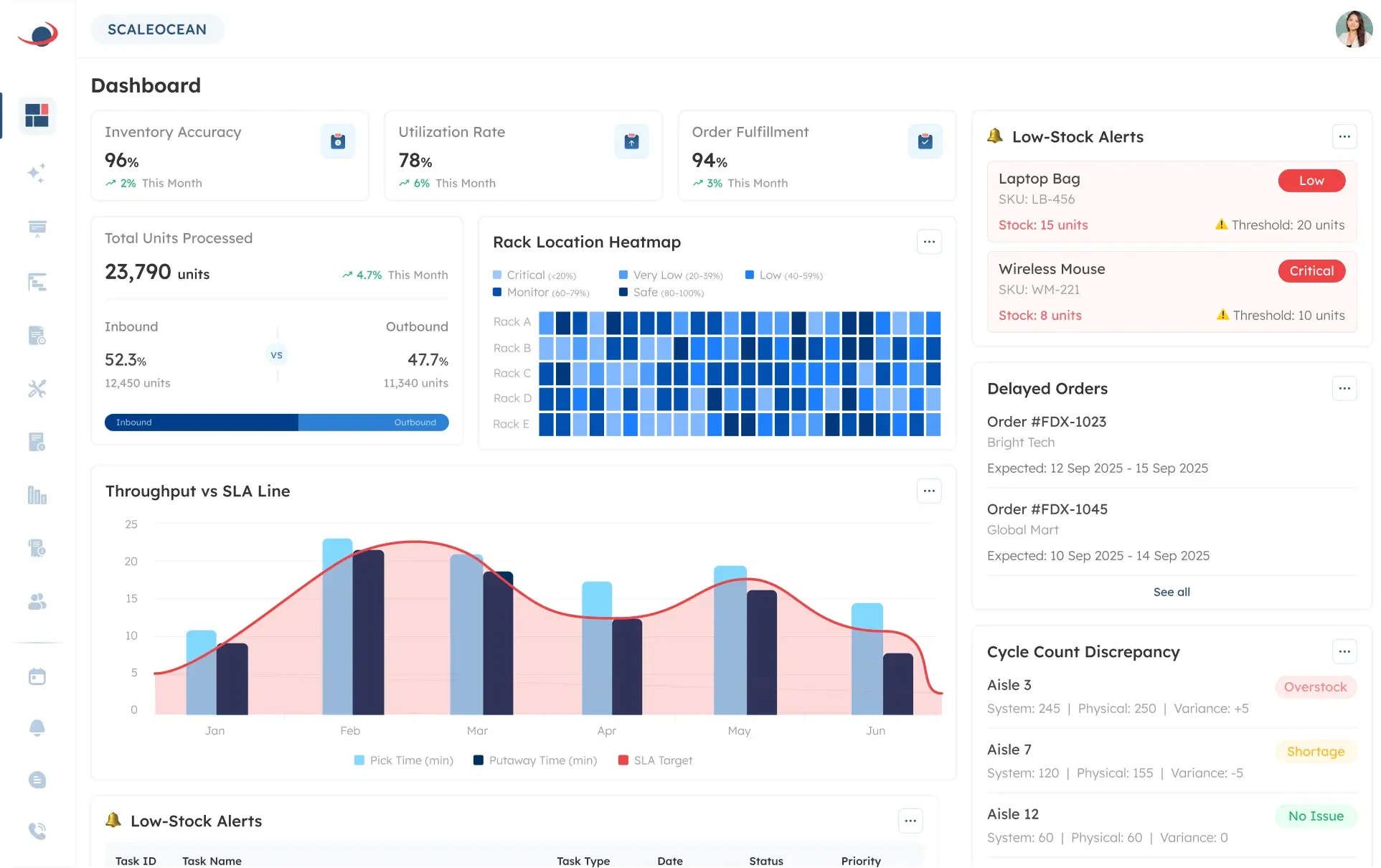
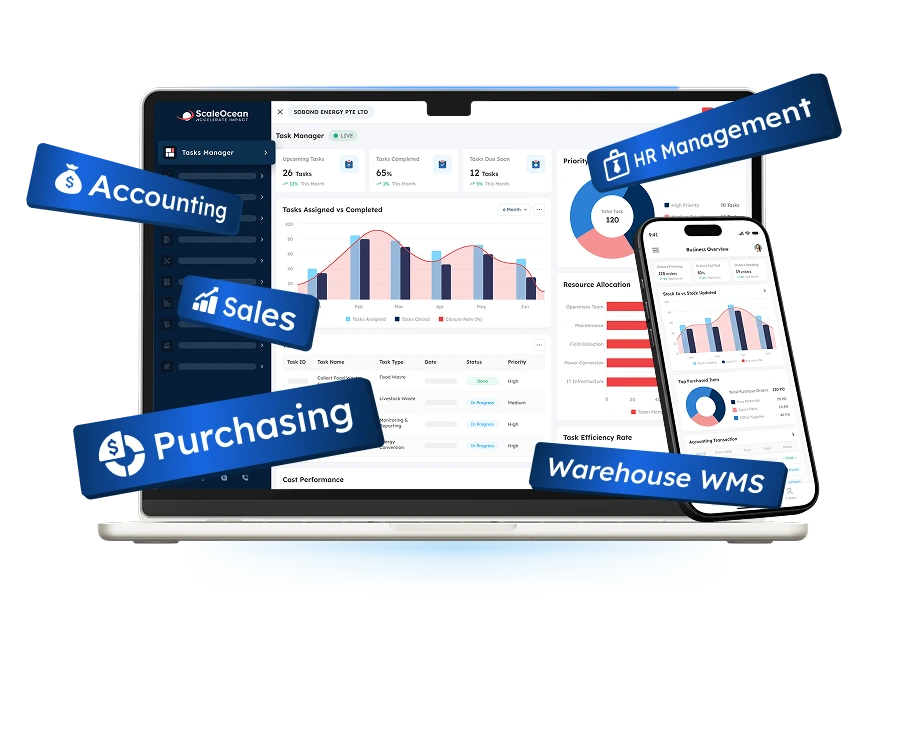
ScaleOcean Atlas is an AI-driven order fulfillment and ERP solution tailored to assist businesses in automating warehouse processes. It’s suitable for manufacturers, distributors, wholesalers, retailers, and eCommerce businesses.
One of ScaleOcean Atlas’s advantages is its integrated ERP platform. Instead of using separate applications for inventory, businesses can now find a solution that handles all aspects of their business from inventory, warehouse, to purchasing.
This integration helps to ensure data accuracy, reduce manual tasks, and give real-time supply chain visibility. Companies can also request a free demo before implementation to better understand ScaleOcean Atlas. Here the features of ScaleOcean Atlas:
- Order Fulfillment Automation: Automates the order fulfillment, such as picking, packing, shipping and order tracking processes, cutting down manual effort and improving the fulfillment efficiency.
- Warehouse Management System (WMS): Provides support for barcode scanning, batch picking, zone picking, warehouse optimization, put-away management and cycle counting.
- Real-Time Inventory Management: Enables real-time view of inventory at multiple warehouse locations to ensure accurate inventory and eliminate stock discrepancies.
- Multi-warehouse Management: Allows companies to control their inventory and order allocation from a single central platform between various warehouses.
- AI-Enhanced Analytics & Reporting: Provides real-time dashboards and analytics for operational monitoring, ensuring stay informed about warehouse productivity and movement of inventory.
Website: https://scaleocean.com/ph/solution/warehouse-management-system
| Pros | Cons |
|---|---|
|
|
2. ShipBob
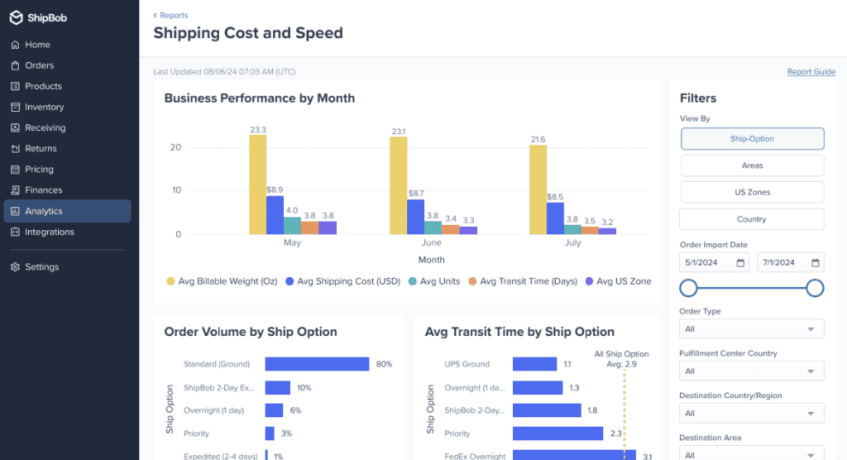
ShipBob is a cloud-based eCommerce order fulfillment software, which integrates fulfillment software and third-party logistics (3PL) services. It is made to order handling and shipping for eCommerce businesses via a single platform.
One of ShipBob’s advantages is its worldwide fulfillment network, which enables companies to keep their stock in numerous fulfillment facilities and ship their items to purchasers. These are a few of the features that are part of ShipBob:
- Third-Party Logistics (3PL): Outsourced warehousing, inventory storage, picking, packing, and shipping.
- Inventory Management: Offers live inventory tracking in multiple fulfillment centers.
- Order Management: Integrates and brings together customer orders across various sales channels into a single platform.
- Warehouse Management: Provides assistance to the warehouse and the movement of inventory in the ShipBob fulfillment centers.
Website: https://www.shipbob.com/
| Pros | Cons |
|---|---|
|
|
3. Zoho Inventory
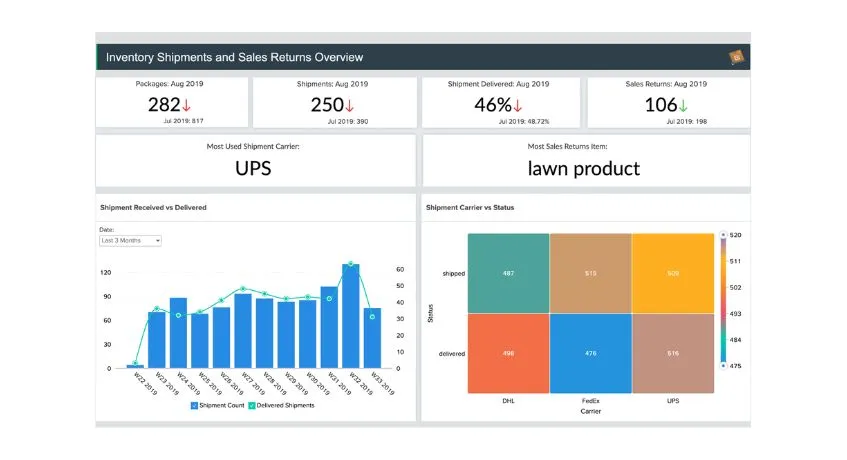
Zoho Inventory is a cloud-based inventory and eCommerce order fulfillment software that is mainly created for small and medium sized businesses. It assists businesses with managing inventory and keeping the stock in sync across several channels.
The software is a part of the Zoho ecosystem, which makes it easy to integrate with other Zoho applications, ideal for businesses that are already working with the Zoho suite. It offers a number of features, some of which are:
- Inventory Management: Enables real-time tracking of inventory levels throughout warehouses.
- Order Management: Manages sales orders, purchase, and backorders.
- Barcode Scanning: Enhances inventory accuracy on receiving and fulfillment.
- Shipping Integration: Integrates with shipping carriers to make order dispatching easier.
Website: https://www.zoho.com/
| Pros | Cons |
|---|---|
|
|
4. Oracle Netsuite
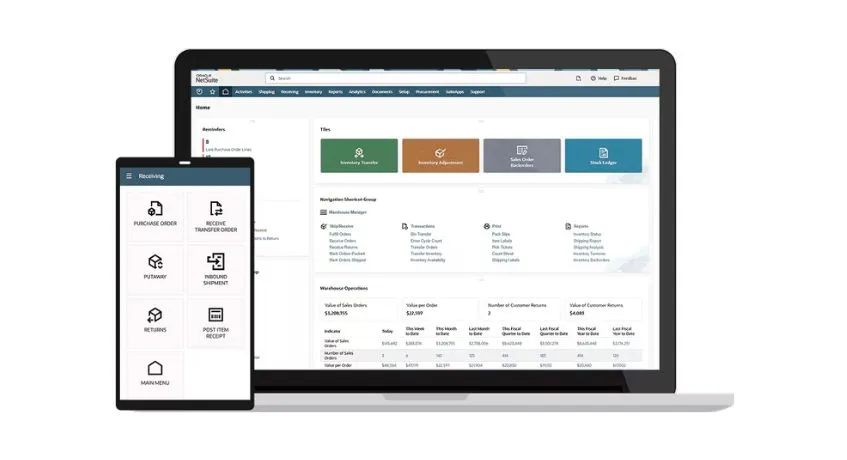
Oracle NetSuite is the cloud-based, enterprise resource planning (ERP) platform with its advanced inventory management and warehouse order fulfillment software. It’s suitable for medium-sized and large organizations with complex supply chains.
It enables businesses to manage fulfillment operations alongside finance and customer relationship management within one integrated system. Some of the features are:
- Order Management: Automates order processing from sales through fulfillment.
- Inventory Management: Provides real-time inventory visibility across multiple locations.
- Warehouse Management: Assists in picking, packing, shipping and warehouse optimization.
- ERP Integration: Integrates fulfillment with finance, accounting, procurement and CRM.
Website: https://www.netsuite.com/
| Pros | Cons |
|---|---|
|
|
5. Shipstation
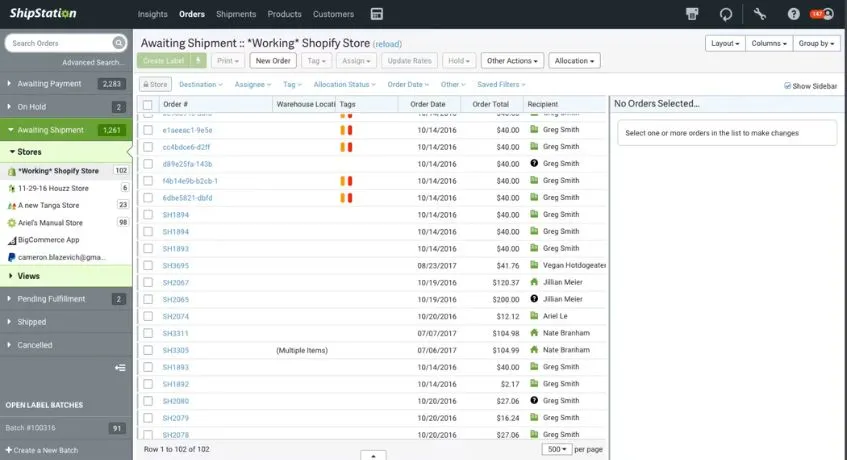
ShipStation is a cloud-based shipping and order fulfillment software that helps businesses manage customer orders and shipping activities across multiple sales channels.
It is popular among the online retailers who want to reduce the delivery time. The platform unifies order management and works with several marketplaces to streamline order fulfillment tasks. Some of the features are:
- Order Management: Integrates sales orders from each online sales channel.
- Shipping Automation: Automates shipping labels, packing slips, and shipping rules.
- Carrier Integration: Connects with multiple domestic and international shipping carriers.
- Order Tracking: Offers businesses and customers a view of shipment tracking.
Website: https://www.shipstation.com/
| Pros | Cons |
|---|---|
|
|
6. LinnWorks
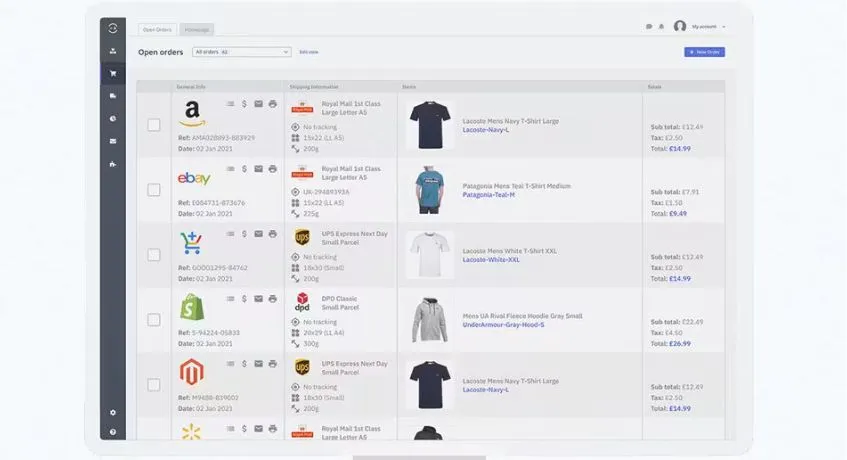
Linnworks is a cloud-based order and inventory management platform designed to help retailers and eCommerce businesses automate fulfillment across multiple sales channels.
The platform integrates with various online marketplaces, shopping carts, and shipping carriers, allowing businesses to streamline fulfillment workflows from a single dashboard. Below here are features within LinnWorks:
- Order Management: Consolidates customer orders from multiple sales channels into one platform.
- Inventory Management: Synchronizes inventory levels across warehouses and online marketplaces.
- Warehouse Management: Supports picking, packing, and inventory movement.
- Shipping Integration: Connects with multiple shipping carriers to simplify order dispatch.
Website: https://www.linnworks.com/
| Pros | Cons |
|---|---|
|
|
7. Jotform
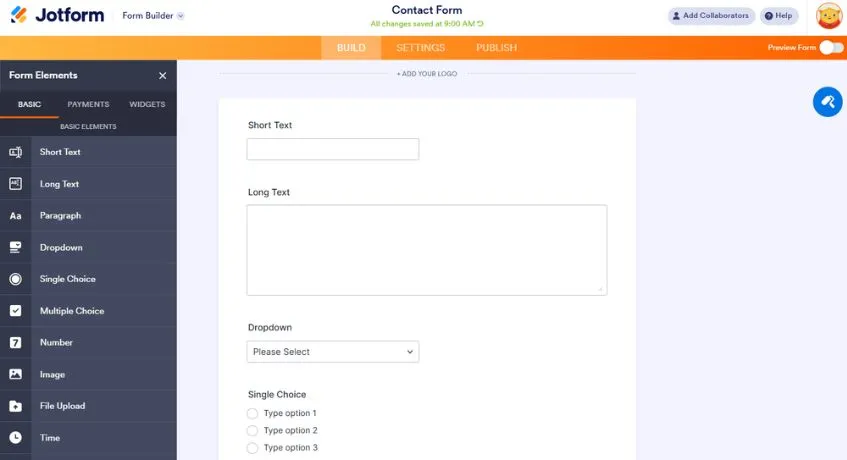
Jotform is primarily known as an online form builder but also offers workflow automation capabilities. Businesses can use customizable forms to collect customer orders, automate approvals, and connect with third-party applications.
Through integrations with payment gateways, inventory tools, and workflow automation platforms, Jotform can help streamline order collection and internal fulfillment processes. Here are some of features include:
- Online Order Forms: Creates customizable forms for collecting customer orders.
- Workflow Automation: Automates approvals, notifications, and internal processes.
- Payment Integration: Connects with multiple online payment providers.
- App Integrations: Integrates with CRM, ERP, and productivity applications.
Website: https://www.jotform.com/
| Pros | Cons |
|---|---|
|
|
8. Extensiv
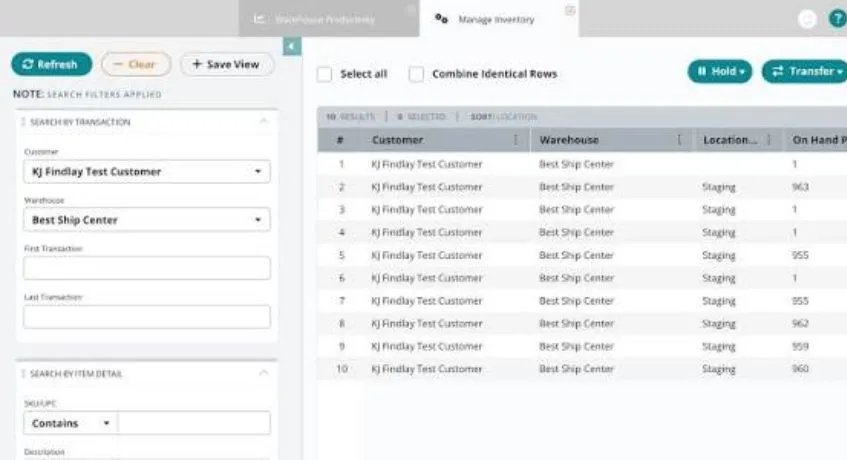
Extensiv is a cloud based warehouse and fulfillment solution for 3PL’s and companies running warehouses. The software can assist in the optimization of inventory management and warehouse processes.
Therefore, Extensiv enables real-time visibility of the inventory, and connects with shipping and eCommerce. Here are some of features within Extensiv that enhance warehouse management:
- Warehouse Management System: Manages receiving, put-away, picking, packing, and shipping.
- Inventory Management: Monitors inventory at various warehouse sites.
- Order Fulfillment: Streamlines order processing and warehouse operations.
- Barcode Scanning: Enhances stock control and warehouse productivity.
Website: https://www.extensiv.com/
| Pros | Cons |
|---|---|
|
|
9. Logiwa
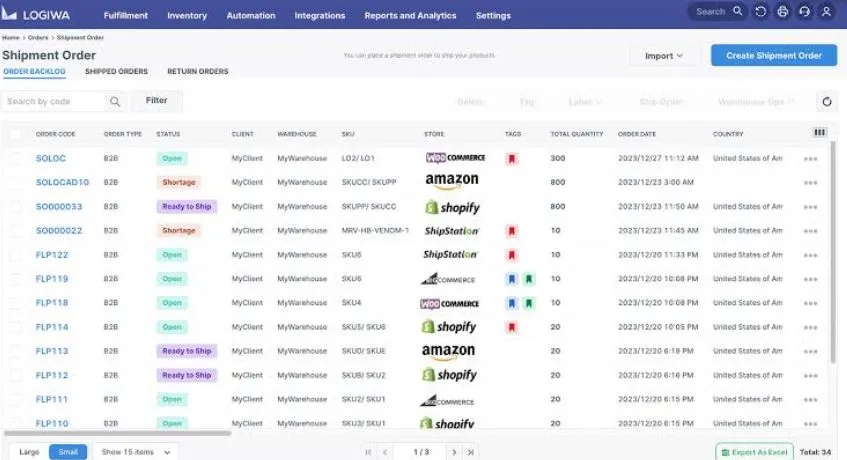
Logiwa is a cloud-native warehouse management and order fulfillment solution built for high-volume eCommerce. The platform is designed to streamline warehouse operations, boost inventory accuracy, and enhance fulfillment efficiency.
Logiwa offers an ideal solution for rapidly expanding businesses, allowing users to streamline warehouse operations and control inventory from a single platform. Here are some of features include:
- Warehouse Management: Facilitates the receiving, picking, packing, shipping and movement of inventories.
- Inventory Tracking: Offers real-time visibility of inventory throughout the warehouse locations.
- Order Management: Manages orders from various sales channels.
- Barcode Scanning: Speeds up the identification process of products.
Website: https://www.logiwa.com/
| Pros | Cons |
|---|---|
|
|
10. Magaya Supply Chain Software
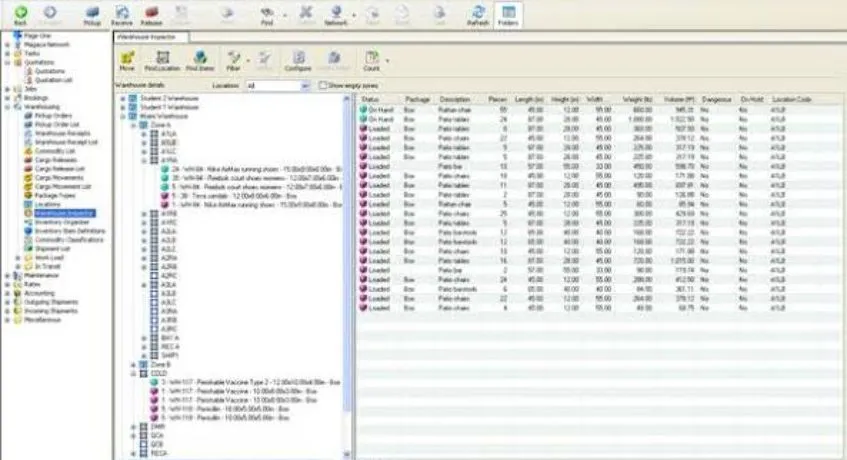
Magaya Supply Chain Software is a logistics and supply chain management solution designed for freight forwarders, distributors, importers, exporters, and warehouse operators.
The software integrates warehouse management and logistics/transportation functions, which is ideal for companies engaged in international trade and supply chain management. It has a number of features such as:
- Warehouse Management: Responsible for storing, picking, packing and shipping inventory within the warehouse.
- Inventory Control: Monitors inventory flow in and out of various warehouse areas.
- Transportation Management: Coordinates shipping and freight operations.
- Order Management: Processes customer orders from fulfillment to delivery.
Website: https://www.magaya.com/
| Pros | Cons |
|---|---|
|
|
11. Mintsoft
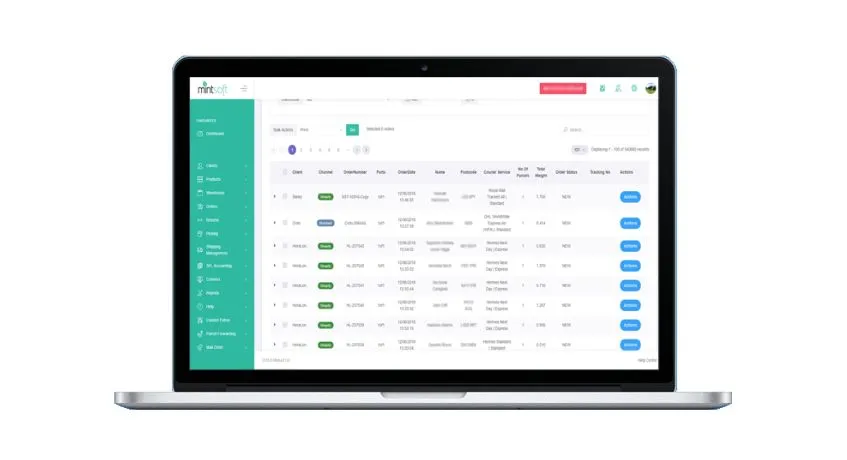
Mintsoft is a cloud-based order fulfillment & warehouse management solution for retailers, wholesalers and third party logistics providers. It enables enterprises to streamline their ordering and delivery procedures.
The platform connects with a range of online marketplaces, couriers and business applications, allowing businesses to oversee their fulfillment tasks from a single platform. Here are some features include:
- Order Management: Gathers the orders of customers from various sales channels.
- Inventory Management: Offers live inventory tracking and stock updates.
- Warehouse Management: Supports receiving, picking, packing, and dispatch.
- Courier Integration: Connects with multiple shipping carriers.
Website: https://www.mintsoft.com/
| Pros | Cons |
|---|---|
|
|
How to Choose the Best Order Fulfillment Software for You
The right order fulfillment software will depend on your business size and future plans. To ensure you choose a solution that meets both your current and future operational needs, consider the following factors:
- Understand Business Requirements: Analyze the current order fulfillment process, warehouse space, orders per day and future business growth plans.
- Prioritize Automation: Use software that automates repetitive tasks like order routing, inventory updates, picking assignments, packing, and shipping paperwork.
- Ensure Scalability: Ensure it scales as your business grows, accommodating more warehouse locations, sales channels, and order volumes.
- Verify Integration Capabilities: Make sure that the software seamlessly integrates with ERP systems and warehouse management systems (WMS).
- Evaluate Reporting & Analytics: Check for real-time dashboards and comprehensive reports of inventory, order accuracy, fulfillment performance.
- Consider Ease of Use: An easy to use interface can help warehouse staff adapt the system rapidly which will help reduce training time.
These aspects can be used to determine the value of the order fulfillment software system that may not only streamline your warehouse operations but also aid your company in long-term growth, customer satisfaction, and general efficiency.
In Conclusion
As eCommerce and multichannel selling continue to grow in the Philippines, investing in a reliable fulfillment solution can help businesses improve productivity, cut down on costs, and provide a better customer experience.
ScaleOcean Atlas for Warehouse Management combines all the essential functions of order fulfillment, inventory management, and warehouse order fulfillment in a single platform. With its WMS, businesses can gain real-time inventory visibility and automate warehouse activities.
For more information, you can also request a free demo of the system to experience how it can aid you optimize your warehouse and boost your business growth.
FAQ:
1. What is order fulfillment software?
Order fulfillment software automates inventory management, order processing, picking, packing, shipping, and order tracking. It helps businesses improve warehouse efficiency, reduce manual errors, and fulfill customer orders faster and more accurately.
2. What is the best order management software?
The best order management software depends on your business size, industry, budget, and operational needs. Compare features, scalability, integrations, ease of use, and pricing to choose the solution that best fits your business.
3. How does order fulfillment software improve warehouse efficiency?
Order fulfillment software automates warehouse tasks such as picking, packing, inventory updates, and shipping. This helps reduce manual errors, improve order accuracy, and increase overall warehouse productivity.















.png)