




Putaway is one of the processes of warehouse operations that can efficiently store and retrieve goods for shipment. It’s because a well-managed putaway system means that every item received is put in the right place for an optimized shipping.
For business in the Philippines, where retail, distribution, and eCommerce are rapidly growing, efficient warehouse operations are becoming important. In this article, you can explore the important part of warehouse putaway to optimize warehouse management.
 Key Takeaways
- Putaway is the process of moving received goods from the receiving area to storage locations to improve warehouse organization.
- An effective putaway process increases picking speed, maximizes warehouse space, and minimizes stock discrepancies.
- The types of putaway processes in warehouse management are direct, indirect, fixed-location, and dynamic.
- ScaleOcean Warehouse ERP Software helps businesses automate putaway with AI-powered, barcode scanning, and real-time inventory tracking.
1. What is Putaway in Warehouse?
Putaway is the warehouse operation that takes place immediately after goods are received and inspected. During this process, products are moved from the receiving dock to the storage area.
The putaway operation is a key element in the warehouse management process as it links receiving and inventory storage. If the products are stored properly, it can help to track inventory and increase productivity.
Researchers in the South Asian Journal of Social Studies and Economics identified warehouse management can predict business financial performance, further emphasizing the role of proper warehouse management in business performance.
Furthermore, WMS can automatically put-away process by suggesting the optimal storage location for products for example, based on their size, volatility, or space in the warehouse. Stating that it can prove inventory management even better.
2. Core Benefits of the Putaway Process
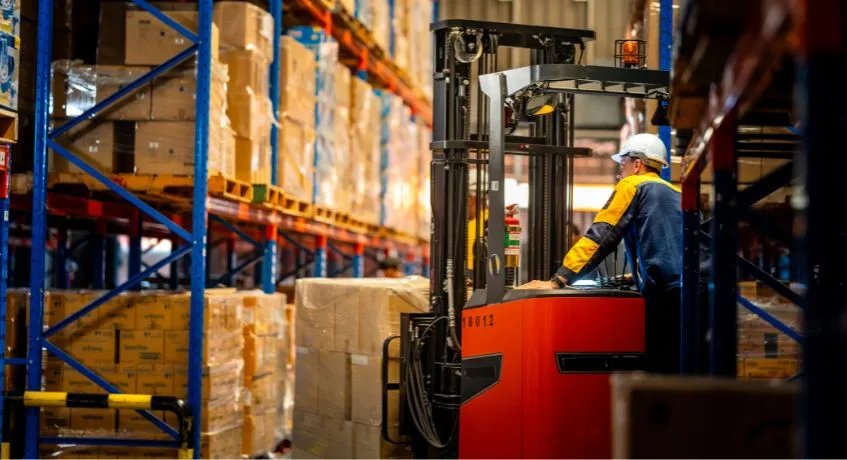
A standardized putaway process offers significant advantages beyond simply organizing inventory. It establishes a platform for the smooth functioning of the warehouse and contributes to the success of the business.
a. Increased Picking Speed
Warehouse workers can find a product much quicker when do orders picking if inventory is properly stored. Furthermore, this is especially important for businesses in the Philippines that are now seeing more and more orders being placed via online.
b. Easier Inventory Tracking
All products that go into storage using a structured putaway process are recorded in the inventory system. Businesses can keep an eye on inventory movement and minimise lost inventory with barcode or RFID technology embedded into a WMS.
c. Maximized Space Usage
Putaway strategy optimizes the space in the warehouse by putting the products in the appropriate place according to storage requirements, turnover, and available capacity. This plays an important role in organizing a warehouse, ensuring inventory remains accessible while making the best use of available space.
d. Reduced Discrepancies & Losses
The third advantage of putaway is to minimize discrepancies and losses. Inaccurate storage areas can cause discrepancies in stock and loss of items. A structured putaway process reduces these problems by putting products away in the appropriate locations.
3. The Warehouse Putaway Flow
Typically, the putaway process has several standardized steps and is designed to ensure that the inventory is stored accurately. Following these steps, along with implementing some tips to optimize warehouses, help make inventory management easier:
- Receiving & Quality Inspection: This process involves checking product quality and quantity when the products are received at the warehouse. If the items are damaged or are wrong, they can be separated before they are stored.
- WMS Assignment: Once the warehouse has been evaluated, the WMS determines the best available storage place according to the predefined warehouse rules, product category, and the history of the warehouse movement.
- Stock Transport: Once WMS recommends the location, the warehouse team moves the products to the recommended location using a forklift, pallet jack, or any other material handling equipment as part of efficient managing materials.
- Logging & Verification: At the end, any product is checked by a barcode or RFID system to ensure that it has been stored properly. The WMS automatically updates the inventory records.
 Also Read: Warehouse Receiving: Guide, Process, & How to Improve
4. What Are the Types of Putaway in Warehouse?
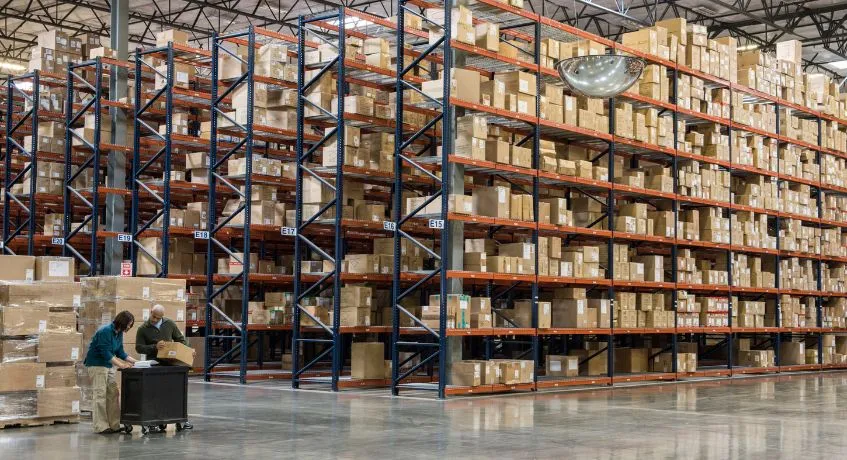
There are several different warehousing activities for storing products in warehouses. Knowing what is available in a warehouse can assist a company decide on the best kind of putaway. Here are some types of putaway in warehouse:
a. Direct Putaway
Direct putaway assigns products to storage locations as soon as the product is received from the dock. It is suitable for warehouse facilities that have a fixed arrangement of items and improves the speed of the shipment process.
b. Indirect Putaway
Indirect putaway is where products are temporarily stored in a staging area before final storage. This approach can be beneficial for larger deliveries, extra checks, or when space is constrained, offering more flexibility in the warehouse.
c. Fixed-Location Putaway
Fixed-location putaway is an essential part of the warehouse where each product is stored in a permanent location. It is suitable for items that are picked often or have high value This to make things more organized.
d. Dynamic Putaway
Dynamic putaway uses a WMS to match the product to the best available storage location based on space, product size, inventory turnover and picking frequency. It also optimizes warehouse racking utilization, improving storage flexibility and operational efficiency.
5. The Future of Putaway and Warehousing in the Philippines
Warehousing in the Philippines is evolving rapidly due to expanding eCommerce, retail, and regional supply chain development. Today, businesses demand faster shipping inventory with accurate inventory accuracy.
The Philippine Statistics Authority (PSA) reported that wholesale and retail trade is still among the largest sectors to contribute to the country’s economic activity, which further necessitates the need for efficient operations in a warehouse.
In addition, it suggested maximizing business potentials through digital transformation amongst companies in the Philippines to enhance their productivity and competitiveness. These trends encourage companies to adopt technologies such as:
- Warehouse Management Systems (WMS): Centralize warehouse operations by managing receiving, putaway, inventory tracking, picking, and shipping from one top warehouse management software.
- AI-assisted Warehouse Management: Uses artificial intelligence to optimize storage assignments, predict inventory movement, and improve warehouse productivity.
- Barcode and RFID Systems: Enable faster product identification, reduce manual errors, and improve inventory accuracy throughout the putaway process.
- Real-time Inventory Visibility: Provides instant updates on stock locations and quantities, helping businesses make faster operational decisions.
- Mobile Warehouse Applications: Allow warehouse staff to perform receiving, putaway, picking, and inventory updates directly from handheld devices.
- Automated Putaway Recommendations: Suggest the most suitable storage locations based on product characteristics, warehouse capacity, and predefined storage rules.
6. Maximize Putaway Efficiency with ScaleOcean AI-Integrated WMS
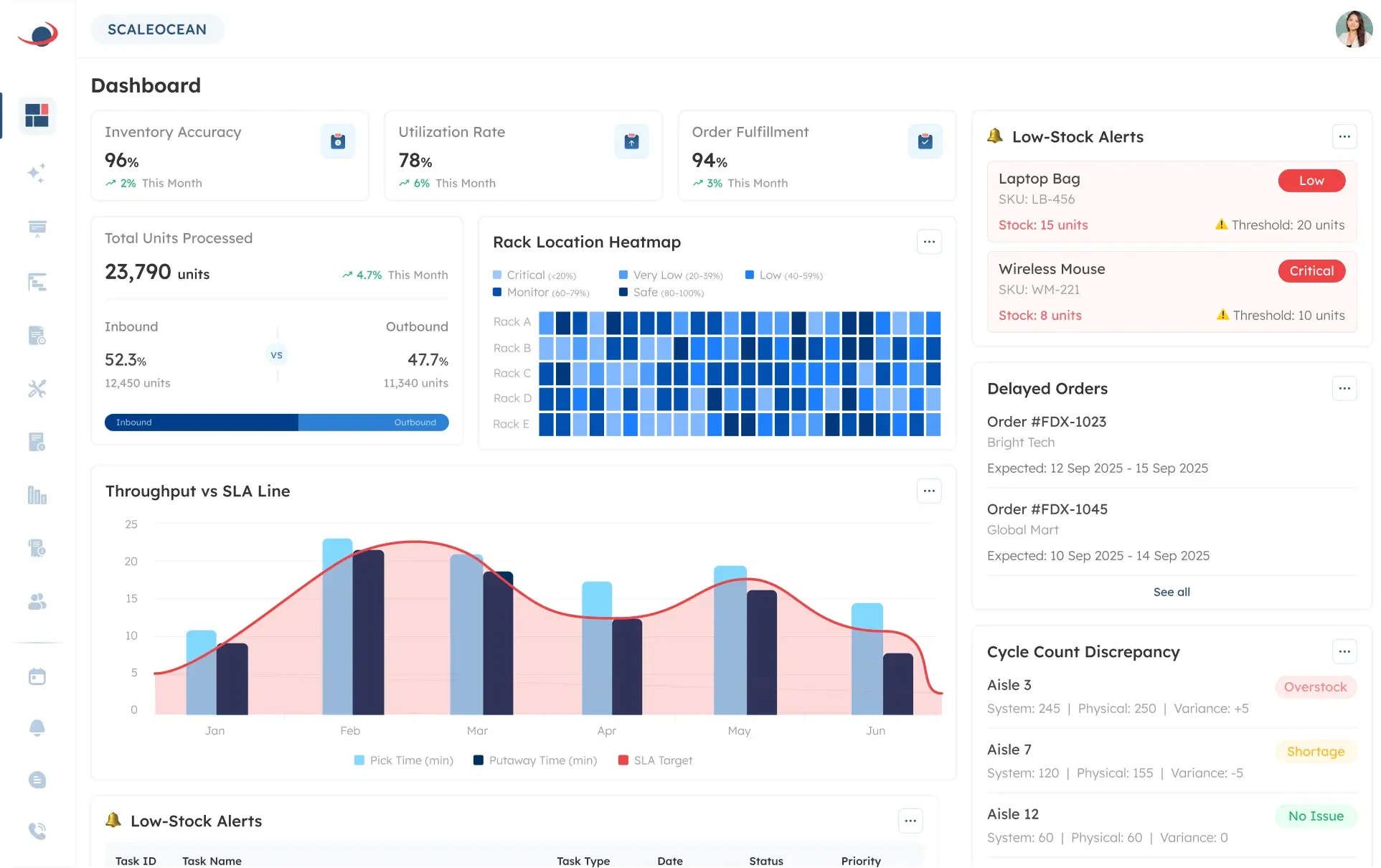
Manually handling putaway can cause inventory to be lost, space to be wasted, picking times to be longer, and stock records to be inaccurate. This will cause more complications as warehouses become more complex.
To overcome these challenges, ScaleOcean’s AI-powered Warehouse Management System automates putaway by recommending the most suitable storage locations, product characteristics, inventory turnover, and predefined warehouse rules.
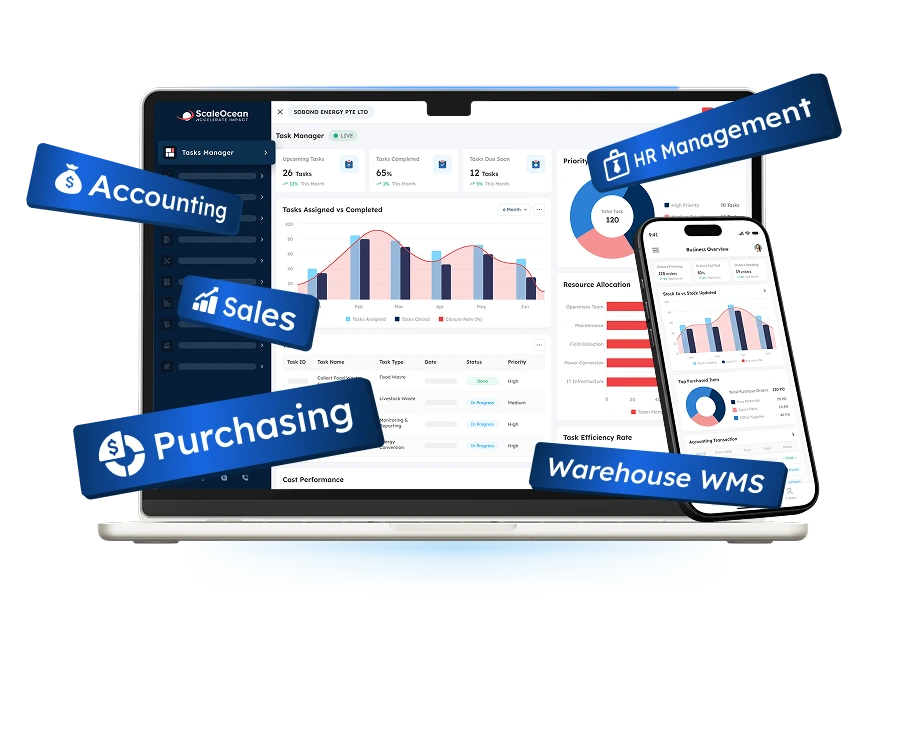
As one of the top solutions, ScaleOcean Warehouse ERP Software also combines warehouse management, inventory, procurement and logistics functions in one platform to manage the flow of inventory effectively.
Additionally, ScaleOcean seamlessly connects with other business operations to enhance productivity and efficiency in all departments. Request a free demo and discover how ScaleOcean can optimize your warehouse process. Key features include:
- AI Smart Putaway Recommendations: Automatically suggest the best storage space based on the available storage space, dimensions, turnover rate and warehouse rules.
- Real-Time Inventory Tracking: Keep track of product locations and stock levels in real time after storage for better inventory visibility and accuracy.
- Barcode & QR Code Integration: Reduce manual entry of product information during putaway, confirm product location, and minimize inventory errors with barcode & QR.
- Warehouse Location Management: Manage warehouse location with digital warehouse mapping for faster storage and retrieval from racks, shelves, and zones.
- Multi-Warehouse Management: Manage putaway and inventory in multiple warehouses within one dashboard.
- Warehouse Performance Dashboard: Keep tabs on putaway productivity, storage utilization, inventory accuracy, and warehouse performance with real-time dashboards.
7. In Conclusion
The putaway process is one of the most important activities in the warehouse that can significantly affect warehouse space utilization and inventory accuracy. This system with a putaway process can increase the productivity of the warehouse.
As warehouse operations in the Philippines continue to grow alongside retail, manufacturing, and eCommerce industries, adopting intelligent warehouse technology becomes increasingly valuable.
ScaleOcean Warehouse ERP Software helps businesses streamline putaway, inventory management, and warehouse operations with AI-powered automation and real-time visibility.
Whether you want to optimize your warehouse operations or save on costs, request a free demo and discover how its AI-powered WMS can streamline your warehouse and help your business growth.
FAQ:
1. What is the putaway rule?
Putaway rules are predefined guidelines that assign incoming goods to the most suitable storage locations based on factors such as product type, size, or storage requirements. They improve storage accuracy and reduce manual errors.
2. What is the main goal of the putaway process?
The putaway process ensures received goods are stored in the correct warehouse locations according to storage requirements. This improves inventory organization, speeds up picking, and supports accurate stock management.
3. What is the putaway cycle time?
Putaway cycle time measures how long it takes to receive, inspect, and store inventory. A shorter cycle time indicates a more efficient warehouse operation and faster product availability.
















.png)