




Inventory audit is one of the processes of maintaining accurate stock records and reducing financial losses. Whether you operate a retail store or warehouse in the Philippines, conducting regular inventory audits helps ensure inventory records.
Moreover, as businesses in regions like Metro Manila or CALABARZON continue to expand, relying solely on manual inventory tracking increases the risk of stock discrepancies. In this article, you’ll explore how to optimize auditing inventory.
 Key Takeaways
- Inventory audit is the process of verifying physical inventory against system records to improve stock accuracy, financial reporting, and warehouse control.
- Inventory audit procedures include warehouse preparation, inventory counting, data reconciliation, and implementing corrective actions.
- Common inventory audit techniques include physical counting, cycle counting, cutoff analysis, ABC analysis, freight cost analysis, overhead analysis, analytical procedures, and inventory reconciliation.
- ScaleOcean Atlas automates inventory audits with real-time inventory tracking, barcode scanning, cycle counting, inventory reconciliation, and integrated reporting.

1. What is Inventory Audit?
An inventory audit refers to the process of verifying inventory stocks in a company’s accounting or inventory management that matches the actual physical inventory stored in warehouses, retail stores, or distribution centers.
This process is important to maintain inventory accuracy and ensure that inventory valuation complies with accounting standards, such as PFRS / PAS 2 (Inventories). Unlike routine inventory counting, an inventory audit examines both physical stock and supporting documentation.
For businesses in the Philippines, periodic inventory counting and auditing are effectively mandatory under BIR regulations. Taxpayers engaged in the sale of goods are required by Section 13 of Revenue Regulations No. V-1 (the Bookkeeping Regulations).
This regulation is to keep a book of inventories in which they must record, in detail, the quantity, description, and total cost of every item of stock-in-trade, materials, supplies, and other goods at the start of business and at the close of each taxable year.
Therefore, proper inventory auditing and reporting help ensure tax compliance, support accurate financial statements, and reduce the risk of penalties during BIR examinations.
2. Why are Inventory Audits Important?

Inventory represents one of the largest business assets for manufacturers, distributors, wholesalers, and retailers. Even small inventory inaccuracies can lead to stock incorrect financial statements. Here are the key benefits of inventory audits:
- Improves Inventory Accuracy: Inventory audits compare physical stock with system records to identify discrepancies. This helps maintain accurate inventory data and supports efficient order fulfillment.
- Prevents Stock Losses: Regular audits detect inventory shrinkage resulting from spoilage, supplier errors, or administrative mistakes. With this, businesses can strengthen inventory controls and reduce unnecessary inventory losses.
- Supports Accurate Financial Reporting: Inventory audits ensure stock values are correctly recorded, helping businesses compile an official Inventory List BIR requirement and calculate the cost of goods sold (COGS), profits, and taxes more accurately while complying with the Philippine Financial Reporting Standards (PFRS).
- Improves Purchasing Decisions: With reliable inventory records, purchasing teams can forecast demand more accurately, avoid stockouts and overstocking, and optimize replenishment planning.
- Strengthens Internal Controls: Inventory audits review warehouse procedures, documentation, and inventory movements to identify process weaknesses, reduce fraud risks, and improve accountability across warehouse operations.
- Increases Customer Satisfaction: Accurate inventory records enable businesses to fulfill orders on time, reduce cancelled orders, and provide customers with reliable product availability.
3. How Do I Conduct an Inventory Audit?
Knowing how to conduct an inventory audit systematically helps businesses maintain accurate inventory records. Although the exact process varies, most inventory audits follow these four essential steps:
- Warehouse Preparation: Organize the warehouse before the audit by arranging products by SKU or category, updating barcode or RFID labels, separating damaged inventory, and preparing count sheets or handheld scanners.
- Counting Inventory: Physically count all inventory using methods such as manual counting, barcode scanning, RFID technology, or mobile inventory applications for greater accuracy.
- Data Reconciliation: Compare the physical count with records in the inventory management or ERP system. Businesses using the perpetual method can also review continuously updated inventory records to identify discrepancies caused by data entry errors, missing documents, or unrecorded transactions before making adjustments.
- Adjustments for the Future: Analyze audit findings and evaluate key metrics like your inventory management KPI to improve future operations, update standard operating procedures (SOPs), train employees, or adopt ERP software to automate inventory control.

4. What are Some Inventory Audit Procedures?
Businesses use different inventory audit techniques depending on their warehouse size, inventory volume, and operational needs. Below are the most common inventory audit procedures used by businesses in the Philippines:
a. Physical Counting
Physical counting is the most traditional inventory audit procedure. It involves counting every inventory item in the warehouse and comparing the results with inventory records.
Usually, this method is commonly performed at the end of an accounting period or fiscal year before preparing financial statements, particularly when businesses follow a periodic inventory system that relies on physical counts to determine ending inventory. Although it requires more time, physical counting provides the accuracy of inventory verification.
b. Cycle Counting
The second technique of auditing inventory is cycle counting. It’s one of the inventory audit procedures that counts small portions of inventory on a scheduled basis instead of auditing the entire warehouse at once.
For example, a warehouse may count one product category, storage rack, or warehouse zone each day or week. This approach minimizes operational disruptions while maintaining accurate inventory records throughout the year.
c. Cutoff Analysis
Cutoff analysis verifies that inventory transactions are recorded in the correct accounting period. This technique requires the auditors to review purchases, sales, and shipments made near the reporting date.
The third procedure is to ensure inventory is neither overstated nor understated. Moreover, this procedure is especially important for businesses with high transaction volumes, such as distributors and manufacturers.
d. ABC Analysis
ABC analysis classifies inventory into three categories based on value and business importance. It allows businesses to prioritize inventory control and focus on important items. Generally, ABC analysis breakdown into three category as this:
- Category A: High-value items that require the closest monitoring.
- Category B: Medium-value products with moderate inventory control.
- Category C: Low-value items that require simpler inventory management.
e. Freight Cost Analysis
Freight cost analysis evaluates transportation and shipping costs associated with inventory purchases. During this process, auditors verify whether freight charges are allocated correctly and included in inventory valuation methods when applicable.
The fifth of auditing techniques is particularly important for businesses that import products into the Philippines, as reviewing freight expenses helps determine the true landed cost of inventory and supports more accurate product costing.
f. Overhead Analysis
Another most common auditing inventory procedure is overhead analysis. The technique involves reviewing indirect costs associated with inventory production or storage, including warehouse utilities, labor, and facility expenses.
Therefore, this auditing process is usually used for manufacturing companies to ensure overhead costs are allocated appropriately to inventory. This auditing process also improves profitability analysis and supports more accurate financial reporting.
g. Analytical Procedure
Analytical procedures compare current inventory data with historical records, sales trends, and inventory turnover ratios to identify unusual fluctuations. Moreover, the significant differences may indicate inventory errors or changing customer demand.
h. Inventory Reconciliation
The next auditing technique is inventory reconciliation, which refers to the process of matching physical inventory counts with records in the inventory management system and accounting software.
Any discrepancies are investigated and corrected to ensure inventory records remain accurate. Further, businesses often perform reconciliation after physical counts or cycle counts to maintain consistent inventory data.
 Also Read: 12 Top Inventory Management Software in the Philippines 2026
5. An Inventory Audit Example: Your Warehouse in CALABARZON
It’s helpful to examine an example in order to understand how an inventory audit works. Below is an example of an inventory audit conducted within warehouse management operations:
Imagine you operate a food distribution warehouse in CALABARZON. You have 5,000 cartons of bottled beverages in your inventory records, but only 4,850 are counted when you audit your inventory. Your audit team does an inventory reconciliation and finds the following problems:
- There were some outbound deliveries that were shipped but not recorded in the system.
- Products with damage were taken off store without documentation.
- Multiple cartons were incorrectly stored in the warehouse, which made it difficult to find them when picking.
- A few pallets were damaged to the point of affecting the barcode label and resulting in scanning errors.
With the problems above, the solution was doing inventory audit, which keeps inventory records up-to-date, replaces damaged barcode labels, and trains employees on how to properly document inventory.
In addition, it improves stock tracking, enabling better inventory visibility, quicker order fulfillment, and more informed purchasing decisions. Inventory audits can also help identify and minimize discrepancies in business inventories.
6. Automate Every Inventory Audit with ScaleOcean Atlas
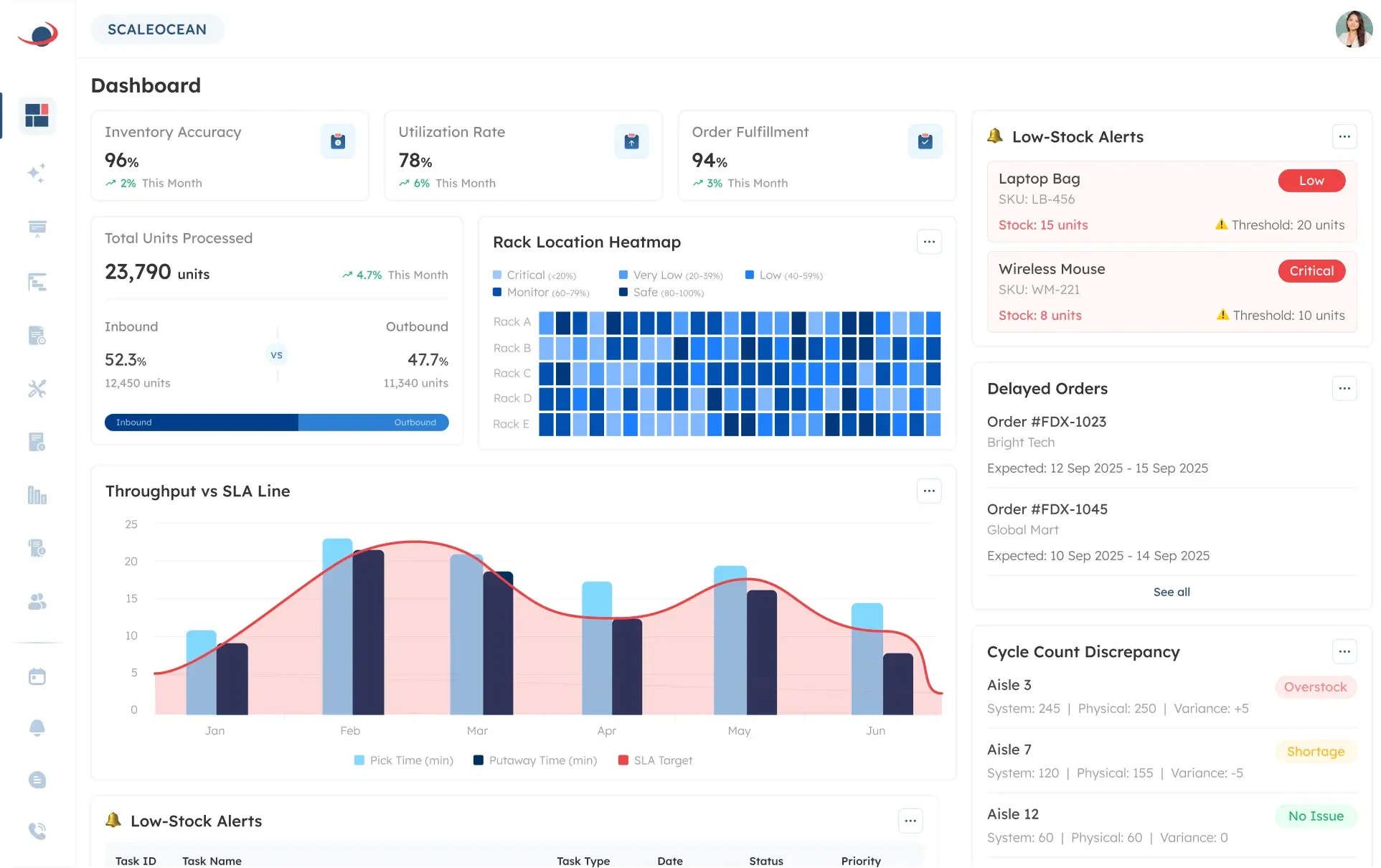
Manually tracking inventory is labor-intensive and often leads to stock discrepancies, particularly if your company has multiple warehouses, thousands of SKUs, or has a high frequency of transactions.
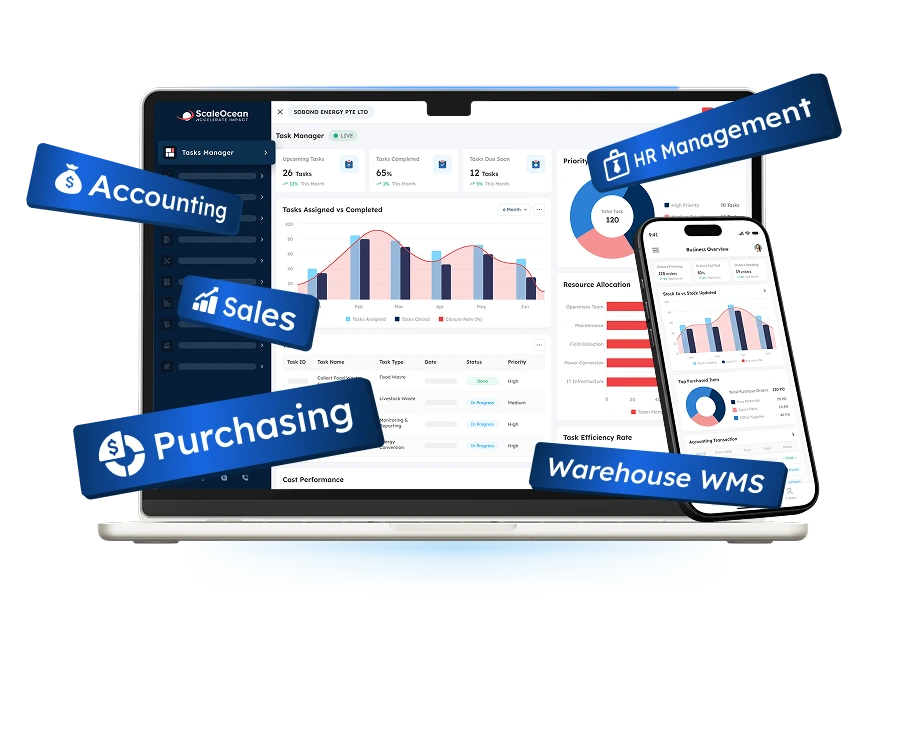
To address these challenges, businesses can audit processes with the inventory module of ScaleOcean Atlas. The solution offers seamless inventory visibility, procurement, sales, accounting and reporting in one place.
In addition, ScaleOcean Atlas is also embedded with ScaleMind, AI that helps businesses automate their inventory management process to keep their inventory accurate and minimize manual efforts during inventory audits.
Schedule a consultation with our experts to get the best out of inventory audits with ScaleOcean Atlas. These are the features that can improve the inventory auditing process:
- Real-Time Inventory Tracking: Monitor inventory movements across warehouses with up-to-date stock information.
- Barcode & QR Code Management: Scan products during receiving, storage, picking, and stock counting to improve inventory accuracy and reduce manual data entry.
- Batch & Lot Tracking: Track inventory by batch or lot number for better product traceability, helping businesses identify discrepancies, expired goods, or recalled products more efficiently.
- Cycle Counting Support: Schedule and perform regular cycle counts without interrupting daily warehouse operations, allowing inventory accuracy to be maintained throughout the year.
- Automated Inventory Reconciliation: Reconcile inventory physically with ERP to swiftly detect discrepancies and generate adjustment reports to complete the audit more quickly.
- Comprehensive Inventory Reports: Get inventory valuation, stock movement history, audit trails, and inventory performance reports in one place for financial reporting and management.
7. In Conclusion
An inventory audit is not simply a matter of counting goods on the shelves of the warehouse, but it is a very important process for ensuring the accuracy of inventory, avoiding stock loss, and ensuring reliable financial reporting.
Inventory audits can be conducted on a regular basis to detect discrepancies early and enhance inventory management, whether it involves physical counts, cutoff analysis, or inventory reconciliation.
Businesses that manage growing inventories across retail, distribution, or logistics operations in the Philippines, adopting a systematic inventory audit solution can enhance operational efficiency and increase customer satisfaction.
To support this, the inventory module of ScaleOcean Atlas helps businesses streamline every stage of the inventory audit process with real-time inventory tracking, automated reconciliation, and comprehensive reporting.
You can also schedule a consultation now and find out how the system can help you automate your warehouse, enhance your inventory management, and drive smarter business decisions.
FAQ:
1. Is inventory auditing hard?
The process of auditing inventory can be difficult based on the size of the inventory, complexity of the warehouse, and the tools being employed. Businesses that have a process and inventory management software would be able to perform audits more efficiently and less errors.
2. How often should inventory be audited?
Most companies carry out inventory audits on a monthly, quarterly, or annual basis depending on their business and size of their inventory. Companies with products of high value or those that move quickly can also do regular cycle counts to keep stock accurate.
3. What happens if you fail an inventory audit?
If an inventory audit identifies discrepancies, businesses should investigate the cause, such as data entry errors, damaged goods, theft, or unrecorded transactions. Corrective actions help improve inventory accuracy and strengthen inventory control processes.
















.png)