


Human Capital Management (HCM) is a strategic approach that manages employees as assets to be optimized for organizational success. It brings recruitment, onboarding, training, performance tracking, and payroll into a single process, using modern software to boost workforce productivity, engagement, and long-term retention.
Many organizations struggle with inefficient employee data management and high costs from manual administration. HCM solves this by integrating employee data into a single system, making it easier to manage and access data in real time. This centralized approach ensures compliance with complex labor regulations while reducing legal risks and administrative delays.
Furthermore, HCM addresses low productivity and poor retention by fostering a culture of tailored training and integrated performance management. It streamlines recruitment through better data analysis to ensure the right talent is in the right roles. By improving career management and recognition, businesses boost engagement and maintain a committed workforce for the long term.
This article will break down what human capital management is, exploring its core components, benefits, and the software that drives it, so you can understand how to truly leverage your people for success.
 Key Takeaways
- Human Capital Management is a strategic approach that views employees as valuable assets, aligning workforce strategy with business goals for maximum value.
- Human Capital Management has several components, such as talent management, recruitment and hiring, performance management, benefits administration, and up to workforce management and planning.
- HRIS, HRMS, and HCM are related; HCM is the most comprehensive system, offering advanced strategic talent management and analytics capabilities beyond core HR functions.
- Human resource management software centralizes data and automates administrative tasks to ensure regulatory compliance, boost workforce productivity, and provide real-time strategic insights.
What is Human Capital Management HCM?
Human Capital Management (HCM) is a strategic framework to manage employees that focuses on attracting, developing, and retaining talent to maximize productivity and achieve business goals, treating employees as a valuable asset rather than a cost. It integrates HR functions like recruiting, payroll, and training into a unified system.
Unlike traditional HR models that are often reactive and focused primarily on compliance, HCM is a proactive discipline. It aligns the entire workforce strategy with broader business objectives, ensuring that every people-related decision directly contributes to the company’s bottom line. This approach views employees as high-value investments capable of delivering substantial returns when managed effectively.
Using HCM practices can help create a strong organizational culture that promotes employee development and commitment to company goals. Employees have more control over their careers and are encouraged to dedicate their skills and talent to the employer for the long term.
What are the Components of HCM?
Human Capital Management (HCM) means covering the complete employee lifecycle through essential pillars like talent acquisition, onboarding, performance tracking, compensation, and payroll. These elements aim to manage, develop, and maximize employee value through workforce planning, professional development, and analytics-driven strategies to enhance organizational results.
Key components of HCM include:
Talent Management
Effective talent management is the strategic step of HCM, moving beyond basic hiring to focus on attracting, developing, and keeping high-performing staff. By identifying key roles and building a steady flow of talent, organizations ensure long-term stability and a lasting advantage over competitors.
A successful strategy creates a cycle of excellence, positioning the company as a top-choice employer through strong branding and clear promotion paths. This ensures that the best employees provide more value over time, directly driving overall business success and growth.
Recruitment and Hiring
Recruitment and hiring are the first steps in the HCM journey, setting the tone for the entire employee experience. This process involves finding and securing top talent who not only possess the right skills but also align with the company’s culture and long-term vision.
Modern hiring relies on systems like an applicant tracking system to simplify workflows and improve hiring quality. Focusing on a positive candidate experience is essential for attracting high-level talent in today’s competitive market.
Onboarding and Training
Effective onboarding is a structured process that goes beyond paperwork to help new hires understand their roles and the company’s goals. Proper integration ensures employees feel connected and become productive members of the team quickly.
Ongoing training and development are also crucial for keeping skills relevant and encouraging professional growth. Investing in these areas boosts employee engagement and retention, as staff are more likely to stay with employers who support their future.
Performance Management
Modern performance management has moved away from annual reviews toward a dynamic system of continuous feedback and coaching. This collaborative approach encourages open communication between managers and employees to drive real-time improvement.
By aligning individual goals with the company’s overall mission, organizations ensure everyone is working toward the same targets. This constant feedback loop is key to keeping staff motivated and improving business results.
Benefits Administration
Benefits administration involves managing essential programs like health insurance, retirement plans, and paid leave. It is a complex area that requires careful attention to detail and a strong focus on legal compliance to avoid risks.
Offering a well-managed benefits package is a powerful way to attract and keep great employees. Modern HCM software automates these tasks, reducing the administrative load on HR while giving employees easy access to their own plans.
Time, Attendance, and Payroll
Accurate time tracking and payroll are foundational to maintaining employee trust and morale. Since errors in pay can significantly damage satisfaction, ensuring these processes are precise and on time is a top priority. Based on data from Forrester, payroll is seeing a major innovation moment through fintech integration, including real-time pay and earned wage access.
Automated HCM systems help eliminate human error and ensure compliance with labor laws regarding hours and overtime. This efficiency allows HR teams to focus on more important strategic work instead of manual data entry.
Employee Service and Self-service
Self-service portals empower employees by giving them direct access to their own HR information, such as pay stubs and leave requests. This autonomy creates a more efficient workplace and improves the overall employee experience.
By letting staff handle routine updates themselves, HR teams can spend more time on high-impact tasks like talent development. This shift makes the HR department more responsive to the actual needs of the business.
Employee Experience Management
Employee Experience Management (EXM) focuses on every interaction an employee has with the company, from hiring to their final day. Creating a positive experience at every stage is essential for building a strong and healthy company culture.
EXM uses feedback and surveys to make real improvements to the workplace environment. Companies that prioritize this experience often see higher engagement, lower turnover, and more innovation across their teams.
Employee Reporting and Analytics
In today’s data-driven world, reporting and analytics turn HR into a strategic partner by providing clear insights into the workforce. This data allows leadership to make smarter decisions based on facts rather than guesswork.
By tracking metrics like turnover and hiring speed, organizations can spot trends and fix problems before they grow. This ability to use data for proactive problem-solving is a major benefit of modern HCM strategies, which can be further optimized by utilizing the best onboarding software singapore to ensure a smooth transition for new hires from day one.
Workforce Management and Planning
Workforce planning is the forward-looking part of HCM that predicts future talent needs based on business goals. It ensures the company has the right people with the right skills in place at exactly the right time.
This process includes identifying skill gaps and planning for future leadership roles to ensure long-term growth. Effective planning makes organizations more resilient and helps them adapt quickly to changes in the market.
How Do HCM Benefits Companies?

Human Capital Management benefits companies by optimizing the employee lifecycle to drive growth and measurable results. Integrating recruitment, payroll, and analytics into a unified system reduces costs while providing the insights needed for better decision-making and compliance.
This investment in people boosts productivity and retention, ultimately increasing profitability across the entire organization.
Key Benefits of HCM for Companies:
Can Hire the Right Talent for Key Roles
The benefit of the HCM strategy is the ability to attract and hire top-tier talent for crucial positions. By using data analytics and precise sourcing, companies find candidates who possess both the required skills and a strong cultural fit. Utilizing a recruitment management system streamlines this process from application to offer, ensuring a professional experience that focuses on the right talent.
This strategic approach minimizes the risk of expensive hiring mistakes, ensuring key roles are filled by individuals ready to contribute immediately. Over time, this builds a more capable team aligned with the company’s mission and equipped to execute strategic goals effectively.
Improve Workforce Productivity and Efficiency
Integrated HCM systems significantly boost workforce productivity and efficiency by automating routine administrative tasks. Providing self-service tools gives time back to employees and HR professionals, allowing them to focus on high-value responsibilities and strategic development.
When leadership sets clear goals and provides regular feedback, HCM fosters a more engaged and motivated workforce. Employees who understand their role in the company’s success and feel supported are naturally more efficient and innovative, directly enhancing overall performance.
Simplify HR Processes
Implementing an HCM system provides an immediate win by simplifying complex HR workflows. Tasks such as payroll, benefits management, and compliance reporting, which are often manual and time-consuming, become automated. This reduces the administrative burden on HR teams and minimizes the risk of costly errors.
Centralizing employee data on a single platform eliminates information silos and provides one reliable source of truth. This makes managing data and generating reports much easier, resulting in an HR function that is streamlined, consistent, and better able to support business needs.
Cut Costs and Enhance ROI
While HCM requires an upfront investment, the long-term savings and return on investment (ROI) are substantial. Automation lowers administrative costs, while improved hiring practices reduce the expenses associated with recruitment and employee turnover. A more productive team ultimately leads to better business outcomes and higher profitability.
HCM analytics also allow companies to measure the financial impact of their HR efforts. Organizations can track the ROI of training programs or analyze turnover costs in specific departments. This data-driven approach helps justify HR spending by ensuring investments in human capital deliver tangible returns.
Enhance Employee Motivation and Engagement
A comprehensive HCM strategy improves employee motivation and engagement by providing clear career paths and growth opportunities. When staff feel their work is recognized and valued, they develop a deeper commitment to the company. This creates a positive workplace culture where employees are motivated to perform at their best.
Continuous performance management and a focus on the employee experience build a culture of open communication. Employees who feel heard and supported maintain higher morale, which not only improves retention but also encourages them to go above and beyond to help the company succeed.
Ensure HR Compliance with Regulations
Navigating the complex landscape of labor laws and regulations is a major challenge that HCM systems help solve. These platforms automate processes like tracking work hours, tax withholdings, and equal opportunity reporting, which significantly reduces legal risks.
To make your business processes more effective, you can use talent management software that will optimize your compliance strategy. This system is designed as a long-term solution to be used for the next 20 years, providing a complete guide to mastering human capital management from basic concepts to advanced optimization to help your organization maintain regulatory stability and a competitive edge.

HRIS vs. HRMS vs. HCM
HRIS (Human Resource Information System) handles data management, payroll, and benefits. HRMS (Human Resource Management System) builds on this by adding talent management features like recruitment and performance tracking. HCM (Human Capital Management) is the most complete, offering strategic, global tools that manage the entire employee lifecycle.
When choosing between these systems, HR professionals should consider their organization’s size, needs, and plans. Smaller companies focused on straightforward payroll and basic HR functions may do well with an HRIS. Growing organizations that need to support recruitment, onboarding, and performance management may benefit from an HRMS.
Larger or rapidly expanding businesses that require advanced analytics, global capabilities, and a single solution for the entire employee journey should consider HCM.
Below is a comparison of HRIS, HRMS, and HCM, outlining the key differences and functionalities of each system.
| Feature | HRIS | HRMS | HCM |
|---|---|---|---|
| Main Focus | Focuses on employee data management, payroll, and benefits | Includes HRIS functions plus talent management, such as recruitment and performance tracking | Includes HRMS functions plus strategic tools for global and full employee lifecycle management |
| Primary Use | Primarily used for administrative HR tasks | Supports both administrative tasks and advanced talent management | Helps transform HR into a strategic partner through workforce planning and analytics |
| System Scope | A foundational system for managing basic HR operations | Expands HR capabilities with recruitment, performance, and employee development features | Provides a comprehensive solution for managing, developing, and planning talent globally |
What is HCM software?
Human Capital Management (HCM) software is a comprehensive cloud-based suite of tools that manages the entire employee lifecycle, from recruitment and payroll to retirement. The key points include automating HR workflows, tracking data, and ensuring regulatory compliance associated with human resources management systems (HRMS) or human resources information systems (HRIS).
HCM offers a broader, strategic platform that uses data analytics to optimize workforce development and drive organizational growth. Most modern HCM platforms operate as Software-as-a-Service (SaaS) models that approach ensures global accessibility, real-time updates, and the seamless integration of previously siloed functions, such as payroll, recruitment, and performance management, into a single, unified ecosystem.
Why Organizations Invest in HCM Software?

Organizations invest in Human Capital Management (HCM) software to transform HR into a strategic partner that drives growth. Based on the data collected by our team from Deloitte, 70% of leaders now prioritize agility, requiring a shift toward dynamic orchestration.
By automating workflows and centralizing data, these platforms bridge the execution gap, where only 7% of firms have made significant progress. Ultimately, HCM systems ensure compliance and foster effective collaboration between humans and AI.
Key reasons for investing in HCM software include:
Attract & Retain Top Talent
In a competitive job market, the experience you provide candidates and employees is a major differentiator. Modern HCM software utilizes mobile-first, user-friendly interfaces to streamline applications and onboarding, aligning with the expectations of today’s workforce.
The software helps maintain engagement through career development tools, continuous feedback, and recognition modules. These features foster a culture where employees feel valued and see a clear growth path, which is essential for reducing turnover and retaining high performers.
Data-Driven Decision
HCM platforms transform raw HR data into actionable business intelligence through powerful analytics and reporting tools. Leaders gain visibility into critical metrics like turnover, engagement, and performance trends, moving beyond intuition to evidence-based strategic planning.
By leaning on hard data, managers can anticipate future workforce needs and measure the direct impact of their initiatives. For example, linking training programs to performance improvements provides a concrete reason to invest further, making data a game-changer for business strategy.
Increased Productivity
Automation within HCM software boosts productivity by digitizing routine administrative tasks, freeing both managers and employees for high-value work. Self-service portals allow individuals to handle their own HR needs, significantly reducing the manual workload on HR departments.
Managers also benefit from streamlined workflows for time-off approvals and performance reviews. This efficiency reduces paperwork, allowing leadership to dedicate more time to coaching and development, which leads to a significant jump in overall organizational output.
Agility & Compliance
To stay competitive in a shifting landscape, organizations must be agile enough to reconfigure structures and processes quickly. Cloud-based HCM systems provide this flexibility and receive continuous updates, ensuring the company always has access to the latest features and tools.
This built-in agility is crucial for maintaining compliance with ever-changing labor laws and global regulations. Reputable providers keep their platforms current with legal requirements, helping organizations minimize risks and avoid expensive penalties through legally defensible HR practices.
Boosting Company Growth
A scalable HCM platform is an essential tool for companies with serious growth ambitions. As businesses expand, a robust system handles increasing headcounts and complex organizational structures without requiring a massive jump in administrative costs or manual headcount.
By providing a solid foundation for managing talent, this software allows companies to scale their workforce efficiently. It ensures that even during rapid expansion, the organization can hire the right people and maintain its core culture, supporting sustainable and profitable growth.
Integrated systems for HR functions
Legacy HR departments often struggle with fragmented data silos and a patchwork of different systems for payroll, recruiting, and performance. An integrated HCM suite solves this by bringing all disparate functions onto a single, unified platform for a holistic workforce view.
An integrated human capital management suite completely tackles this issue by bringing all those disparate HR functions onto one unified platform. This seamless integration establishes a single source of truth for all employee data, boosting accuracy, saving time, and providing a much more cohesive user experience overall.
Data security and privacy
Protecting sensitive employee data is a top priority, and reputable HCM providers invest heavily in state-of-the-art security measures. These include advanced encryption, strict access controls, and regular audits to safeguard information from potential breaches and ensure privacy.
Choosing a professional cloud-based HCM provider allows organizations to leverage a level of security that would be too costly to maintain independently. This ensures that the underlying infrastructure is secure, allowing the business to focus on its core operations with complete peace of mind.
Enhanced reporting
Modern HCM software simplifies the generation of comprehensive, customized reports for stakeholders at every level. Because all data is centralized, pulling insights on headcount, diversity metrics, and recruitment effectiveness becomes a fast and simple process.
These reports are vital for both daily operations and long-term strategic planning, helping leaders track progress against corporate goals. Additionally, the system simplifies government compliance reporting, cutting down the time spent on paperwork and reducing the risk of errors.
How Does ScaleOcean Work for Human Capital Management?
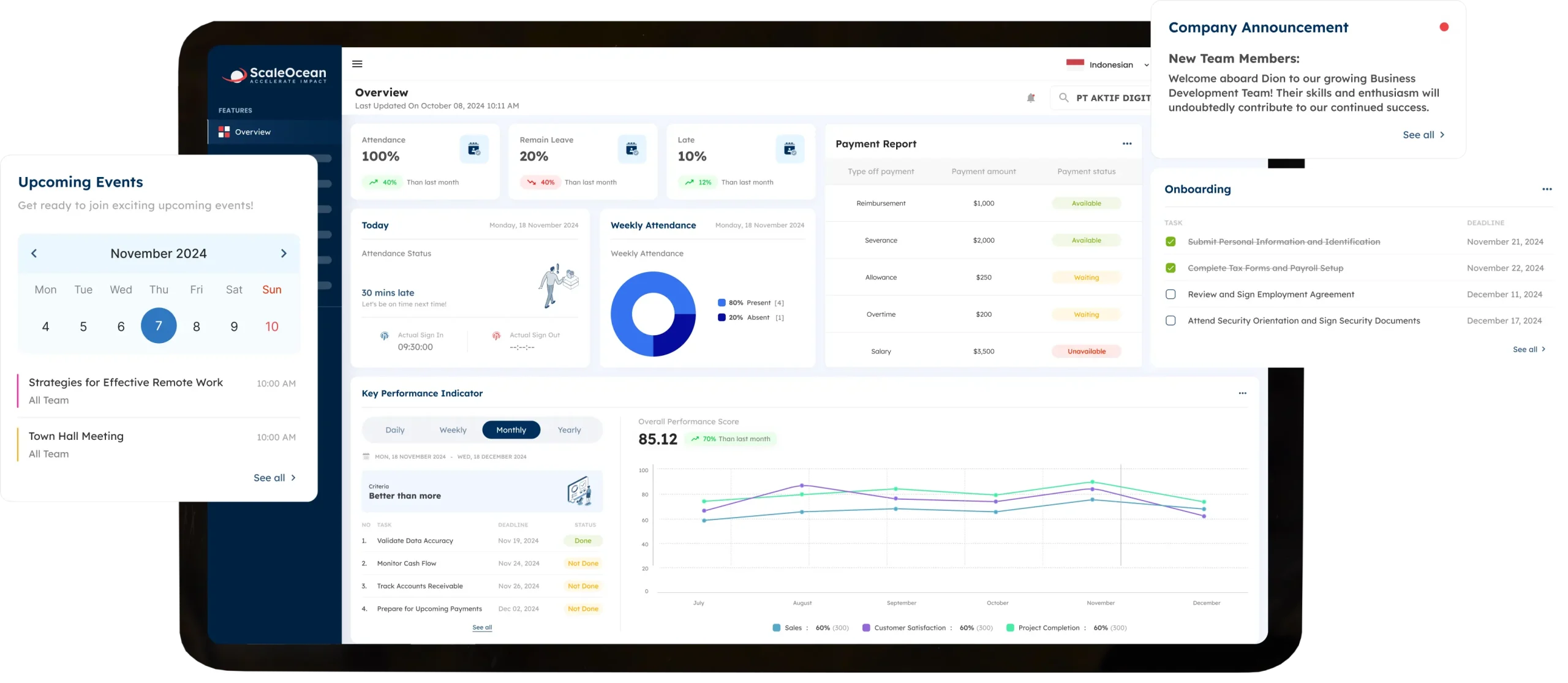
Many companies struggle with low workforce productivity due to fragmented manual processes. This will effectively resolved through talent management software ScaleOcean, which increases productivity through tailored training and integrated performance management, ensuring employees work more efficiently.
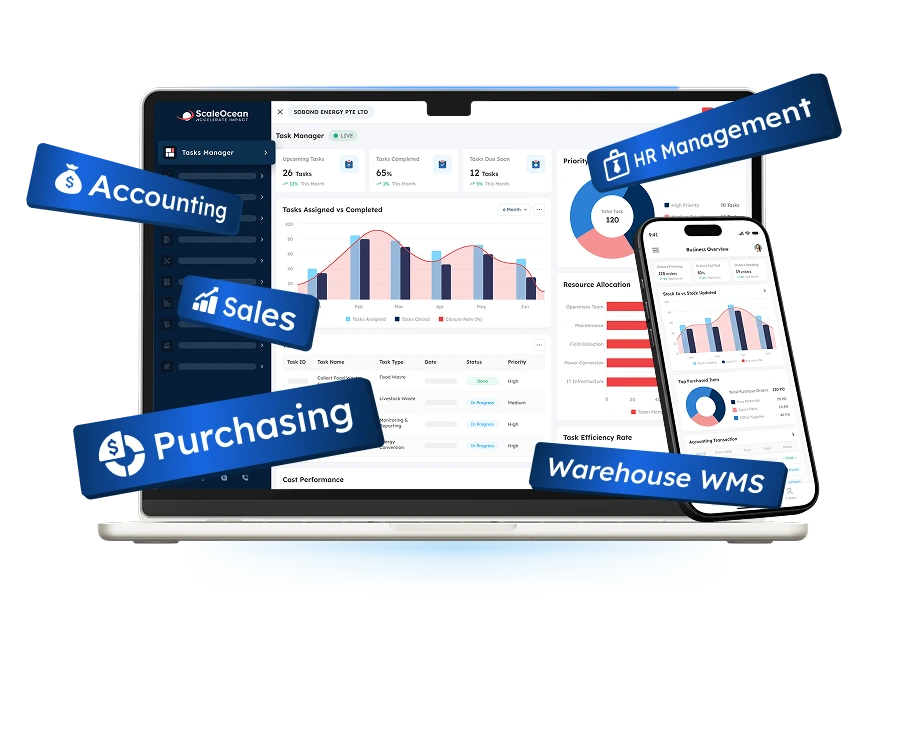
As an all-in-one solution with complete modules, our system integrates everything from recruitment and training to performance development within a single platform. ScaleOcean offer unlimited users with no extra cost and a flat, rational pricing model, ensuring your HCM functions remain scalable and transparent as your business grows.
Furthermore, ScaleOcean is eligible for match for CTC grant requirements with grants of up to 70%, allowing you to modernize your human capital management at a much more affordable cost.
Below are some of the advanced features from ScaleOcean designed to help you master these strategic workflows:
- End-to-end Recruitment: Manage the entire hiring journey from requirement identification to final selection on one integrated platform to attract top-notch candidate quality.
- Applicant Tracking System: Streamline how you evaluate CVs and portfolios, making it significantly easier for HR teams to make fast, data-driven hiring decisions.
- Seamless On/Off-Boarding: Create structured plans and provide instant access to training materials to ensure every employee adapts quickly to their new role.
- Performance Management: Track employee progress transparently using KPIs and provide real-time feedback based on individual performance data.
- Staff Development: Monitor performance to identify specific skills development opportunities, fostering continuous improvement through targeted training and mentoring.
- Centralized Employee Database: Store all profiles in a single location to eliminate data duplication and ensure every department works with accurate, up-to-date information.
Beyond these functional advantages, implementing this software is a strategic financial move for your business. If you are curious about how our system can transform your operations, you can experience the difference by trying a free demo with our expert team today!
Conclusion
Human Capital Management (HCM) is a comprehensive strategy that views an organization’s workforce as a vital asset to be developed rather than just a cost to be managed. By integrating core functions like recruitment, training, and payroll into a unified framework, HCM leverages modern technology to optimize employee performance and long-term engagement. This approach ensures that every aspect of the employee lifecycle is aligned with broader business objectives, turning human potential into a measurable competitive advantage.
The challenges of low workforce productivity and manual tracking are effectively solved by embracing modern technology that builds a more resilient and agile organization through data-driven insights. Implementing talent management software from ScaleOcean is the most fundamental step in this transformation, as HCM increases productivity through tailored training and integrated performance management, ensuring employees work more efficiently. Experience how our solution can streamline your workflows and provide the real-time intelligence you need to succeed by trying our free demo with our team today.
FAQ:
1. What is Human Capital Management?
Human Capital Management (HCM) is a comprehensive strategy that views an organization’s workforce as a vital asset to be developed rather than just a cost to be managed.
2. Is HCM the same as HR?
Human Resource Management (HRM) and Human Capital Management (HCM) are strategic frameworks that streamline daily HR tasks while driving long-term business goals. Driven by technological advancements, these functions have transformed from basic administrative roles into essential drivers of organizational value.
3. What are the 7 functions of Human Capital Management?
Human Capital Management has several functions, such as: Recruitment and Talent Selection, Training and Development, and Performance Management. Employee Relationship Management, Employment Law and Compliance, Compensation and Benefits, Administration, Payroll, and HR Mechanism.


















.png)