




Pile foundation is designed to transfer building loads deep into the ground where the soil condition is strong and stable. This foundation system is commonly used for large buildings, bridges, ports, and structures built on weak soil conditions.
Therefore, pile foundations are widely used in the Philippines because many areas have soft soil and big rainfall. Thus, pile foundation helps structural stability for long-term safety and durability.
 Key Takeaways
- Pile foundation is a deep foundation system that transfers building loads to stronger soil layers underground.
- There are several pile foundation types based on function and materials used in construction projects.
- Pile foundations are commonly used in area with soft soil conditions, flooding risks, and seismic activity.
- ScaleOcean Construction ERP Software helps improve construction planning, budgeting, and project management efficiency.
1. What is Pile Foundation?
A pile foundation uses long structural elements called piles to transfer loads to deeper soil layers. These piles are bored or placed deep into the ground to provide better support for the structure above.
Usually, pile foundations are used when shallow foundations such as a spread footing cannot safely support the building due to poor land stability. In coastal and flood-prone areas, like the Philippines, pile foundations help prevent structural movement.
Therefore, pile foundations are often used for high-rise buildings, bridges, warehouses, or infrastructure projects where strip foundations may not provide sufficient support. They provide better load-bearing capacity and strong stability in areas exposed to earthquakes and heavy rains.
2. Types of Pile Foundations Based on Function
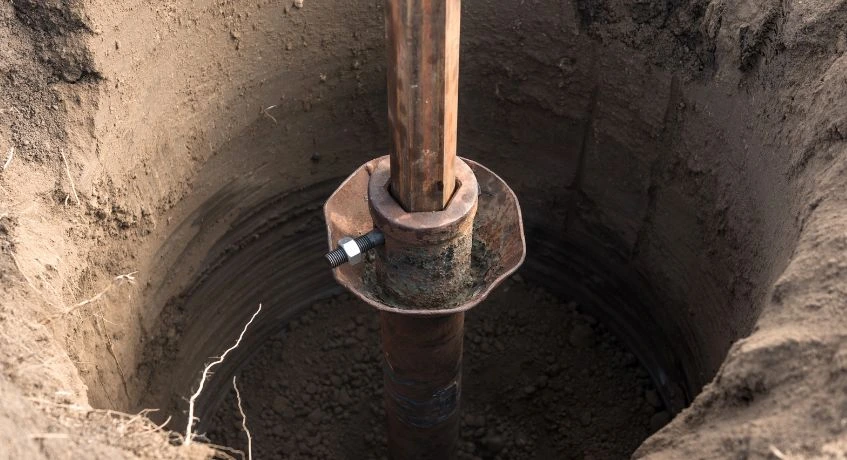
After learning about the definition, there are several types of pile in construction projects. Each type serves a different purpose depending on soil conditions, building loads, and project requirements. Here are some of piles’ types in fabrications:
a. Load Bearing Piles
The first type of pile foundations is commonly used for commercial buildings, bridges, or industrial facilities. It is designed to support the weight of the structure on weak soil’s stability. The piles purposely distribute heavy loads safely to deeper soil with higher bearing capacity.
b. End Bearing Piles
The second type is end bearing piles. It helps transfer structural loads into stronger layer rock that is buried underground. The pile acts as a column that carries the load directly to the hard layer below.
c. Driven Piles
Driven piles are installed by hammering prefabricated piles into the ground. This method is commonly used because it provides reliable support for large structures. Driven piles are usually made from concrete, steel, or timber depending on requirements.
d. Friction Piles
After driven piles, the other pile in foundation is friction piles. This type of pile is transferring friction between the pile surface and soil. Instead of relying only on hard soil, the load is distributed along the length of the pile. It’s suitable for areas where hard soil is located deep under.
e. Bored Piles
The fifth type is where piles are constructed by drilling holes into the ground and filling them with reinforced concrete. It’s called bored piles which helps reduce vibration and noise during installation. It’s also popular in a wide population area to reduce excessive vibration.
f. Sheet Piles
The next type is sheet piles. It is designed with thin interlocking sections driven into the ground to ‘lock’ soil or water. They are commonly used for excavation support, seawall, riverbanks, or even coastal projects.
g. Micropiles
Micropiles are often used for structural strengthening, renovating projects, or earthquake retrofitting. This last type of pile foundations has small-diameter piles that are used in areas with limited access conditions. Furthermore, the structure helps provide strong support for the weights.
3. Types of Pile Foundations Based on Materials
Pile foundations can also be classified based on the materials used while construction still going-on. Each material offers different strength and durability. Here are some types of piles that determined by the materials that’s used:
a. Timber Piles
Timber piles, the first type is relatively affordable and easy to make, although they are generally used for different applications than concrete slab foundations. They are made out of wood and are usually used for light construction projects. However, timber piles may not be suitable for very heavy loads or areas with high moisture exposure.
b. Concrete Piles
Additionally, the most common type is concrete piles. Concrete piles can be precast or cast-in-place depending on the construction foundations method. They provide high strength and resistance against moisture or corrosion.
c. Steel Piles
The last type is used for hard soil conditions, and it’s suitable for heavy structures and deep foundations, similar to caisson foundations used in challenging ground conditions. It’s commonly used for construction projects like bridges, ports, and high-rise buildings.
4. Materials Used in Pile Foundations
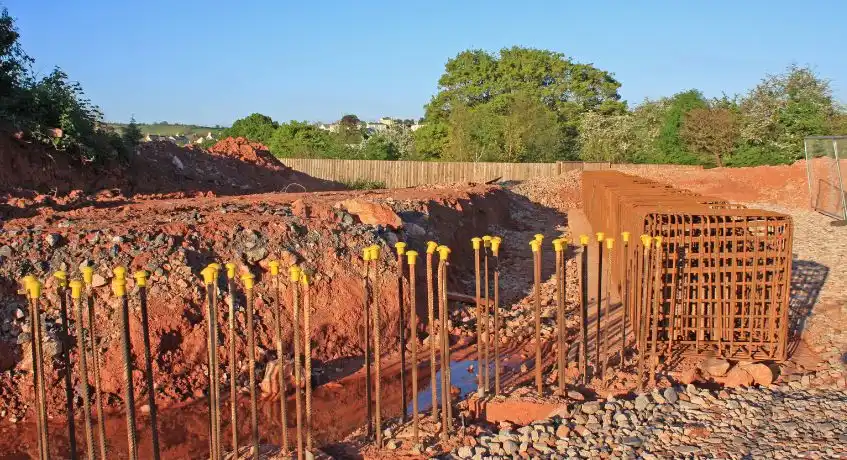
Several materials are commonly used in pile foundation construction to ensure structural stability and durability. The selection depends on soil conditions, project size, environmental exposure, and budget. The most commonly used materials include:
- Reinforced concrete.
- Steel reinforcement bars.
- Structural steel sections.
- Timber.
- Grout and cement mixtures.
- Protective coatings for corrosion resistance.
5. When to Use Pile Foundations?
Pile foundations are used when the soil is too weak to support a building. This foundation helps transfer the building load to stronger soil layers deeper underground, thus improving stability.
According to the research Bibliometric and Knowledge Network of Global Research on pile foundations, pile foundations are widely used for construction on soft soil conditions. This shows the importance of pile foundations in improving structural stability
They are also suitable for structures with heavy loads, such as high-rise buildings, bridges, ports, and commercial projects, where raft mat foundations may also be considered depending on soil conditions.
In the Philippines, pile foundations are widely used because many regions have unstable soil conditions and frequent seismic activity, especially for buildings with a basement foundation that require additional structural support.
6. In Conclusion
Overall, pile foundation is a reliable deep foundation system that helps support structures on unstable soil. Understanding what a pile foundation can help improve structural safety and construction foundation efficiency.
In the Philippines, pile foundations are especially important because of soft soil conditions, flooding, and frequent earthquakes. Choosing the right type of pile foundation can significantly improve the durability and stability of a building.
However, successful construction projects also require proper planning and budgeting. To simplify these processes, businesses can use ScaleOcean Construction ERP Software to improve project management efficiency.
If you want to optimize your construction projects and improve workflow management, you can request a free demo today and experience a more efficient way to manage your construction operations.
FAQ:
1. What are the three types of piling?
The three common types of piling used in construction are driven piles, bored piles, and rotary bored piling. Each method is selected based on soil conditions, building requirements, and project size.
2. Is pile foundation safe?
Yes, pile foundations are considered safe when they are properly designed and installed. They help transfer building loads to stronger soil layers underground, making structures more stable and durable.
3. How long does pile foundation last?
The lifespan of a pile foundation depends on the material used, soil conditions, and environmental exposure. In general, properly installed pile foundations can last for several decades and even more than 100 years in stable conditions.


















.png)