




Order picking is one of the processes of warehouse inventory operations. This is the step of picking customer orders from the inventory. Therefore, this step should pick the orders fast and accurately.
In Philippines business, this is crucial to ensure that customers receive the appropriate orders. This article will delve into the definition, processes, optimization and best order picking systems for companies in the Philippines.
 Key Takeaways
- Order picking is the process of retrieving products from storage locations to fulfill customer orders accurately and efficiently.
- Common order picking methods include batch picking, cluster picking, zone picking, wave picking, and discrete picking each suited to different warehouse layouts.
- Businesses can improve order picking performance by optimizing warehouse layouts, using barcode or RFID technology, and implementing a WMS.
- ScaleOcean Warehouse Software helps businesses automate order picking with AI-powered WMS features.

1. What is Order Picking?
Order picking is the process of locating and retrieving products from their storage locations. It’s one of the most labor-intensive activities in the warehouse where workers are moving from one storage location to another for a long duration.
When a system (like WMS or eCommerce platform) receives a customer order, the order picking process starts. The goods are picked from the warehouse and staff are given a picking list of the goods they are required to pick.
Furthermore, the order picking system can provide a number of benefits, such as minimizing picking errors and enhancing inventory control. Optimizing order picking is crucial for growing business as even minor issues can lead to longer fulfillment times.
In the Philippines, this is particularly relevant to the growing industries. According to the International Journal of Economics and Management Sciences, warehouses using supporting technologies achieved a 3.87/4 rating for order fulfillment efficiency.
The results point to the need for process optimization when it comes to order picking, particularly because of the need for standardization and digital tools. By using clearer picking lists, businesses can reduce picking errors and enhance warehouse productivity.
2. Order Picking vs. Warehouse Picking: Is There a Difference?
Although order picking and warehouse picking are often used interchangeably within this industry, they are not exactly the same. Moreover, the differences between the two are highlighted here:
| Aspect | Order Picking | Warehouse Picking |
|---|---|---|
| Definition | Retrieving products for customer orders. | Retrieving products for any warehouse activity. |
| Purpose | Prepare products for shipping to customers. | Support overall warehouse operations and inventory movement. |
| Scope | Limited to customer order fulfillment. | Covers all picking activities inside the warehouse. |
| Activities | Picking items based on sales orders. | Stock replenishment, inventory transfers, and customer order picking. |
| Users | Distribution centers, e-commerce warehouses, and retailers. | Manufacturing plants and warehouses with internal inventory movement. |
| Example | Picking products ordered by customers before shipment. | Moving raw materials from storage to a production line. |
For instance, in the Philippines, a food manufacturer may transport raw materials from the storage to the production site in support of production. It is regarded as warehouse picking when the products are picked for internal use.
Meanwhile, another example is, a distributor who delivers to the supermarket collects finished goods according to the supermarket’s purchase orders. This activity is considered “order picking” because its objective is to fulfill customer’s orders.
Simply put, every order picking activity is warehouse picking, but not every warehouse picking activity is order picking. By grasping this distinction, businesses can work out how to manage work more efficiently and effectively.
3. The Procedures of Order Picking

Order picking is generally a standardized process with several specific steps that are followed to ensure products are picked correctly and efficiently. To ensure the accuracy of the orders here are some procedures:
- Receiving: It starts with a customer order being received via ERP or e-commerce platform and routed to warehouse receiving. The system checks the availability of inventory before creating a picking request.
- Label Generation: WMS generates a picking list and/or digital picking label including necessary information. This directs the workers moving through the warehouse in picking and reduces manual mistakes.
- Travel and Picking: Warehouse staff follow the route established during the warehouse putaway process to reach the assigned storage location and collect products while inspecting their condition.
- Order Verification: After the products have been picked, the warehouse personnel ensure the proper items and quantities were picked, this ensures that there are fewer shipping mistakes and returned goods.
- Packing and Delivery: Once verified, products are moved to the packing station for packing and labeling prior to delivery. WMS automatically updates inventory records and makes sure the order is ready to be shipped to the customer.
4. What are the Methods in Order Picking?
There are a number of order picking methods to help to make the warehouse more efficient. The right choice can save on transportation and help to accelerate order fulfillment. Below are the most common order picking methods used in warehouses:
a. Batch Picking
Batch picking is a picking method that involves the picker collecting the same products for several orders. Similar orders are grouped together rather than done one after another. This is to minimize unnecessary travel for warehouses with big volume orders.
Advantages:
- Reduces travel time throughout the warehouse.
- Increases productivity of the staff.
- Makes it easier to run large orders with few items.
Disadvantages:
- Needs to sort after picking individual customer orders.
- Less effective in situations where there are many different products in order.
b. Cluster Picking
Cluster picking enables warehouse workers to take products off the shelves for multiple orders at once. Each of the compartments is a separate customer order, allowing for products to be sorted during pick.
Advantages:
- Minimizes post-picking sorting.
- Improves order accuracy.
- Reduces order fulfillment time.
Disadvantages:
- Needs special picking equipment or carts.
- May be hard to control when processing numerous orders.
c. Zone Picking
In zone picking, the warehouse is segmented into different zones and each picker is assigned a zone to pick products from. Orders that need multiple zones products will be shuttled between pickers until all items are picked up.
Advantages:
- Reduces employee travel time.
- Raises the level of specialization of workers in given areas.
- Supports higher productivity in large warehouses.
Disadvantages:
- Needs a number of pickers to coordinate.
- Bottlenecks can arise in one zone if the zone is slow.
d. Wave Picking
Wave picking is the process of arranging the picking into a sequence of “waves” according to shipping deadlines, delivery routes or carrier schedule. Warehouses do not place orders right away but they send out sets of orders at a certain time.
Advantages:
- Matches up the shipping schedule with warehouse operations.
- Improves labor planning.
- Improves flow in heavy traffic.
Disadvantages:
- Needs to be carefully planned and coordinated at the warehouse.
- Not ideal for companies that require instant order processing.
e. Discrete Picking
Discrete picking, also known as single-order picking, is the simplest order picking method. A warehouse employee picks one customer order from start to finish before moving on to the next order.
Advantages:
- Easy to do and easy to maintain.
- Easy to implement for high order accuracy.
- Minimal training required.
Disadvantages:
- Longer travel distances.
- Decreased productivity in large packing facilities.
5. There are Also Hybrid Picking Methods
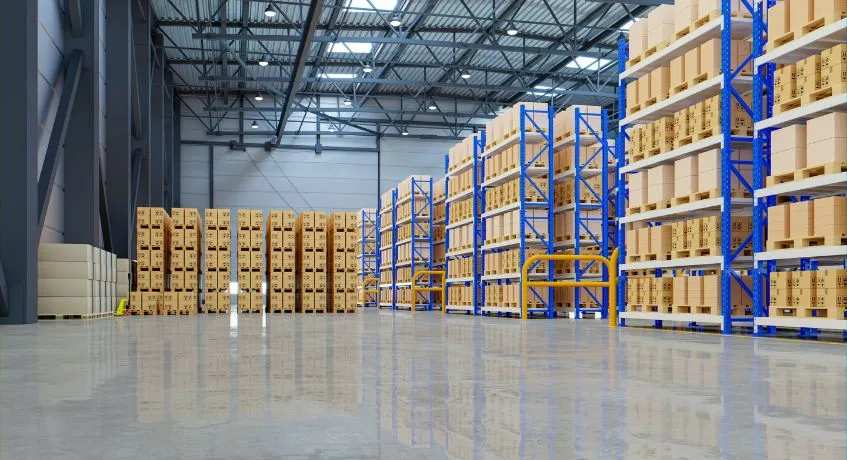
When the task of order picking in the warehouse is increasingly complex, many companies are combining several order picking methods. These hybrid picking methods to the strengths order shipping, here are the most common hybrid picking method:
a. Zone-Batch
Zone-batch picking is a combination of zone picking and batch picking. Warehouse employees are given zones to work in and they get a number of customer orders to pick products from simultaneously. This works well in high-order-volume, large warehouses.
Best for:
- Large distribution centers.
- Retail warehouses.
- High-volume e-commerce fulfillment.
b. Zone-Wave
The Zone-wave picking method is a combination of zone picking and the wave picking method. Orders are issued in predetermined batches, and each warehouse zone only works on orders that are assigned to that zone.
Best for:
- Logistics providers.
- Distribution centers.
- Companies that have regular outbound deliveries.
c. Zone-Batch-Wave
The zone-batch-wave picking combines the benefits of zone picking, batch picking and wave picking in one. Warehouse staff pick multiple orders and process orders by shipping waves in designated areas.
Although this is one of the most advanced picking strategies, it offers the highest efficiency for warehouses managing thousands of orders each day. This method is commonly supported by advanced WMS.
Best for:
- Large e-commerce fulfillment centers.
- Third party logistics (3PL) service providers.
- Enterprise warehouses.
- Companies that have a complicated or large volume of operations.

6. How to Improve the Warehouse Picking Process?
With a well-designed picking process, businesses can minimize order filling mistakes, speed up delivery time, and enhance customer satisfaction levels. Here are a number of good practices to consider implementing to enhance the order picking process:
- Implement Picking SOPs: Develop Picking standard operating procedures (SOPs) for all warehouse personnel so that they all pick the same way.
- Choose the Best Method for Warehouse: Identify the best order picking method for the warehouse according to the warehouse size, number of orders, number of items, and business activities.
- Modify Warehouse Layout (If Necessary): Optimize the layout of your warehouse to reduce the distance that employees must travel, by having fast-moving products near packing areas and grouping similar products together.
- Optimize Picking Routes Routinely: Routinely review and optimize picking routes to remove wasteful movement time and congestion within the warehouse.
- Consider Warehouse Automation: Explore technologies like bar code scanners, RFID, mobile warehouse apps, pick-to-light, voice picking or AI-based WMS.
 Also Read: Top 13 Warehouse Management Systems in the Philippines
7. Some Technologies Used in Order Picking
Technology is playing a growing role in modern-day warehouses, helping to boost picking accuracy, minimize tedious tasks, and enhance order fulfillment. The following are the most commonly used technologies in order picking:
- Barcode/RFID: Barcode scanners and Radio Frequency Identification (RFID) systems allow warehouse personnel to identify and confirm products in a timely fashion during picking.
- Conveyor Belts: Conveyor systems make the product move automatically from the picking areas to the packing and shipping areas. Conveyor belts can help to streamline the order fulfillment process and reduce the need for manual labor.
- Forklifts: Forklifts enable warehouse employees to move pallets and heavy items safely from one storage area to another. They enhance material handling efficiency whilst minimizing the physical effort.
- Automated Storage and Retrieval Systems (AS/RS): These are automated systems that are used to store and retrieve products with minimal human intervention. These systems are designed to use storage space optimally and prevent picking mistakes.
- Warehouse Management System (WMS):This WMS collects and consolidates warehouse data, integrating all the information in order to optimize warehouse management by inventory locations, generating picking lists, and keeping the inventory updated in real time.
8. Automate Your Picking Process with ScaleOcean AI WMS
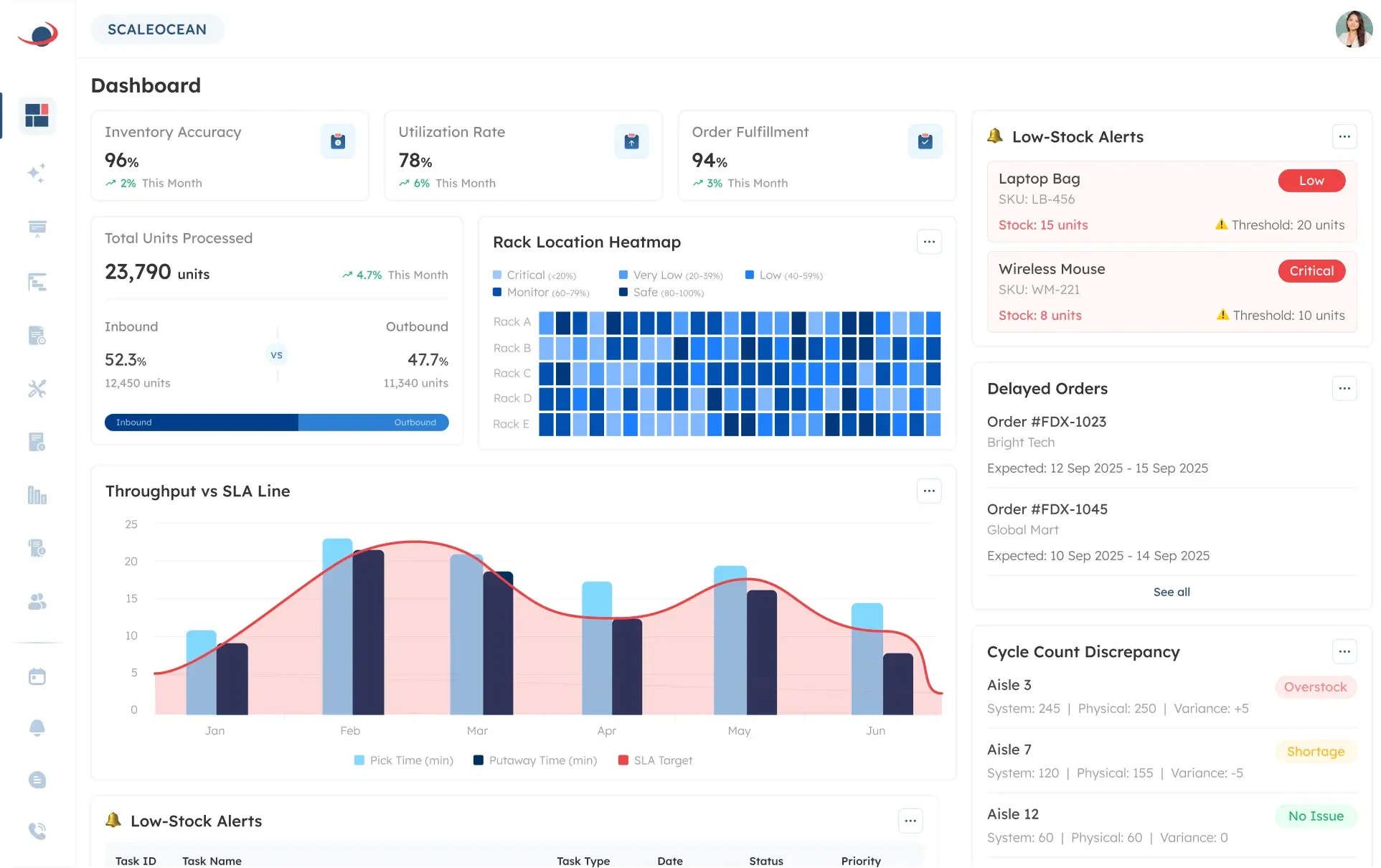
Manually managing order picking can lead to picking errors, and even inaccurate inventory records. As order increase, these challenges can reduce productivity and negatively impact customer satisfaction.
To overcome these issues, ScaleOcean’s AI-powered Warehouse Management System automates the order picking process by generating optimized picking routes, assigning picking tasks intelligently, and providing real-time inventory visibility.
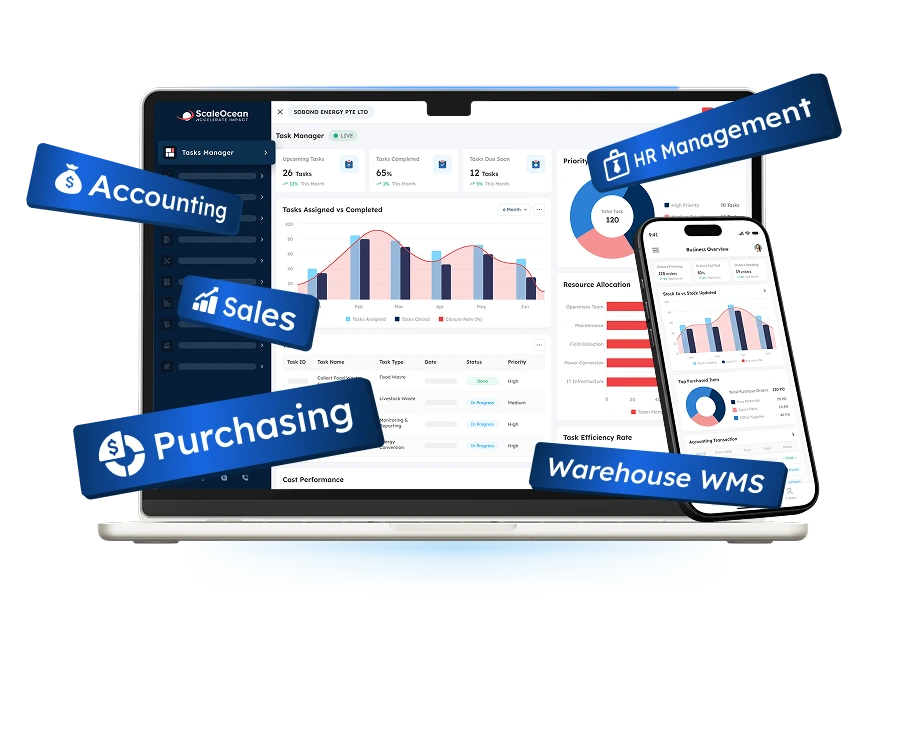
ScaleOcean Warehouse ERP Software is one of the best warehouse management software solutions, which brings together various software applications of warehouse management, inventory control, procurement, logistics, etc. in a single platform.
Moreover, ScaleOcean is seamlessly integrated with other business processes for enhanced productivity throughout the business. Request a free demo and discover how ScaleOcean can optimize your warehouse picking process. Key features include:
- AI-Optimized Picking Routes: Suggests the optimal picking routes based on product locations, order priorities, and inventory movements.
- Real-Time Inventory Tracking: Keep inventory up-to-date and know what products are available at any given time, enabling warehouse personnel to always pick from inventory information.
- Barcode & QR Code Integration: Scan barcodes or QR codes on products to verify on-site during picking and reduce manual data entry to ensure order accuracy.
- Warehouse Location Management: Organize products with digital mapping to enable employees to rapidly locate products in the warehouse by zone and racks.
- Multi-Warehouse Management: Manage inventory, order picking and fulfillment from multiple warehouse locations from a centralized dashboard.
- Warehouse Performance Dashboard: Track critical warehouse metrics such as picking accuracy, staff efficiency, and stock turnover.
9. In Conclusion
Order picking is a core warehouse process that can directly affect the speed of warehouse fulfilment, inventory accuracy and customer satisfaction. The use of the right order picking methods and modern technologies can enhance warehouse efficiency.
Rising order volumes and customer expectations are driving the growth of warehousing and logistics operations across the Philippines, necessitating smarter solutions to meet demand.
An AI-powered Warehouse Management System (WMS) helps automate picking operations, optimize inventory movement, and provide real-time visibility across the warehouse.
With ScaleOcean Warehouse ERP Software, businesses can manage every stage of warehouse operations, from receiving and storage to order picking and shipping, through one integrated platform.
Request a free demo today and see how ScaleOcean can help you build a faster, more accurate, and more efficient warehouse.
FAQ:
1. Is order picking hard?
Yes. Order picking can be time-consuming and prone to errors, especially in busy warehouses. ScaleOcean AI-powered WMS simplifies picking with optimized routes, real-time inventory tracking, and barcode scanning to improve speed and accuracy.
2. How to get faster at order picking?
Improve warehouse layout, use the right picking method, and automate workflows. ScaleOcean Warehouse ERP Software helps speed up picking with AI route optimization, barcode integration, and real-time inventory visibility.
3. What is the next step after order picking?
After order picking, products are verified, packed, labeled, and shipped to customers. Using a Warehouse Management System (WMS) helps automate inventory updates and streamline the picking, packing, and shipping process.
















.png)