

eCommerce website builder platforms are software solutions that enable businesses to create, manage, and operate an online store without needing advanced technical skills. They typically include tools for website design, product listings, shopping carts, payments, order processing, and customer management in a single system.
The importance of these platforms continues to grow rapidly, with the global website builder market expected to reach USD 3.57 billion in 2026 and projected to grow to USD 7.67 billion by 2031, according to Mordor Intelligence. This reflects how more businesses are relying on digital solutions to build and scale their online presence.
In Singapore’s fast-evolving digital landscape, having a reliable platform is no longer optional but essential for maintaining competitiveness. The right solution helps businesses reach online customers, streamline daily operations, and scale efficiently as demand grows
But the problem is often juggling too many separate apps for sales, inventory, and accounting. This creates data silos and operational headaches that significantly slow you down. Finding a single, integrated solution is the main challenge for most growing businesses today.
This article will explore the best eCommerce website-building platforms available in Singapore. We’ll compare their features, pricing, and suitability for businesses of different sizes. Our goal is to help you find a system that not only builds a website but also streamlines your entire operation.
 Key Takeaways
- Top eCommerce builders require comparing features, pricing, and suitability for your specific business model.
- What makes the best ecommerce builder platform is its ease of use, robust security, mobile optimization, and essential tools for inventory and SEO.
- How to Choose a Website Builder involves looking beyond monthly fees to consider transaction charges and the total cost of ownership.
- Look for a platform that offers scalability, customization, and a flexible architecture to support long-term growth.
- ScaleOcean’s eCommerce system provides a fully customizable, unified solution that eliminates plugin conflicts and streamlines operations for sustainable business growth.
The 10 Best eCommerce Website Builders
Finding the right eCommerce partner is crucial for any business looking to thrive, especially given how fast things are moving in Singapore’s digital space. This list compares the top platforms available to businesses in Singapore right now.
We’ll be looking at each one, evaluating them based on their core strengths, so this helps you make an informed decision for your company’s specific needs, something that’s truly important.
| Vendor | Best For | Pricing |
|---|---|---|
| ScaleOcean | Integrated B2B/B2C operations and scaling businesses | Unlimited users with no hidden cost and flat pricing based on business size and modules |
| Shopify | Beginners and dropshippers | Starts from $30/mo |
| Wix | Visually-focused small businesses | Starts from $20/mo |
| BigCommerce | Large-scale retail operations | Starts from $35/mo |
| WooCommerce | Businesses using WordPress | Free (hosting costs extra) |
| Ecwid | Adding eCommerce to an existing site | Starts from $19/mo |
| Squarespace | Creatives and portfolio-based businesses | Starts from $27/mo |
| Square Online | Online Businesses using Square POS | Free plan available |
| SiteGiant | Marketplace sellers in Southeast Asia | Starts from $20/month |
| Webflow | Designers and developers who need full control | Starts from $29/mo |
Below is a closer look at each platform, highlighting what makes them stand out, who they are best suited for, and how their features, scalability, and pricing support different business goals in Singapore’s highly competitive eCommerce landscape.
1. ScaleOcean
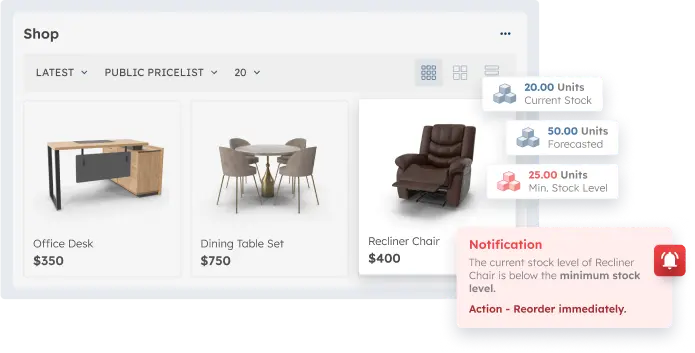
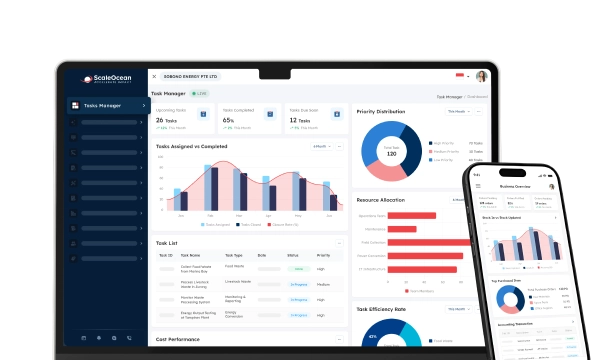
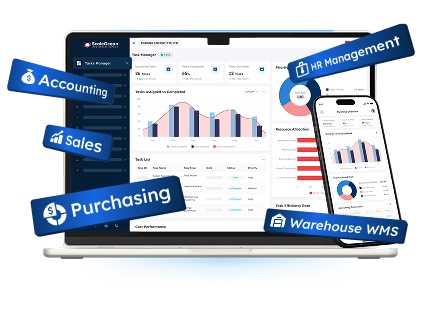
ScaleOcean’s eCommerce builder platform provides an ERP-based website builder, meaning it offers full, seamless integration with e-commerce platforms within a single unified ecosystem, which is quite an approach. It’s a comprehensive system.
Unlike many others, it consolidates everything into a single database, which really helps eliminate the need for numerous third-party plugins and prevents data conflicts, which can be a real headache.
You can also flexibly customize modules based on your business workflows, starting with e-commerce, and then seamlessly integrate with WMS and accounting later as you grow, which is very practical.
This system is also quite optimized for Singapore tax compliance, which is a significant factor here, and it even qualifies for various digitalization grant schemes like the PSG grant, helping with subsidies, which is a good bonus.
Key Features of ScaleOcean:
- Centralized Marketplace: Manage orders from Shopee, Lazada, TikTok Shop, and your website in a single dashboard.
- Supplier & B2B Portal: A dedicated B2B customer portal for reordering at special prices distinct from retail customers.
- Local Payment Integration: Supports PayNow, SGQR, Buy Now Pay Later, and local payment gateways.
- Real-Time Inventory Synchronization: Inventory is automatically updated across online and offline channels.
- Accounting Automation: Every transaction is recorded in the financial module immediately, including GST calculations.
- Integrated Shipping & Logistics: Direct integration with local couriers like Ninja Van, J&T Express, and Qxpress.
| Pros | Cons |
|---|---|
|
|
Best For: ScaleOcean is truly ideal for growing businesses, medium or already large, especially since it’s built for companies needing an integrated, scalable solution. It truly aims to handle complex B2B and B2C needs, which is quite comprehensive for an e-commerce website building platform.
Their pricing is customized based on the modules you select, ensuring you pay only for the specific functionalities your business requires, without unnecessary extras.
2. Shopify
Shopify e-commerce builder is a household name in the e-commerce space, an all-in-one platform that helps users quickly launch an online store with minimal fuss. It’s a popular choice for a reason.
It gives you everything from hosting and themes to their tools so that you can manage your products, orders, and payments from a single, easy-to-use dashboard.
Key Features of Shopify:
- Theme Store
- App Marketplace
- Integrated Payment Processing
| Pros | Cons |
|---|---|
|
|
Best For: This platform works really well for beginners, startups, and smaller businesses, especially if you’re looking for a straightforward setup that just works. It’s not uncommon to see dropshippers using it quite effectively, too.
Shopify offers several pricing tiers, with monthly plans starting at a low price point, but keep in mind that costs will increase if you need more advanced features.
3. Wix
Wix e-commerce builder has certainly made a name for itself as a popular website builder, particularly known for its design flexibility and its intuitive drag-and-drop interface for easy customization. It makes building a site feel less daunting.
While it’s not just for eCommerce, it still offers some strong features in that area, so users can pretty easily add a store to any website they happen to create.
Key Features of Wix:
- Wix ADI (Artificial Design Intelligence)
- Hundreds of Templates
- App Market for Extra Features
| Pros | Cons |
|---|---|
|
|
Best For: It’s often seen as the best choice for small businesses, artists, and entrepreneurs – essentially, anyone who really prioritizes visual branding and design for their online presence. This approach tends to work well for creative types.
Wix offers several plans, including a free option to get you started, but do remember that unlocking full eCommerce functionality requires a specific business subscription plan.
4. BigCommerce
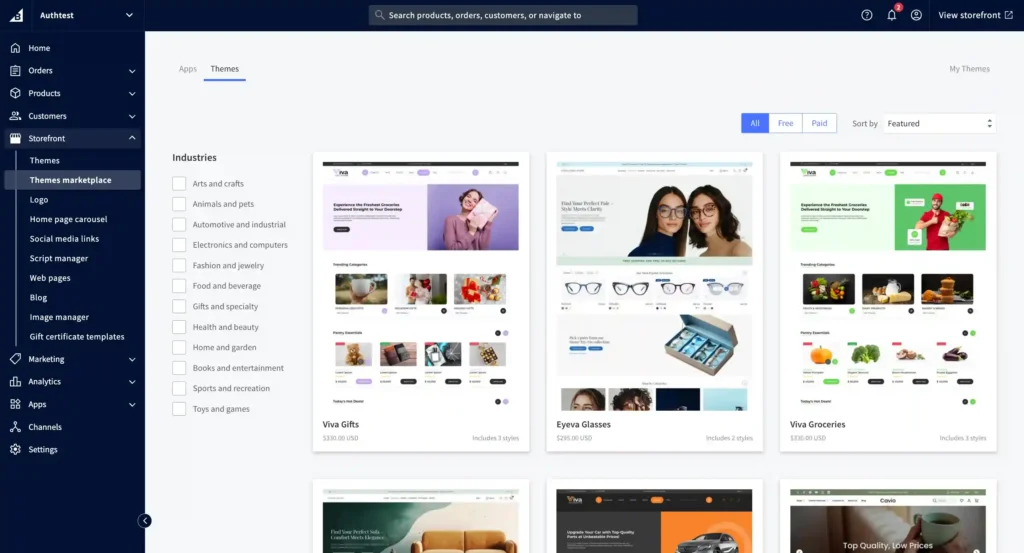
BigCommerce e-commerce website builder is a robust platform built with growth in mind, offering a wide range of built-in features without pesky transaction fees. That’s a significant advantage for many.
It’s designed to handle large product catalogues and supports both B2C and B2B sales models effectively, demonstrating its versatility.
Key Features of BigCommerce:
- Multi-Channel Selling
- No Transaction Fees
- Strong SEO Features
| Pros | Cons |
|---|---|
|
|
Best For: BigCommerce is well-suited to medium- to large-sized businesses, making it an ideal choice for retailers seeking a scalable, feature-rich solution to manage their operations. It’s definitely a powerhouse in the e-commerce website-building software space.
Their pricing is based on monthly subscription tiers, and it’s worth noting that costs will naturally increase as your annual online sales volume grows, which is a pretty standard model.
5. WooCommerce
WooCommerce e-commerce website builder is a free, open-source eCommerce plugin, and it’s designed specifically for WordPress websites, so it’s a natural fit if you’re already on WordPress. It’s pretty much the go-to for many.
It effectively transforms any WordPress site into a fully functional online store, offering incredible customization thanks to its thousands of available extensions.
Key Features of WooCommerce:
- Full WordPress Integration
- Highly Customizable
- Large Extension Library
| Pros | Cons |
|---|---|
|
|
Best For: This solution is ideal for businesses already running on WordPress, particularly for users who want full control and don’t mind getting a little technical. You really get to shape it exactly how you want.
While the plugin itself is free to use, it’s important to remember that you’ll still need to budget for web hosting, your domain, and any premium themes or extensions you choose to add.
6. Ecwid
Ecwid e-commerce builder is a neat little platform that lets you add e-commerce capabilities to almost any site you already have, making it perfect if you need to integrate with an existing online presence. Think of it as a plug-and-play store.
It’s not really a standalone site builder itself, but instead, it provides a smart widget that you can easily place on any website, blog, or even a social media page.
Key Features of Ecwid:
- Integrates with Any Website
- Social Media Selling Tools
- Point-of-Sale Functionality
| Pros | Cons |
|---|---|
|
|
Best For: Ecwid is definitely suitable for smaller businesses, proving great for those who just want to add a simple store to their existing website or blog without rebuilding everything. It’s a practical choice in most scenarios for quick additions.
They offer a free-forever plan, which is generous for getting started with limited features, but paid plans will naturally unlock more products, channels, and advanced tools as your needs grow.
7. Squarespace
Squarespace e-commerce builder is a website builder that really shines with its templates, consistently offering award-winning, visually appealing designs that make your site look stunning. It’s all about aesthetics here.
It serves as a solution for building a site, and importantly, its e-commerce capabilities are integrated directly into the platform, not just tacked on.
Key Features of Squarespace:
- Professionally Designed Templates
- Drag-and-Drop Editor
- Integrated Marketing Tools
| Pros | Cons |
|---|---|
|
|
Best For: This platform is pretty much ideal for creatives, artists, and restaurants – basically any business where brand aesthetics are a top priority and a beautiful online presence is key. It lets your visual identity really stand out.
Squarespace requires a subscription, and to sell products online, you’ll need to choose one of their dedicated business or commerce plans.
8. Square Online

Square Online e-commerce builder comes from the payment company Square, which means it’s an e-commerce platform that is, as you’d expect, deeply integrated with the Square POS system. This makes it incredibly convenient if you’re already using Square.
It’s designed to let businesses sell online, in person, and on social media, with the big advantage that your inventory automatically syncs across all these sales channels.
Key Features of Square Online:
- Full Square POS Integration
- Inventory Syncing
- Local Delivery and Pickup Options
| Pros | Cons |
|---|---|
|
|
Best For: Square Online really shines for restaurants, retailers, and service businesses, proving particularly useful for those already using Square for payments. It just simplifies things quite a bit.
They actually offer a free plan to help you get started, which is great, though paid plans will naturally provide more features, like a custom domain and generally lower processing fees.
9. SiteGiant
SiteGiant e-commerce builder is a multi-channel eCommerce platform that has become quite popular among sellers in Southeast Asia, and for good reason. It’s built with the regional market specifically in mind.
It effectively helps businesses manage sales across numerous marketplaces, including major platforms like Shopee and Lazada, as well as their own webstore, all from a single centralized dashboard.
Key Features of SiteGiant:
- Marketplace Syncing
- Inventory Management
- Order Fulfilment Tools
| Pros | Cons |
|---|---|
|
|
Best For: This platform is well-suited for small to medium-sized businesses, making it ideal for sellers heavily focused on marketplaces like Lazada and Shopee. If your sales are primarily there, this could be a great fit.
SiteGiant operates on an annual subscription model, with plans priced based on the number of products you have and the specific features your business requires.
10. Webflow
Webflow e-commerce website builder is a really powerful design platform, excellent for building professional websites, and it famously offers total design freedom without writing code. It’s a dream come true for many designers.
You can think of it more as a visual web development tool rather than just a simple builder, and happily, it has recently added integrated eCommerce functionality, which is a big step.
Key Features of Webflow:
- Complete Design Control
- Clean Code Output
- Integrated CMS
| Pros | Cons |
|---|---|
|
|
Best For: Webflow is best for designers, agencies, and tech-savvy businesses, especially if you need a fully custom website without developer help. It truly empowers creative control.
Their pricing structure is split into site plans and account plans, and it’s important to know that getting eCommerce functionality will require a more expensive site plan subscription.
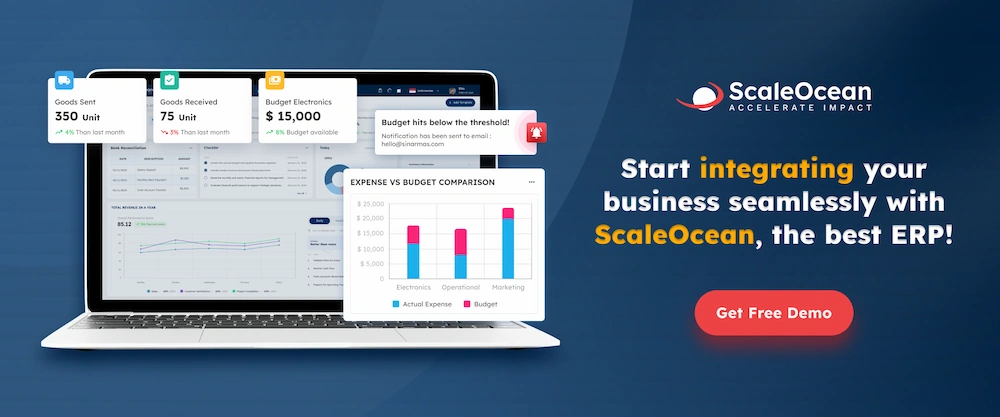
Before choosing a platform, consider how an integrated solution can simplify your operations as you grow. Like ScaleOcean eCommerce, which can simplify your business by integrating your website, marketplace orders, inventory, and accounting, reducing manual work and improving efficiency across multiple sales channels and processes.
ScaleOcean is ideal for growing companies that need more than just a storefront. With flexible modules and support for both B2B and B2C operations, ScaleOcean helps streamline complex workflows while providing a foundation for sustainable scaling. See how ScaleOcean can transform your eCommerce and request a free demo today.

What Makes the Best eCommerce Website Builder?
When you’re looking at different options for a e-commerce website building platform, there are definitely some key things that really set the good ones apart. These crucial elements work together to ensure your online store is not just functional but also super user-friendly and genuinely secure for everyone involved.
Ease of Use
Think about your team using this platform day in and day out. It’s important that a simple, intuitive interface reduces training time and helps avoid those little operational hiccups that can slow things down.
Honestly, adding new products to your store should be straightforward, not a headache. The whole point is that managing daily orders and keeping your content fresh shouldn’t ever require a dedicated technical expert, which just adds unnecessary costs.
Payment Gateways
Any good e-commerce website building software needs to handle local payment methods seamlessly, especially when you’re operating in Singapore. This typically means integrating options like PayNow and SGQR, which are pretty standard here and what customers expect.
It’s just a simple fact that customers trust what they know, so offering familiar payment options really helps build confidence in your store. This practical approach also tends to significantly reduce cart abandonment right at that crucial final checkout step.
Mobile Optimization
Let’s be real, most people are shopping on their phones these days, so your e-commerce website must be fully mobile-responsive without question, as it’s essential.
A well-optimized mobile site ensures a smooth, seamless experience for everyone browsing your products, regardless of their device. On the flip side, a poor mobile site is almost guaranteed to drive potential customers away really fast, which nobody wants.
Security
When it comes to customer data, protecting it isn’t just an option, it’s non-negotiable for any e-commerce website builder Singapore. Therefore, the platform you pick must provide SSL certificates and PCI compliance to meet those industry standards.
Really robust security measures go a long way in building customer trust, which is invaluable for any online business. It’s essential for protecting your business from the significant threats of fraud and data breaches, something you just can’t afford to overlook.
Inventory and SEO Tools
Having really good inventory tools in your e-commerce website-building software helps you keep track of stock across all your sales channels, which is a big deal. This way, you avoid annoying overselling situations and can always be sure your data stays accurate.
Built-in SEO features are another crucial aspect that the best e-commerce website building platform should offer, helping people actually find your store. These features specifically help your store rank higher in search results, which is key for attracting that valuable organic traffic.
How Much Does an eCommerce Website Builder Singapore Cost?
The total cost of an eCommerce website builder Singapore depends on several components, not just the subscription price. Businesses should consider all ongoing fees to estimate their operating budget accurately.
- Monthly Fees: Recurring subscription charges for using the platform. Pricing tiers usually vary based on features, number of products, bandwidth, user accounts, and advanced tools such as analytics or automation.
- Payment Gateway Fees: Fees charged by payment providers for processing online payments via credit cards, debit cards, or digital wallets. This typically includes a percentage of each transaction plus a small fixed charge.
- Transaction Fees: Additional fees imposed by the platform on each sale, particularly when using external payment gateways. Some builders waive these fees if you use their native payment system.
Understanding these cost components helps businesses choose a platform that fits both their operational needs and long-term budget.
What to Look For in an eCommerce Website Building Platform in 2026

When choosing website-building software for 2026, select a platform that will remain relevant, adapt to future trends, and support your online business’s growth, as e-commerce is constantly evolving with new technologies and consumer behaviors shaping the landscape.
Core eCommerce Features
First things first, your chosen platform has to nail the fundamentals. This means having really solid, robust product, order, and inventory management capabilities, which is just crucial for any online store.
It’s also super smart to look for those features that can really automate the daily grind. When those routine tasks are handled automatically, it frees up your team to focus on growing the business, which is ultimately what you want.
Design and Customization
Think of your website as your brand’s main digital storefront. It’s where customers first really get a feel for you. So, the platform should allow deep customization, letting you truly reflect your unique identity and stand out in the crowded e-Commerce space.
Try to avoid builders that lock you into rigid templates, because that’s no fun. You absolutely need the flexibility to adapt your site’s look and feel over time, as your brand evolves or trends change, which is pretty common.
Scalability and Performance
Your website should be prepared for sudden traffic surges, especially during sales or peak periods. Opt for a platform that can scale with your needs so it remains reliable and performs well as traffic increases.
This means the system should effortlessly manage more products, orders, and customers as your business expands. It should be able to do all of this without slowing down or crashing, while a product information management system helps keep growing product data accurate and consistent across channels.
App Ecosystem and Integrations
Sure, third-party apps offer powerful features, which are beneficial. However, managing too many plugins can cause conflicts and often slow down the entire site, something nobody desires.
Generally speaking, a more unified system often works out better in the long run, from what I’ve seen. This approach actively avoids app conflicts and data sils, because it integrates those key features natively, right into the platform itself.
Flexibility
These days, it’s pretty common for modern businesses to serve all sorts of customer types, sometimes both businesses and consumers. So, a truly flexible platform supports both B2B and B2C models, which is really important for diverse operations.
What’s great about this kind of setup is that it lets you manage both your wholesale and retail orders. You can do this with a single, centralized backend system, making things much simpler.
Pricing and TCO
When you’re looking at pricing, please always look beyond just that advertised monthly fee, because there’s usually more to it. You really need to calculate the true cost over time, making sure you factor in any hidden fees that may pop up.
This total cost often includes transaction fees, any app subscriptions you might need, and even premium themes. Often, a platform with lots of built-in features right from the start tends to have a lower Total Cost of Ownership in the long run.
How to Choose an eCommerce Website Builder

Choosing the right platform for your online store is more about strategy than a quick choice. It starts with a clear understanding of your business needs and your main e-commerce goals.
- Define your business needs: Start with your model (B2B, B2C, or both) and required features, so you choose a platform that actually fits your operations.
- Check scalability: The platform should handle growth in traffic, products, and orders without needing a rebuild later.
- Evaluate pricing and total cost: Look beyond monthly fees and consider transaction costs, add-ons, and long-term expenses.
- Ensure integration capabilities: Choose a system that connects with inventory, accounting, payments, and other tools to avoid data silos.
- Prioritize ease of use: A simple, intuitive interface helps your team manage operations efficiently without technical barriers.
- Check security and payment support: Secure transactions and multiple payment options are essential for building trust and driving higher conversion rates.
- Assess your team’s technical skills: Ensure they can manage the platform easily and that eCommerce can integrate with Cest CRM Software to minimize potential issues.
Conclusion
Choosing the right eCommerce builder means creating a reliable system that supports growth and competitiveness. The best platforms offer usability, security, scalability, and integrated tools to help businesses thrive in Singapore’s fast-paced digital market.
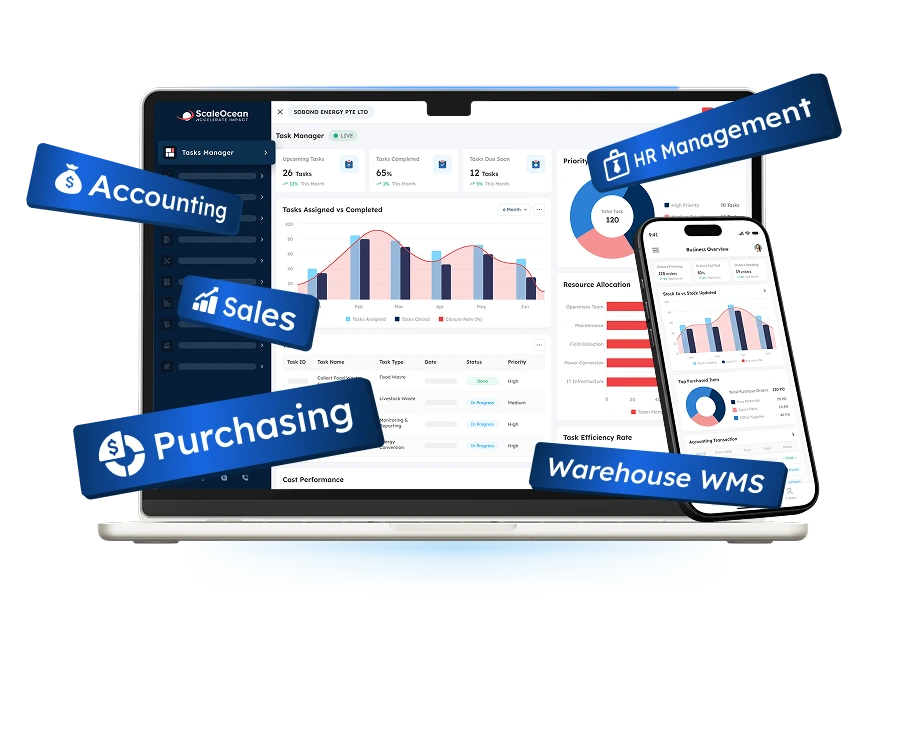
For companies with complex workflows, fragmented apps cause bottlenecks. ScaleOcean eCommerce provides a unified ERP system that connects sales, inventory, accounting, and logistics, reducing manual work and giving real-time operational visibility.
If you aim for sustainable growth beyond just a website, an integrated solution can make a big difference. Request a free demo to see how ScaleOcean can streamline your processes, boost efficiency, and support your business expansion.
FAQ:
1. Can I build my own e-commerce platform?
Yes, you can build your own e-commerce platform from scratch using frameworks or custom development. However, it requires technical expertise, higher costs, and ongoing maintenance, which is why many businesses prefer ready-made platforms.
2. What platform is best for e-commerce?
1. ScaleOcean: Best for integrated B2B/B2C operations and scalable ERP-based systems
2. Shopify: Best for beginners and fast store setup with a strong ecosystem
3. Wix: Best for small businesses needing easy design and a drag-and-drop builder
4. BigCommerce: Best for growing businesses with advanced built-in features
3. What are the 7 pillars of e-commerce?
1. User experience (UX)
2. Marketing & SEO
3. Secure payments
4. Order management
5. Inventory control
6. Shipping & delivery
7. Customer support
4. Can ChatGPT create an e-commerce website?
ChatGPT can help generate code, content, and structure for an e-commerce website, but it cannot fully build and deploy a live store on its own. You still need a platform or developer to launch and manage it.




















.png)