




A payment bond in construction contracts secures the payment of all parties to the contract against improper payment. This aids in the fair compensation of all parties involved in construction projects in the Philippines for their labor and services provided.
Disputes over payments in the construction sector can have a great impact on the completion of projects and cash flows. That’s why payment bonds are a requirement for construction projects as a form of risk management and contract compliance.
 Key Takeaways
- A payment bond is a type of surety bond that guarantees subcontractors, suppliers, and laborers will be paid.
- A payment bond works by guaranteeing payment to subcontractors, suppliers, and workers if the contractor fails to fulfill its payment obligations.
- The parties involved in a payment bond include the obligee, principal, surety, and subcontractors or suppliers.
- ScaleOcean Construction ERP Software helps construction companies streamline project budgeting, contract management, and financial reporting.

1. What is a Payment Bond?
A payment bond is a bond type that ensures that subcontractors, laborers and suppliers will receive payment if the main contractor defaults on its payments. It shields these parties from payment conflicts prior to or after completion of the project.
In other words, if the contractor is unable to pay his suppliers or subcontractors, the surety company issuing the bond may be able to pay the unpaid cost, depending on the terms of the bond.
Payment bonds are commonly used in public infrastructure projects and large-scale private construction projects. They offer financial safeguards and play a crucial role in ensuring the project runs smoothly and minimizing payment disputes.
In the Philippines, government infrastructure projects require contractors to post security under the procurement law framework, originally Republic Act No. 9184, now revised by Republic Act No. 12009 (the New Government Procurement Act of 2024).
It is important to note that Philippine procurement laws primarily require performance security, which guarantees the contractor’s faithful completion of the project in accordance with contractual obligations.
While the law does not explicitly require a payment bond in the same way as some international construction contracts, private project owners, and some contractual agreements might need to have payment bonds to parties for payment defaults.
2. How Does a Payment Bond Work?

Understanding how a payment bond works is relatively straightforward. The process typically includes three parties that are the project owner, the contractor and the surety company. The general method of operation is as follows:
- The project owner requires a payment bond before construction begins.
- The contractor is buying the bond from a surety or insurance company.
- Subcontractors, suppliers, and workers supply labor or material during the project.
- If the contractor doesn’t pay them, the party affected can claim the bond.
- If the claim is valid, the surety reviews the claim and pays the party to whom the bond is payable in accordance with its terms.
Payment bonds are excellent for ensuring a healthy cash flow in construction supply chain Research published in Sustainability indicates that delayed payments can disrupt project progress, increase costs, and contribute to schedule delays in projects.
 Also Read: Understanding Construction Performance Bonds and How it Works
3. Parties Involved in a Payment Bond
It’s helpful for everyone to understand the roles of each party so they can better understand how payment bonds work, and what happens when payment problems occur. Here the parties involved in the payment bond:
- The Obligee (Project Owner): This is the party requiring the payment bond. The obligee may be a government agency, corporation, or property owner seeking protection against payment disputes that could disrupt the project.
- The Principal (Contractor): Principal is the contractor that has to finish the project and pay the subcontractors, the suppliers and workers in line with the contractual terms. Contractors are also required to provide additional guarantees, such as a construction bid bond during the tendering stage.
- The Surety: This is the company that issues the surety bond or the insurance provider. Before granting the bond, the surety typically evaluates the contractor’s financial condition, experience, and ability to fulfill contractual obligations.
- Subcontractors and Suppliers: These are individuals who supply the labor, materials, equipment or services needed to complete the project. If they are not paid even though they have performed their contractual duties, they can make a claim against the payment bond.

4. Payment Bond vs Performance Bond
Payment and performance bonds are often mistaken for one another because they are both often seen in construction projects. Below are the difference between a payment bond and a performance bond:
| Aspect | Payment Bond | Performance Bond |
|---|---|---|
| Purpose | Guarantees payment to suppliers and subcontractors | Guarantees project completion according to contract terms |
| Protected Party | Suppliers, subcontractors, and workers | Project owner |
| Trigger for Claim | Non-payment by contractor | Failure to complete or properly perform the work |
| Main Risk Covered | Financial default on payments | Poor performance or project abandonment |
When discussing the differences, it is important to note that both bonds often work together to protect the projects. After project completion, owners may also require a construction maintenance bond to cover defects identified during the warranty period.
5. Are Payment Bonds Really Necessary?
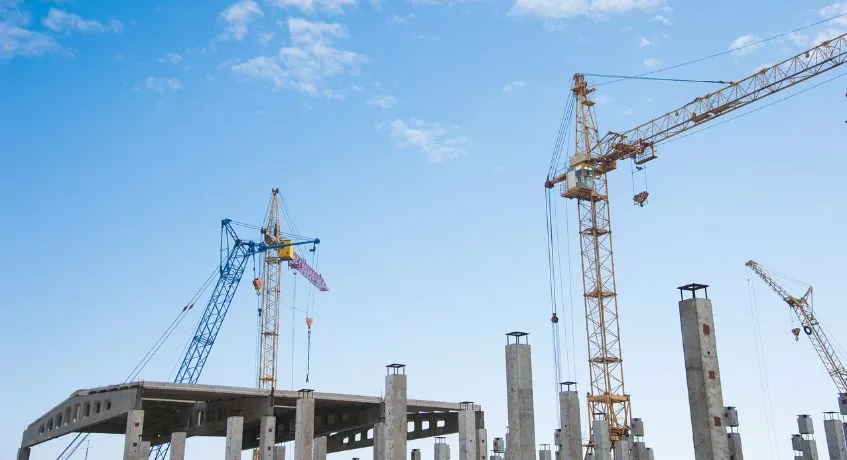
Yes, payment bonds are extremely important, especially for medium and large construction projects. Without a payment bond, subcontractors and suppliers may face significant financial risks. Here are some benefits of payment bonds include:
- Protecting subcontractors and suppliers against non-payment.
- Reducing legal conflicts between stakeholders of a project.
- Ensuring a continuous supply of labour and materials.
- Improving partnerships between project participants.
- Supporting to finish the project on time.
In the Philippines, where construction projects frequently involve multiple subcontractors and suppliers, this provides extra financial security and financial stability in project delivery.
Payment bonds are often included as part of broader risk management strategies alongside other instruments such as a construction bond to safeguard project performance and financial obligations.
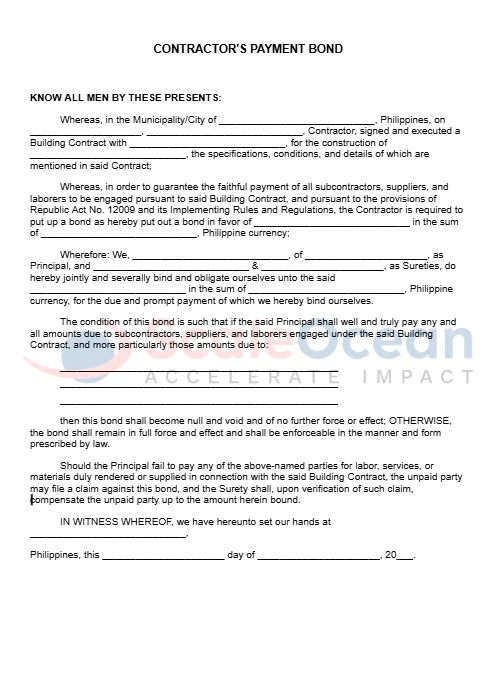
6. Payment Bond Example
To better understand the concept and purpose of a payment bond, it is helpful to examine a practical example. The following illustration demonstrates how a payment bond works:
7. In Conclusion
Payment bonds are a crucial financial security for subcontractors, suppliers, and workers who are not getting paid. This helps ensure projects are completed successfully by providing timely compensation in the event of project failure.
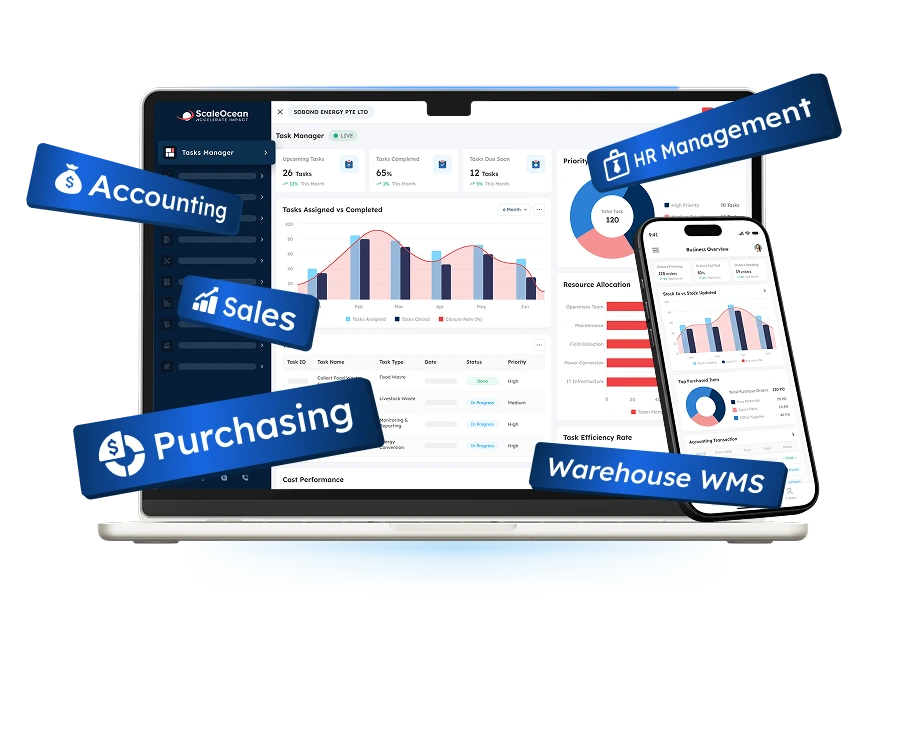
It can be difficult to manage financial documentation, progress billings, contracts and payment bonds manually. For a smooth running of these processes, businesses can use ScaleOcean Construction ERP Software.
ScaleOcean helps construction companies manage project budgeting, contract administration, and financial reporting within a single integrated platform. This helps contractors have more transparency and optimize the project performance.
ScaleOcean can help businesses increase productivity and improve their performance. Request a free demo and see how ScaleOcean can help you enhance your construction project management process.
FAQ:
1. What is the difference between performance and payment bonds?
A payment bond guarantees that subcontractors, suppliers, and workers receive payment for their services and materials. In contrast, a performance bond ensures that the contractor completes the project according to the agreed contract terms.
2. What is the point of a payment bond?
A payment bond protects subcontractors, suppliers, and laborers from non-payment if the contractor defaults. It helps reduce payment disputes, maintains cash flow, and supports smooth project execution.
3. How much does a ₱1,000,000 performance bond cost?
The cost of a ₱1,000,000 performance bond generally ranges from 0.5% to 10% of the bond amount, or approximately ₱5,000 to ₱100,000, depending on the contractor’s financial strength, credit history, and risk profile.
















.png)